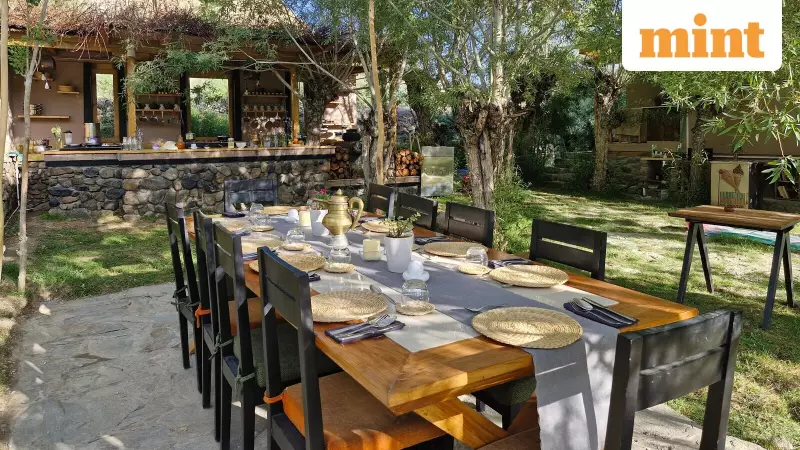
A quiet revolution is simmering in the high-altitude kitchens of Ladakh, where a new generation of chefs is passionately showcasing the region's rich culinary diversity through carefully crafted tasting menus. Moving beyond the stereotypical momos and thukpa, these culinary artists are presenting small plates with creative twists on local favourites, offering a deeper, more authentic taste of their homeland.
The Pioneers of Ladakhi Fine Dining
On a serene hill in Leh, surrounded by willow trees and arid mountains, chef Jigmet Mingyur operates his intimate 10-seater restaurant, Tsam Khang. The format is a nine-course tasting menu featuring dishes like stinging nettle soups, foraged salads, and stews. Mingyur, who left monkhood to pursue his passion for food, previously honed his skills at Prana in Goa, where he learned the art of small plates, which he now masterfully applies to the food from his home.
Similarly, Kunzes Angmo was inspired to host curated meals while researching Ladakhi food. Disturbed by the misrepresentation and conflation of Ladakhi cuisine with Tibetan food, she launched Artisanal Alchemy in 2019. She now hosts immersive, three-hour, story-driven menus at The Jade House, a boutique homestay, and the Stok Palace Heritage Hotel.

Reimagining Classics for the Tasting Plate
The challenge for these chefs lies in adapting Ladakh's inherently hearty dishes into a multi-course format. At Heritage Kitchen, where chef Tsetan Namgail is part of an all-women team, the morning buckwheat pancake, or 'chilla', has been ingeniously transformed into a crisp cracker for the starter course. This is topped with tangthur, a mixture of local wild greens called saganik and yoghurt, finished with a wild chives-infused butter.
At Tsam Khang, foraged ingredients take centre stage. Wild capers, seabuckthorn, wild fruits, ephedrine berries, and fresh apricots are combined into a vibrant salad with a yoghurt dressing. Kunzes Angmo has turned the traditional sourdough khambir bread and tsong thaltak, a biscuit-bread with onions and poppy seeds, into an artisanal bread basket.
A Deeper Look at Thukpa and Main Courses
These menus also aim to educate diners about the complexity of Ladakhi staples. Both Angmo and Mingyur emphasize that thukpa is not a single dish but an entire family of noodle soups. Angmo serves Lama pakthuk, or 'monk's thukpa', made with dried cheese, dried black peas, radish, and dried wild buckwheat leaves, seasoned with Chinese celery, freshly ground pepper, and cilantro. At Tsam Khang, Mingyur features zathuk, a version made with stinging nettle and dried cheese.
The main courses reflect Ladakh's history as a crossroads of trade. Heritage Kitchen serves Yarkhandi pulao, a rice and mutton dish with Central Asian influences, cooked in ghee and garnished with caramelised onions. Another star is chutagi, a celebratory one-pot meal of bowtie pasta cooked in a rich broth with goat trotters.
Since the region lacks a strong dessert tradition, chefs have found creative ways to conclude the meal. Mingyur at Tsam Khang serves phey-marr, a rustic farmer snack of roasted barley flour, butter, sugar, buttermilk, and cheese, as a dessert. He also brews his own chhaang, the local fermented barley drink. At Heritage Kitchen, phey-marr is accompanied by apricot jam and a choice of salty butter tea or kahwa.
Through these thoughtful and flavourful plates, Ladakh's burgeoning culinary scene offers a rare and authentic glimpse into a food culture shaped by its harsh climate, ancient trade routes, and unique biodiversity. These chefs are not just serving food; they are sharing their heritage, one small plate at a time.