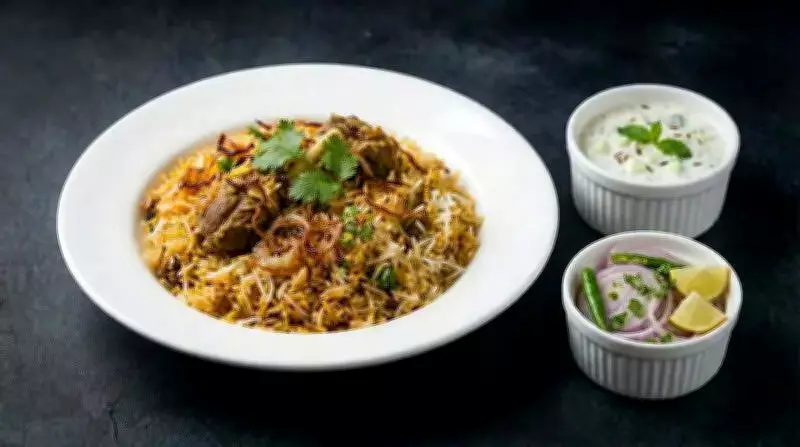
The Quiet Evolution of Karnataka's Biryani Traditions
In the early 2010s, a Bengaluru-based restaurateur embarked on an ambitious culinary project: curating a rotating menu showcasing biryanis from across Karnataka, backed by extensive research. Despite the innovative concept, the venture shut down quickly, likely due to the absence of social media platforms to amplify such a niche offering at that time.
Beyond Celebration: Biryani as Cultural Record
In Karnataka, biryani transcends its role as a celebratory dish to become a living record of movement, necessity, and everyday appetite. This has resulted in numerous distinct varieties across the state. Tracing its journey from royal kitchens and military camps to roadside eateries and wedding feasts reveals a food that has quietly adapted across regions and communities, absorbing local tastes while maintaining its core identity.
Unlike the extensively documented biryanis of Hyderabad or Awadh, Karnataka's versions remain understated, loosely defined, and deeply regional. They are shaped more by geography and economy than by courtly spectacle or royal patronage.

The Modern Renaissance of Regional Biryanis
Social media platforms, increased migration into Bengaluru, and a new generation of chefs and writers documenting regional micro-cuisines have brought once-overlooked styles of Karnataka biryani into the public conversation. What is emerging now is not a single definition of Karnataka biryani, but a recognition of its remarkable diversity—a culinary map that mirrors the state's layered cultural geography.
Food hospitality professional and writer Aslam Gafoor describes Karnataka biryani not as a single tradition but as a cluster of regional rice-and-meat preparations that evolved independently across the state. Coastal influences, interior farming cultures, and working-class food habits all played significant roles in this evolution.
What unites many of these styles, Gafoor notes, is practicality. These are not ornamental, layered biryanis built around luxury ingredients, but robust, everyday dishes designed to feed many people—quickly and affordably.
Regional Variations Across Karnataka
Bengaluru and Surrounding Districts: Donne Biryani
At the heart of Karnataka's biryani landscape sits donne biryani, closely tied to the state's working-class and naati (local) food culture. Popularized through military hotels—most famously establishments like Shivaji Military Hotel—and roadside eateries, it prioritizes speed, consistency, and volume over ceremony.
Prepared using jeera rice instead of basmati, driven by green chillies rather than aromatic whole spices, and cooked with bone-in meat to maximize flavor and economy, donne biryani reflects a utilitarian philosophy. Its very name comes from the palm-leaf cup (donne) in which it was traditionally served, reinforcing its identity as food meant to be eaten quickly and affordably.
Coastal Karnataka: Bhatkal Biryani
Along the coast, especially in Bhatkal, biryani reflects centuries of maritime exchange, shaped by Arab and Persian-influenced Nawayath cuisine. Here, biryani is known for its lighter, non-greasy texture—meat is cooked separately in an onion and green-chilli-based gravy and then layered with fragrant rice, rather than being drowned in ghee or rich oils.
Ajaib Shabbir Bhatkali, owner of the Biryani House in Abu Dhabi, explains that Bhatkal biryani traces its roots to the coastal town and is deeply embedded in the culinary traditions of the Nawayath Muslim community. "Bhatkalis are known for their warmth and hospitality, and our biryani reflects that spirit," he says.
The traditional Bhatkali dum biryani focuses on quality ingredients and precise technique rather than overpowering spice. True to Bhatkal tradition, the biryani is accompanied by raity—a unique chilled accompaniment made from sweet potato, half-ripe jackfruit and half-ripe papaya—and kachumber, a chilli-based pickle with finely chopped onion, tender mango and tomato.
North Karnataka: Hubballi and Belgaum Styles
In north Karnataka, slow-cooked meat-centric styles influenced by the Hyderabadi masala mix dominate. The Hubballi and Belgaum versions are two popular varieties from this region.

"Both biryanis are heavily influenced by Hyderabadi masalas. The key difference is that we don't use whole spices like how they do in Hyderabad," says Muhammad Ziya Ul Haq, who runs the restaurant Al-Madina in Hubballi town. Spices are ground to powder and used in Hubballi and Belgaum biryanis.
While red and green chillies are used to prepare mildly spiced Hubballi biryanis, only green chillies are used extensively to make Belgaum biryani, a spicy signature one-pot dish of Belagavi district. "Belgaum biryani is flavourful when the locally grown Belgaum basmati is used," Ziya notes.
Hassan and Kodagu: Milder, Homely Preparations
Regions such as Hassan and Kodagu are known for milder, dum-style preparations that sit somewhere between a biryani and a pulao. Hassan biryani, by contrast, remains gentle and restrained, closer to everyday home cooking than restaurant spectacle. Avoiding heavy masalas, it relies on subtle seasoning and slow cooking, giving it a distinctly "homely" character that resists easy categorization.
For many from Kodagu, what is often loosely called biryani is closer to a pulao—and defiantly so. "We miss the authentic mutton pulao our grandmother used to make," says Pramitha Achaiah, a consultant now living in Bengaluru, recalling a dish that doesn't follow the Mughal grammar of layered rice and excess ghee.
Coorg pulao, she explains, is built differently. The process begins with frying spices along with coconut, grinding them into an aromatic base that defines the dish. The meat—usually mutton—is cooked directly in this masala, allowing the spices and peppercorns to do the heavy lifting.
Mangalore: A Coastal Legacy of Technique
According to home cook and social worker Khairunnisa Sayed, Mangalore biryani stands apart with its own identity, technique, and soul. "Mangalore biryani is completely different from Hyderabadi, Kerala, or even Bengaluru biryani," she says. "Its uniqueness lies not just in the ingredients, but in the method, the balance of flavours, and the respect for layering."
Unlike the short-grain or medium-grain rice commonly used elsewhere, Mangalore biryani traditionally uses long-grain basmati rice that is soaked well in advance. Mangalore biryani is also a true dum biryani, where rice and masala are prepared separately and brought together only during the final stage.
The masala itself reflects the bold yet balanced nature of coastal cooking. Green chillies play a starring role, sometimes as many as 25 to 30 green chillies for one kilogram of mutton, along with fresh pudina and coriander, ground directly.
Bengaluru: The Testing Ground for Karnataka's Biryanis
Bengaluru has emerged as the most visible stage where these diverse traditions intersect. With its layered history and migrant population, the city functions less as the birthplace of Karnataka's biryanis and more as their testing ground. Styles once confined to specific towns or neighborhoods are now encountered side by side—debated, compared, and occasionally reinvented—through military hotels, modest messes, and newer restaurants attempting revival.
Aslam Gafoor points out that this convergence has made Bengaluru central to how Karnataka biryani is discussed today, even if its roots lie elsewhere. Some traditions remained hidden in plain sight for decades. The Hubballi variety, long sold through small booths and military hotels, stayed local for years before gaining wider visibility. Its recent rise in Bengaluru, especially over the last 15 to 20 years, mirrors the city's changing demographics and the role of migration in reshaping food culture.
That difference is something Sangamesh, an IT professional from Hubballi now living in Bengaluru, notices clearly. "What I eat here and what I eat back home are called the same thing, but they're not the same," he says. "In Hubballi, the flavours are sharper and more familiar—it feels like food meant for locals. In Bengaluru, it's adapted. The spice levels change, the presentation changes, sometimes even the meat cuts. It's good, but it's different."
A Legacy of Adaptation and Practicality
Aslam Gafoor emphasizes that Karnataka's biryanis evolved through adaptation rather than replication. Persian influences entered via Hyderabad, while neighboring Andhra, Tamil Nadu, and Kerala traditions left their mark along trade routes and migration corridors. Local cooks reshaped these influences to suit available ingredients and everyday needs—replacing expensive imports with local produce, country-bred meat, and robust spice pastes.
The result was food that was deeply satisfying but rarely documented. Unlike Hyderabadi or Awadhi biryanis, which benefited from royal patronage and institutional backing, Karnataka's styles thrived in neighborhood booths and homes. They represent a culinary tradition built for everyday consumption, shaped by movement and necessity, and now finally receiving the recognition they deserve in India's rich gastronomic landscape.