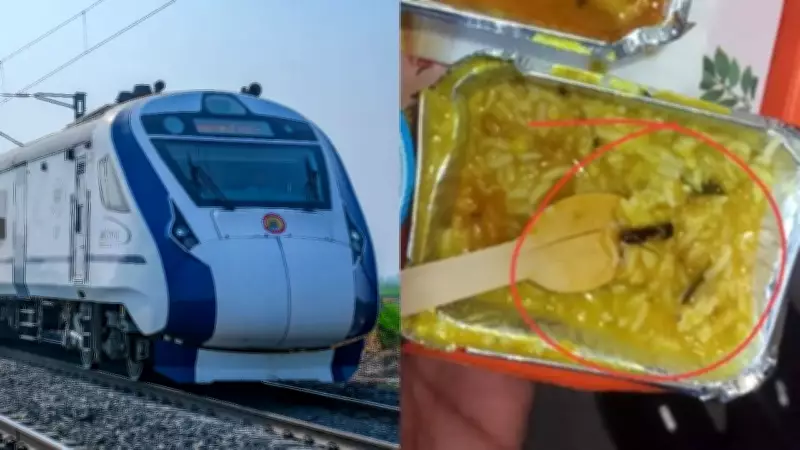
Insect Found in Vande Bharat Meal: IRCTC Slaps ₹10 Lakh Fine on Vendor
Food contamination on Indian trains is emerging as a persistent and alarming issue. In a recent distressing episode aboard the Vande Bharat Express, a passenger discovered an insect in their meal, sparking widespread concern over hygiene standards. Following the complaint, the Indian Railway Catering and Tourism Corporation (IRCTC) took decisive action, imposing a substantial fine of ₹10 lakh on the service provider. While such penalties demonstrate accountability, the recurrence of hygiene lapses underscores a deeper systemic problem that demands stricter oversight and consistent quality control measures.
Incident Details and Passenger Complaint
The issue came to light after X user Aditya Didwania shared images from his journey on the Ahmedabad-Mumbai Vande Bharat train, alleging he had found an insect in the meal served onboard. He further claimed that at least two such instances were observed in his coach, leading passengers to stop eating altogether. In his caption, he wrote, "Found an insect in Vande Bharat train food (Ahmedabad - Mumbai). At least 2 such cases in my coach, everyone stopped eating after that." Didwania also named the vendor and tagged authorities, urging immediate action to enforce food safety standards.
IRCTC's Response and Actions Taken
Responding promptly to the incident, IRCTC issued a statement in the comments section, expressing deep regret for the inconvenience caused. The corporation stated, "The matter has been viewed with the utmost seriousness and a hefty penalty of Rs 10 lakh along with termination notice of the contract is being issued to the Service Provider. The kitchen is sealed for deep cleaning and pest control. Hygiene and passenger safety remain our top-most priority." This swift action reflects IRCTC's commitment to addressing grievances, yet it has also ignited broader discussions among users about recurring food quality and safety issues on trains.

Key Reasons for Food Contamination on Trains
The repeated incidents of contamination point to several underlying factors that compromise food safety in railway catering:
- Poor Storage and Temperature Control: Meals served on trains are often prepared in central kitchens and transported long distances before reaching passengers. Experts note that if these meals are not stored at appropriate temperatures, they become breeding grounds for bacteria, larvae, and insects. Warm and humid weather conditions exacerbate this problem, increasing the risk of spoilage.
- Lapses in Hygiene During Preparation: Large-scale kitchen setups that cater to thousands of passengers struggle to maintain strict hygiene standards. Issues such as improper cleaning, open cooking areas, or exposure to flies can lead to contamination. Even minor oversights may result in insects laying eggs, which later develop into worms, posing serious health risks.
- Poor Packaging and Handling in Transit: While kitchen hygiene can be monitored with scrutiny, packaging and transportation processes often introduce vulnerabilities. Food passes through multiple hands—from kitchen staff to delivery personnel to onboard vendors—and any lapse in the system can cause contamination. Delayed deliveries, overcrowded vehicles, and improper handling during loading and unloading further heighten these risks.
Safety Measures for Passengers
To mitigate risks, passengers are advised to follow these safety measures when consuming food on trains:

- Check Packaging and Seals: Always ensure that food received is properly sealed. IRCTC-authorized meals typically come with labeled packaging; verify the date and time of packaging, vendor details, and other relevant information.
- Eat Fresh and Hot Food: If the food served appears stale or cold, request a replacement and only consume items that are fresh and hot to reduce contamination risks.
- Carry Essentials: While traveling, maintain a small kit containing hand sanitizer, wet wipes, tissues, and basic cutlery. Cleaning your hands before eating can significantly lower infection risks.
- Be Cautious with Water: Avoid purchasing bottles with broken seals and refrain from drinking tap water, as water is a common source of health issues.
- Avoid Greasy Foods: Opt for healthier choices like rice and dal, soup, sandwiches, or salads, and steer clear of deep-fried items such as pakodas and tikkas, which can cause gut health problems.
- Report Issues Immediately: Upon discovering any hygiene lapses or contaminated food, promptly inform railway staff or use official complaint channels to ensure swift action.
This incident serves as a stark reminder of the ongoing challenges in maintaining food safety standards on Indian railways. While IRCTC's punitive measures are a step in the right direction, sustained efforts in monitoring, training, and infrastructure improvements are essential to prevent future occurrences and restore passenger confidence.