Revitalize Your Summer Garden with Hollyhocks
During the peak of summer, gardens often appear dull, dry, and lifeless under the intense sun. Yet, selecting the right flowers can transform even the most neglected corners into vibrant, eye-catching spaces. One standout choice is the hollyhock, renowned for its tall, cheerful flower spikes that bring a regal touch with minimal effort. Whether you have a sprawling backyard or a compact garden nook, hollyhocks infuse color and charm, making your outdoor area a neighborhood highlight.
Easy Steps to Grow Hollyhocks at Home
Follow this straightforward process to cultivate hollyhocks successfully:
- Sow seeds directly into soil during spring or early summer.
- Select a sunny location with good air circulation to prevent fungal problems.
- Water moderately, keeping soil moist but not waterlogged.
- Maintain slightly alkaline soil conditions.
- Space plants adequately to reduce disease risks.
- Use stakes to support plants, especially in windy conditions.
Research from the University of Minnesota Extension, published on ResearchGate, emphasizes proper growing techniques for optimal results.

Tips for Continuous Blooming and Health
To ensure hollyhocks bloom brightly throughout the season, adopt these care strategies:
- Deadhead faded flowers regularly to encourage new blooms.
- Monitor for rust, a common fungal disease; remove affected leaves and ensure air circulation, as advised by the Royal Horticultural Society (RHS).
- Apply a balanced fertilizer monthly to nourish the plants.
With minimal attention, hollyhocks reward gardeners with long-lasting, vibrant colors.
Why Hollyhocks Are Ideal for Summer Gardens
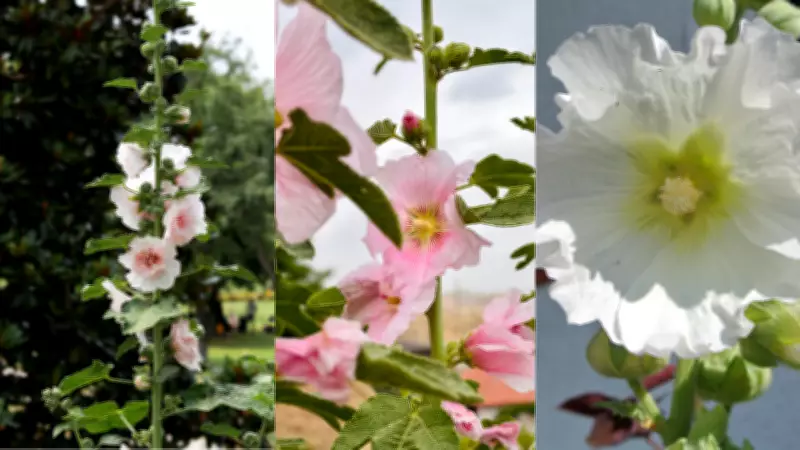
Hollyhocks (Alcea rosea) are tall plants, reaching heights of 6 to 8 feet, adding vertical interest to gardens. They come in a range of attractive colors, including pink, yellow, red, and purple. According to the RHS, hollyhocks thrive in well-draining soil under full sun, making them perfect for warm environments. They are described as short-lived perennials or biennials that are easy to grow from seed, providing blooms during summer when many other plants struggle with heat.
Adding Royal Elegance and Environmental Benefits
Hollyhocks have a long history in traditional cottage-style gardens, valued for their stature and beauty. They add depth and dimensionality, making small gardens appear fuller and more structured. Botanical literature from Kew Gardens notes that hollyhocks attract pollinators like bees, enhancing both aesthetics and environmental health. This combination of sophistication and ecological friendliness makes them a cost-effective landscaping choice, offering height, color, and charm without extensive maintenance.
By strategically placing hollyhocks and following simple steps, you can turn a quiet garden into a vibrant, colorful haven. Soon, your blooming summer wonderland might become the talk of the town, inspiring others with its beauty.