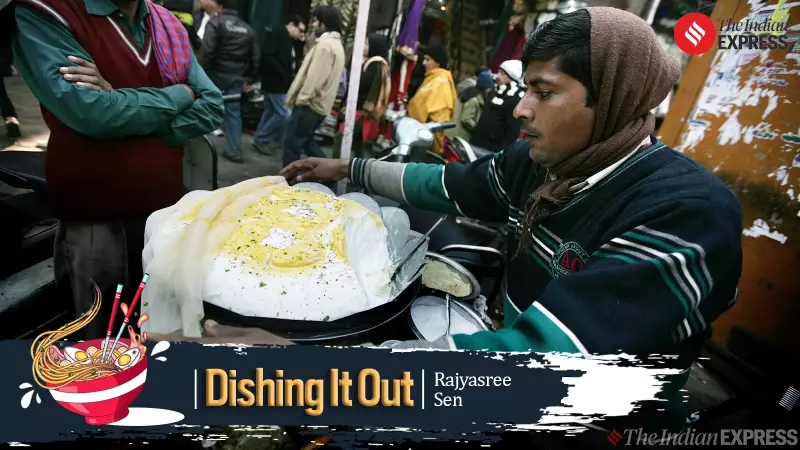
The Ephemeral Magic of Daulat Ki Chaat
Old Delhi holds many culinary secrets, but none quite as fleeting as Daulat Ki Chaat. This delicate milk froth dessert appears like winter morning mist on the streets of Purani Dilli, only to vanish before noon. Its name translates to "the savory born of wealth," though it contains neither wealth nor savory elements. This contradiction only deepens its mystique.
A Winter-Only Delicacy
Daulat Ki Chaat exists exclusively between Diwali and Holi. Vendors prepare it during cool winter nights, often under moonlight. The dessert cannot survive Delhi's summer heat. It represents a perfect marriage of season and tradition.
When I first arrived in Delhi twenty years ago, food enthusiasts spoke of this dessert with reverence equal to Old Delhi's famous biryanis and kormas. I waited eight long months through scorching summers before experiencing my first taste in November.

The Art of Preparation
Creating Daulat Ki Chaat demands patience and precision. Vendors begin each evening around seven. They add cream to full-fat milk and start the initial whisking. The mixture rests overnight in steel urns covered with muslin cloth, placed outdoors to capture winter dew.
Around four in the morning, the real work begins. Vendors sprinkle saffron into the chilled milk and begin vigorous hand-churning. They must maintain constant low temperatures, often using ice slabs beneath their vessels. The froth forms only under these specific conditions.
The process involves:
- Skimming the richest cream from milk before boiling
- Hand-whipping until intensely frothy
- Gently transferring the foam layer by layer
- Drizzling with saffron-infused milk and powdered sugar
Historical Roots and Regional Variations
Daulat Ki Chaat carries imprints of multiple culinary traditions. Some theories trace its technique to Central Asia's Kyrgyz Botai tribe, who fermented mare's milk into kumis. This practice possibly traveled along Silk Road trade routes into India.
The dessert shares connections with:
- Malayo in Varanasi
- Malai Makhan in Kanpur
- Nimish in Lucknow
Other origin stories credit Gujarati traders or Awadhi kitchens under Nawab Sadaat Ali Khan. The use of saffron, khoya, and dried fruits echoes Mughal culinary traditions. Early versions of Shahi Tukda used similar cream-collecting techniques.
The Street Experience
Finding Daulat Ki Chaat requires navigating Old Delhi's crowded lanes before sunrise. Vendors display their wares on traditional khomchas (cane stands) or carts fitted with ice slabs. Each carries a large steel urn draped in red cloth.
For serving, they spoon generous mounds of whipped foam onto pattals (dried sal leaf plates). Toppings vary by vendor but typically include:
- Condensed milk
- Saffron-infused milk
- Crushed nuts and dried fruits
- Khoya (reduced milk solids)
- Occasional rosewater drizzle
A plate costs between ₹40 and ₹60, while a kilogram sells for around ₹600. The dessert's texture resembles the lightest soufflé, with just the right touch of sweetness.
Why It Disappears
Daulat Ki Chaat cannot be packed or preserved. Its delicate froth structure collapses quickly. As temperatures rise through the morning, the milk risks turning sour. This fragility makes it a truly ephemeral experience.
Vendors typically sell out by late morning. Those unwilling to brave Old Delhi's lanes can find a modern version at Indian Accent restaurant, which recreates the dessert using nitrogen, milk, and cream. Their version comes garnished with mock five-hundred-rupee notes.
A Living Tradition
Despite commercialization pressures, Daulat Ki Chaat remains rooted in street food culture. Younger vendors now push carts with built-in ice slabs, adapting tradition to modern constraints. Yet the core preparation methods stay unchanged.
The dessert represents more than just sweet indulgence. It connects contemporary Delhi to centuries of culinary history, from Mongol travelers to Mughal courts. Each mouthful carries whispers of moonlit winter nights and ancient trade routes.

Daulat Ki Chaat proves that some treasures cannot be bought or stored. They must be experienced in their moment, under specific conditions, with all the imperfections of street food authenticity. This winter delicacy reminds us that true wealth sometimes comes in fleeting, frothy spoonfuls.