The Radiant World of Persimmons: Nature's Sweet Sunshine
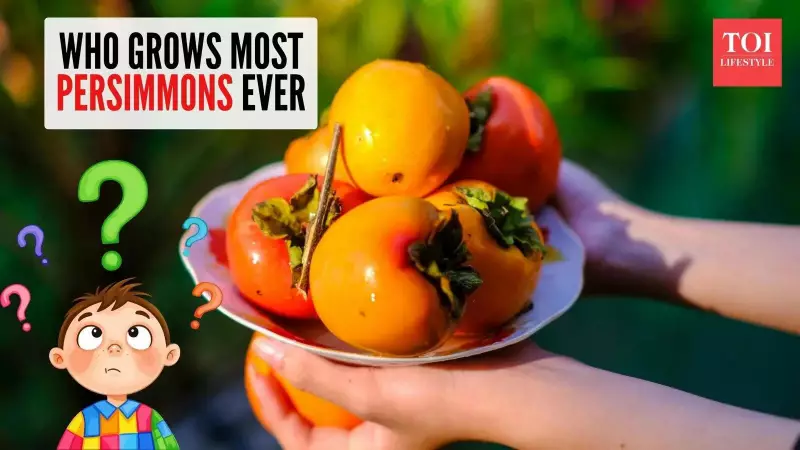
Persimmons, with their vibrant orange hue and honey-like sweetness, truly resemble little suns on a plate. These delightful fruits have recently gained attention after Bollywood actress Katrina Kaif mentioned them in an interview, sparking renewed interest in their unique characteristics. Growing on trees in warm climates, persimmons offer a soft, sugary interior encased in smooth skin that appeals to children and families alike.
Global Cultivation and Consumption Patterns
Persimmons thrive across multiple continents, finding suitable growing conditions in various parts of Asia, Europe, and the Americas. These trees prefer mild weather with abundant sunshine, producing fruits that can be enjoyed fresh, dried, or incorporated into numerous desserts including cakes and puddings. While many countries cultivate this fruit, one nation stands out as the undisputed leader in production volume.
China's Overwhelming Dominance in Persimmon Production
China emerges as the world's largest persimmon producer by an enormous margin. Annually, Chinese farms harvest more than 4 million tonnes of persimmons, representing approximately 80% of global production. This staggering output means that nearly four out of every five persimmons consumed worldwide originate from Chinese orchards.

Visualize countless persimmons rolling across hillsides and filling countless baskets across expansive agricultural landscapes—this imagery captures the sheer scale of China's persimmon harvest.
Factors Behind China's Agricultural Success
Several key elements contribute to China's remarkable persimmon production capacity. The country possesses extensive farmland where persimmon trees can flourish, combined with an ideal climate that avoids temperature extremes. The soil quality in many Chinese regions proves particularly suitable for fruit tree cultivation. Furthermore, strong domestic demand for persimmons within China encourages farmers to maintain high production levels to satisfy local markets.
Other Notable Producing Nations
While China leads overwhelmingly, other countries contribute significantly to global persimmon supplies:
- South Korea and Japan rank as secondary producers, each harvesting hundreds of thousands of tonnes annually
- Countries like Spain and Brazil maintain smaller but quality-focused harvests that supply local markets and families
- Various European and American nations cultivate persimmons on a more limited scale
Cultural Significance and Varietal Diversity
Beyond their nutritional value, persimmons hold cultural importance in many societies, featuring in traditional festivals and folklore. The fruit exhibits remarkable diversity across varieties:
- Some types remain sweet when firm and crisp
- Other varieties only develop their full sweetness when extremely soft and ripe
- Preparation methods range from fresh consumption to drying, cooking, and transformation into jams and desserts
Educational Value and Global Awareness
Understanding food origins enhances appreciation for what we consume. When enjoying a persimmon, one can now envision the lush Chinese orchards where most grow and contemplate the journey these fruits undertake from farm to table. This knowledge connects consumers to agricultural processes and global food systems in meaningful ways.
This article utilizes the most recent verified production statistics from international agricultural sources. Figures and rankings may evolve as new data becomes available regarding global fruit cultivation patterns.