Mastering the Squat: Why Returning to Basics with Advanced Variations Matters
One of the most fundamental exercises in any fitness regimen is the squat. From beginners to advanced athletes, this movement forms the cornerstone of lower body strength training. However, as fitness enthusiasts progress through their journey, they encounter numerous squat variations—front squats, back squats, sumo squats, Bulgarian squats, and more. While these variations become ingrained in muscle memory, many individuals tend to neglect them in pursuit of more complex exercises. This oversight highlights the critical importance of revisiting foundational movements to reinforce proper form and technique.
The Drop Squat: A Superior Variation for Perfect Form
Among the myriad squat variations, one particular exercise stands out for its ability to reinforce proper biomechanics more effectively than conventional squats. Known by various names—dumbbell drop squat, goblet squat, or single-dumbbell sumo squat—this variation involves holding a single dumbbell with both hands, either at chest level or allowing it to drop between the legs. This technique forces the body into the safest and most correct squatting pattern, making it an invaluable tool for anyone looking to improve their form.
Assessing Your Mobility: The First Step to Better Squats
Before incorporating weights, it's essential to evaluate your mobility. Begin by performing a deep squat without any load. Allow your hands to fall between your legs, aiming to touch the floor with your fingertips. Ensure that both the soles and heels of your feet remain flat on the surface. Maintain a straight back, avoiding any rounding. If you can achieve this position comfortably, your range of motion is excellent. If not, it indicates a need for focused mobility work to enhance your squatting capability.

How Weights Enhance Form: Insights from Fitness Experts
Interestingly, you don't need perfect squat form to start using dumbbell variations. The weights themselves serve as an extension of your arms and add load to the exercise, which can actually aid in achieving better form. According to Athlean-X creator Jeff Cavaliere, the drop squat is particularly effective. In a popular YouTube video titled How to Fix Knee Pain With Simple Exercise, which has garnered nearly four million views, Cavaliere explains, "I don't care how bad your squat form is, but just putting the dumbbell between your legs and lowering it down to the ground is going to fix how much knee flexion you need for your torso size, how much hip flexion you need for your torso size. It basically creates the biomechanically perfect squat. The hip angle is perfect, the back angle is perfect. It takes you where you need to go because the weight is going straight down."
Alternative Approaches: Goblet Squats and Bench-Assisted Variations
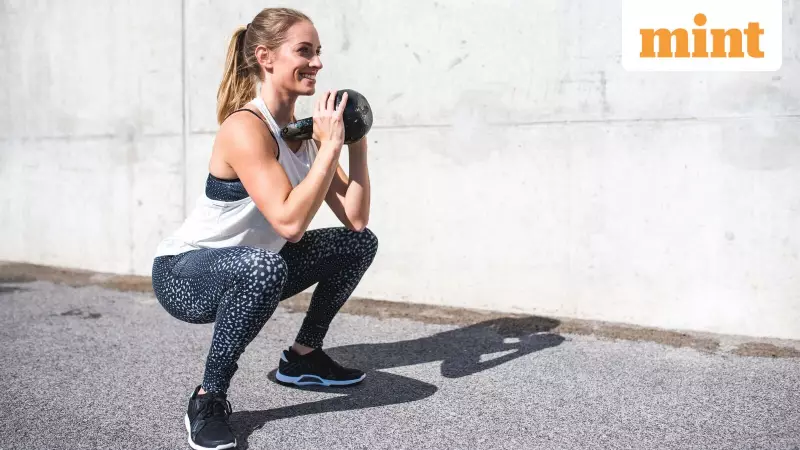
For those who prefer not to go too deep into the squatting position, the goblet squat offers similar benefits. This variation involves holding the weight at chest level. Another effective method is using a chair, bench, or box with lighter dumbbells. Position the bench behind you, hold dumbbells at your sides, and practice sitting on the bench and rising after contact. Over time, this can help you progress to more advanced variations like the drop squat with heavier weights.
Counterbalance Techniques: Making Squats Easier with Weights
Maintaining a straight back and preventing the chest from dropping toward the knees during unweighted squats can be challenging due to balance issues. A simple solution is to use a counterbalance, such as a kettlebell or dumbbell, to help keep the torso upright. This is one of those rare instances where an exercise becomes easier with weights than without. Another variation, the counterbalance squat, involves holding a weight plate or dumbbell in front of the body instead of letting it drop down. This method is ideal for individuals who feel like they are falling backward during conventional squats, as the weight engages the core and counterbalances the sensation. Tight ankles, which often contribute to this feeling, can also be addressed through this technique.

Conclusion: Embrace Weights for Optimal Squat Form
Whether you struggle with a collapsing chest or unstable ankles during squats, remember that weights are not necessarily your adversary. In fact, they can be the key to unlocking your best form. By incorporating variations like the drop squat and counterbalance techniques into your routine, you can correct common mistakes, enhance mobility, and achieve biomechanically perfect squats. So, the next time you hit the gym, consider revisiting these foundational movements with a new perspective—your body will thank you for it.