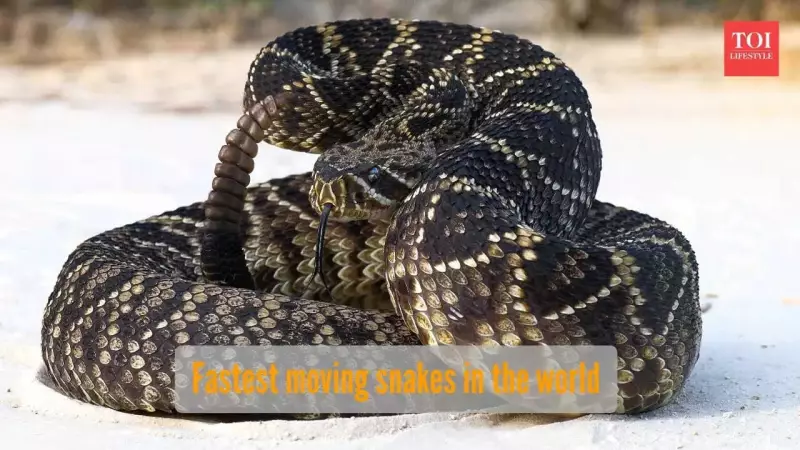
When we think of speed in the animal kingdom, snakes might not be the first creatures that come to mind. However, these legless reptiles can achieve remarkable velocities that would surprise most people. Their flexible bodies and unique movement patterns allow them to chase prey, escape predators, and navigate challenging terrains with astonishing agility.
The Need for Speed: Why Snakes Move Fast
Snakes have evolved various locomotion methods that enable them to reach impressive speeds despite lacking limbs. From desert environments to dense forests, different species have adapted movement techniques that maximize their efficiency in their specific habitats. Speed becomes crucial for hunting, escaping danger, and surviving in competitive ecosystems.
The World's Fastest Snakes: Top 5 Ranking
Sidewinder: The Desert Speedster
The sidewinder rattlesnake holds the title as the fastest snake globally, capable of reaching speeds up to 18 miles per hour (29 km/h). Native to the sandy deserts of southwestern United States and Mexico, this remarkable reptile employs a unique sideways motion that lifts parts of its body off the hot sand. This specialized movement not only reduces heat exposure but also provides exceptional traction on loose surfaces, making it incredibly efficient for desert travel.

Black Mamba: Africa's Lightning Strike
Feared throughout sub-Saharan Africa, the black mamba can achieve speeds up to 19 km/h. Its long, slender body and lateral undulation technique allow it to glide smoothly through brush and open terrain. Beyond its impressive speed, this snake possesses potent neurotoxic venom and is known for its aggressive defense when threatened, making it one of Africa's most dangerous reptiles.
Eastern Brown Snake: Australia's Agile Hunter
Australia's eastern brown snake combines incredible speed with highly toxic venom, reaching velocities around 19 km/h. This slender predator uses its agility to efficiently hunt lizards and small mammals. Its quick bursts of movement and formidable striking speed make it one of the most dangerous snakes in Australia and among the fastest striking snakes worldwide.
King Cobra: The Long and Swift
As the world's longest venomous snake, the king cobra can move at speeds up to 19 km/h. Found in forests, bamboo thickets, and farmland across Southeast Asia and India, adults can grow up to 18 feet long. When threatened, it displays its characteristic hood and can detect movement from an impressive 330 feet away. This speed assists in both escaping danger and capturing prey, including other snakes, lizards, and small mammals.
Cottonmouth Viper: Wetland Warrior
The cottonmouth viper, native to the southeastern United States, can strike at speeds up to 11.2 km/h. Inhabiting swampy and wetland areas, this semi-aquatic snake relies on quick, precise strikes to capture amphibians and small mammals. Also known as water moccasins, these snakes display a distinctive white mouth lining when threatened and use heat-sensing pits to detect warm-blooded prey even in low-light conditions.
Understanding Snake Movement and Speed
Different snake species have evolved various locomotion methods suited to their environments. Desert dwellers like the sidewinder use specialized techniques to navigate loose sand, while forest species like the king cobra rely on smooth gliding motions. The fastest snakes typically share characteristics like long, slim bodies and energy-efficient movement patterns that allow them to achieve high speeds without legs.
These incredible reptiles demonstrate that speed comes in many forms in nature, and snakes have mastered movement techniques that make them successful predators and survivors in their respective habitats across the globe.