From Torches of Freedom to Iranian Protests: The Complex History of Women and Cigarettes
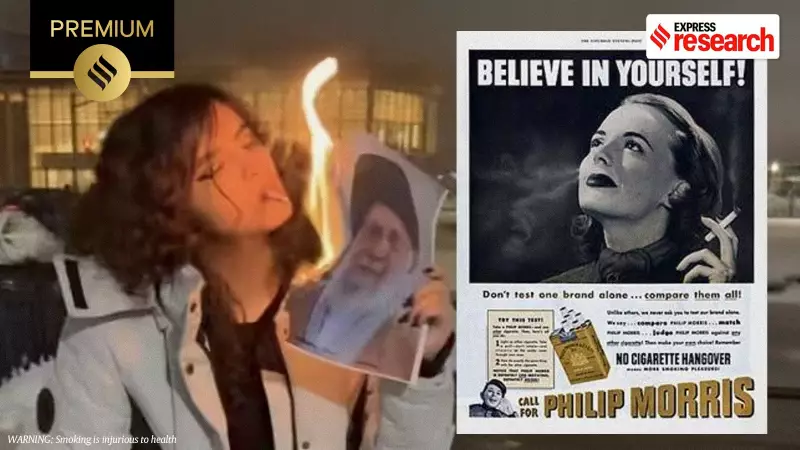
In the smoke-filled protests of Iran, a powerful image has captured global attention. Young women light their cigarettes from burning portraits of Supreme Leader Ayatollah Ali Khamenei. This act of defiance connects directly to the "Woman, Life, Freedom" movement that emerged after Mahsa Amini's tragic death in 2022.
These viral photographs reveal a deeper story. They represent the latest chapter in a century-long struggle where cigarettes have repeatedly symbolized female autonomy. What began as a corporate marketing ploy has evolved into a potent tool of political resistance.
Early Backlash and Social Stigma
Long before cigarettes represented freedom, women who smoked faced severe social consequences. In early 20th-century America, a woman smoking in public could face official warnings or social ruin. Newspapers published editorials claiming no man would marry a smoking woman. Some politicians even blamed women's smoking for causing men to abandon their families.

The backlash was intense because smoking represented a threat to traditional gender roles. As social historian Rosemary Elliot notes in her research, smoking functioned as "a visible delineator of gendered social space." Magazines openly debated whether women should smoke at all, revealing how unsettled this issue remained in society.
The Corporate Reinvention
The First World War brought significant changes. Women entered workplaces where men smoked openly, making the habit harder to confine to private spaces. The suffrage movement further highlighted gender inequalities. Smoking gradually became a visible sign of defiance against restrictive norms.
Corporate advertisers saw an opportunity. They needed to transform smoking from a moral threat into an acceptable feminine practice. In 1929, public relations pioneer Edward Bernays staged a memorable stunt. He hired debutantes to march in New York's Easter Parade holding cigarettes aloft, calling them "Torches of Freedom." This cleverly connected smoking imagery with suffragette symbolism.
Manufacturers developed specific strategies to appeal to women:
- They created slimmer cigarettes
- They used slogans like "Mild as May"
- They promised weight control benefits
- They associated smoking with elegance and modernity
By 1968, Virginia Slims launched with its famous tagline: "You've come a long way, baby." Smoking became a performance of femininity, with women learning specific gestures like how to hold cigarettes and exhale smoke in particular ways.
The Paradox of Marketed Liberation
This marketed liberation concealed a troubling reality. While smoking felt empowering for some women, it also brought stigma and anxiety about respectability. Male smokers rarely faced similar burdens. When health risks became clearer in the mid-20th century, another divergence emerged. Men quit smoking earlier and in greater numbers than women.
Smoking rates became highest among women facing significant constraints: lone mothers, working-class women, and those experiencing structural precarity. As feminist scholars have noted, cigarettes often functioned less as expressions of freedom than as mechanisms for managing anger, exhaustion, and constrained lives.
Global data reveals enduring inequalities. In India, recent surveys show significant gender gaps in tobacco use. Rural residents are more likely to smoke than urban residents. Age and gender significantly impact smoking patterns, with awareness of health risks influencing behavior.
Cinematic Stereotypes and Social Impact
Popular culture absorbed the smoking woman as a visual shorthand. In both Hollywood and Bollywood, female characters who smoke often signal modernity, rebellion, or moral decay. Hindi cinema frequently portrays smoking women as chaotic or in need of correction, while male smokers appear macho or intellectual.
This representation has real consequences. Studies show that Indian adolescents with high exposure to tobacco use in Bollywood films are significantly more likely to use tobacco themselves. The cinematic cliché reinforces social attitudes while potentially influencing behavior.

Reclaiming the Flame in Modern Protests
Against this complex history, the Iranian protest images gain deeper meaning. In a theocracy that strictly controls women's bodies and behaviors, public smoking by women becomes inherently transgressive. Burning the Supreme Leader's image constitutes a serious crime. Combining these acts creates a powerful statement that fuses political sacrilege with personal autonomy.
This visual grammar of protest has appeared in other contexts too. In India, Dalit rights activist Priya Das lit a cigarette from a burning Manusmriti, a text criticized for upholding caste and gender hierarchies. She clarified she doesn't smoke, emphasizing the act's symbolic nature meant to burn "ideas of hypocrisy."
The "torch of freedom" has completed a remarkable journey. It has transformed from a corporate public relations stunt to a literal flame taken from icons of oppression. In Iran today, the cigarette is no longer just a marketed prop or cinematic cliché. Despite its fraught history, it has been reclaimed as a tangible spark of rebellion against authoritarian control.
This evolution highlights how symbols can change meaning across time and contexts. What began as a tool for corporate profit has become, in certain moments, an instrument of political resistance. The cigarette's journey from marketed liberation to genuine rebellion reveals the complex relationship between gender, commerce, and political expression across the past century.