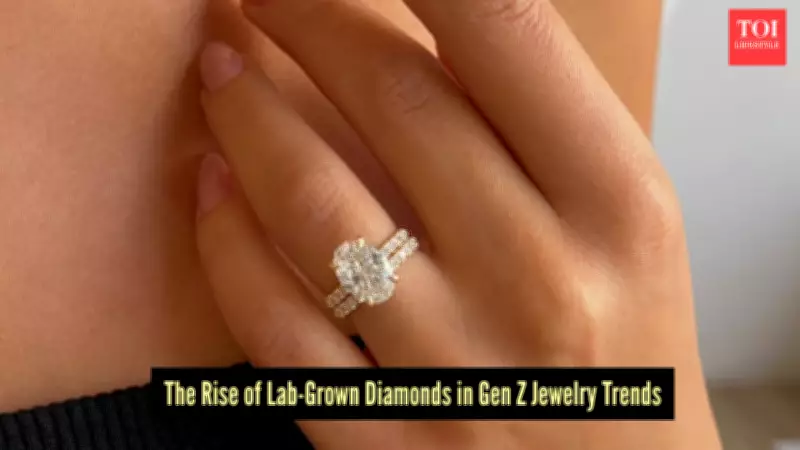
The idea of spending a small fortune on a single piece of jewelry no longer appeals to many. For decades, mined diamonds symbolized status and rarity. However, a significant shift is underway, particularly among those born after 1996. Generation Z is redefining luxury by prioritizing transparency, value, and ethical considerations. Lab-grown diamonds (LGDs) have emerged as a popular choice, transforming from a niche alternative to a mainstream standard. This article explores the reasons behind this trend.
More Carats, Less Compromise
Price is a major factor. Young professionals seek high-end aesthetics without sacrificing financial goals like rent, investments, or travel. Lab-grown diamonds bypass the complex mining supply chain, costing significantly less than mined stones. A 1-carat natural diamond typically ranges from ₹2,00,000 to ₹5,00,000, depending on clarity and cut. In contrast, a certified 1-carat lab-grown diamond costs between ₹35,000 and ₹1,00,000. For a 2-carat LGD, prices range from ₹90,000 to ₹1,50,000, while a natural diamond of that size would cost ₹6,00,000 to ₹15,00,000. For Gen Z, the value proposition is clear: a larger stone for the same budget.
The Clean Conscience Flex
Ethics play a crucial role. While older generations may value a diamond's geological history, younger buyers prioritize ethical sourcing. Lab-grown diamonds are created using advanced technologies like Chemical Vapor Deposition (CVD) or High Pressure High Temperature (HPHT). They are optically, chemically, and physically identical to mined diamonds, scoring 10 on the Mohs hardness scale. However, they come without the environmental damage or conflict concerns associated with mining. For a generation that champions conscious consumerism, this clean origin is a decisive factor.

Breaking the Safe-Deposit Box Habit
Styling trends have also evolved. With the cost savings from LGDs, Gen Z treats fine jewelry as everyday accessories rather than heirlooms locked away. They seek pieces that transition from casual coffee runs to evening events. Experimentation is common, with bold, chunky, gender-neutral rings and intricate ear stacks gaining popularity. Traditional round brilliant cuts are giving way to elongated shapes like ovals, pears, emerald cuts, and vintage-inspired old mine cuts.
The Final Word
Natural diamonds are not obsolete. For long-term investment with resale value, mined diamonds remain superior. However, for a generation that views jewelry as an expression of personal style and values, lab-grown diamonds offer the same physical perfection without the inflated price. This logic is hard to dispute.