The Subtle Shift in Men's Fashion: A Journey from Victorian Rigidity to Modern Relaxation
Men's fashion is currently experiencing a nuanced transformation, with surprising origins tracing back to the strict dressing codes of the late 19th century. Long before the dominance of fast fashion and social media trends, a man's wardrobe served as a powerful indicator of his social status and personal identity.
The Victorian Foundation: Conformity as Social Order
Consider Victorian London, where everyday style was meticulously defined by formal garments like the stiff frock coat. This was not merely clothing; it functioned as a wearable institution enforcing rigid visual order. The frock coat effectively locked men into the strict confines of their social strata, demanding total conformity and leaving minimal room for personal individuality or creative expression.
The Rural Rebellion: Utilitarian Garments Enter Urban Society
This oppressive uniformity eventually sparked a subtle rebellion when practical, rural garments unexpectedly crossed over into urban environments. The stark city streets witnessed the arrival of items like the Inverness cape and the Scottish deerstalker hat—pieces originally designed for rugged countryside use. This transition was neither accidental nor a simple aesthetic change.

Choosing to wear these rustic garments in polite society represented a brilliant, subtle rejection of Victorian conventions. It broadcast a radical new idea: that a man's identity, intellect, and raw personality could dictate his appearance more powerfully than his inherited social standing.
The Visual Legacy of Sherlock Holmes: Defiance Through Practicality
No figure, real or fictional, embodied this quiet defiance more effectively than Sherlock Holmes. While author Arthur Conan Doyle gifted the iconic detective with his formidable intellect, it was illustrator Sidney Paget who forged his enduring visual legacy. Paget understood that a man who thought beyond normal human logic could not dress like a compliant Victorian banker.
He created for Holmes a silhouette that was profoundly practical, heavily layered, and wonderfully unconventional. In doing so, Paget drafted a stylistic blueprint for menswear that has survived for over a century, influencing generations of fashion enthusiasts.
Young Sherlock and the "Undone" Aesthetic: Modern Interpretations
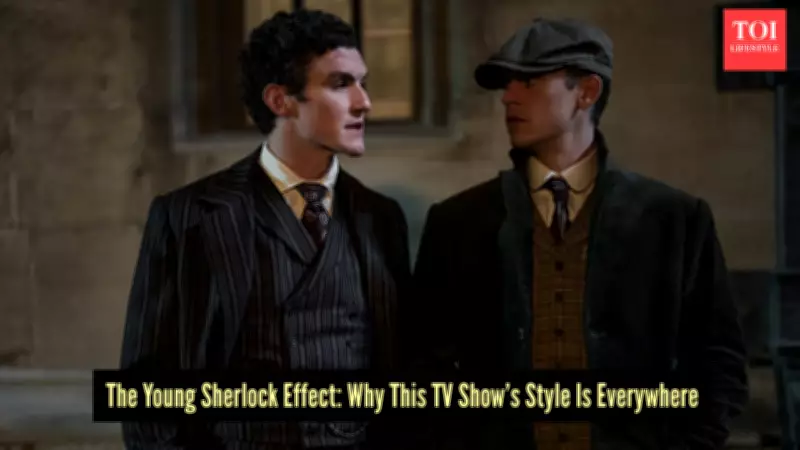
This exact legacy is being resurrected and remixed in the Prime Video series Young Sherlock. Helmed by director Guy Ritchie and starring Hero Fiennes Tiffin, the show makes a brilliant stylistic choice by refusing to present Holmes as a finished, polished product. Set against the brooding gothic architecture of Oxford, the series uses clothing as a literal extension of a brilliant mind still forming.
The wardrobe completely rejects the rigid tailoring of the era in favor of an intriguingly "undone" aesthetic. This includes:
- Softer forms and outerwear that drapes rather than structures
- Collars left casually unfastened
- Garments stacked to create a lived-in reality
This relaxed approach is highly considered, projecting intellectual substance over superficial display while maintaining architectural form.
Adapting the Look Today: Practical Translation to Modern Streetwear
What makes this rugged, slightly unkempt aesthetic resonate so powerfully today is its easy translation to modern streetwear. Adopting the look requires no theatricality or cosplay, just deliberate shifts in daily wardrobe choices:
- Swap stiff blazers for textured wool jackets with tactile richness
- Build visual dimension by layering waistcoats over rumpled shirts
- Ground your wardrobe in muted, earthy tones rather than loud colors
The goal is to allow outfits to relax without losing underlying structure—a concept that translates effortlessly into winter wardrobes globally.
Dark Academia and the Return to Craft: Parallel Cultural Movements
We have witnessed screen-led fashion power before, notably when Benedict Cumberbatch's sweeping coat in Sherlock sparked massive global demand. Currently, this momentum runs parallel to the sudden obsession with "dark academia"—an aesthetic steeped in nostalgia, intellect, and heavy, textured garments.

This global mood seamlessly connects with a larger cultural pivot unfolding in India, where there's a serious return to authentic craftsmanship. Indian menswear is experiencing significant resurgence in heritage craftsmanship, with growing interest in:
- Clothes that feel substantial when worn
- Heavy weaves and raw handwoven textiles
- Tailoring that values generational longevity over temporary trends
Designers like Sabyasachi Mukherjee champion this cultural pivot, pulling traditional heritage details into modern closets where looks feel both aspirational and accessible.
The Power of Authentic Dressing: Clothing as Meaningful Expression
Ultimately, the enduring appeal of Holmes's look stems from clothing never being treated as mere ornamentation. His layered, exact, and slightly unorthodox outfits were highly functional tools reflecting his unique engagement with the world.
As the fashion industry pivots away from overt branding and disposable fast fashion, consumers increasingly seek pieces with genuine meaning. There is growing demand for clothing that suggests continuity, character, and deliberate intent. Sherlock Holmes's style endures as a timeless reminder: true, distinctive style never needs to shout to prove its authenticity.