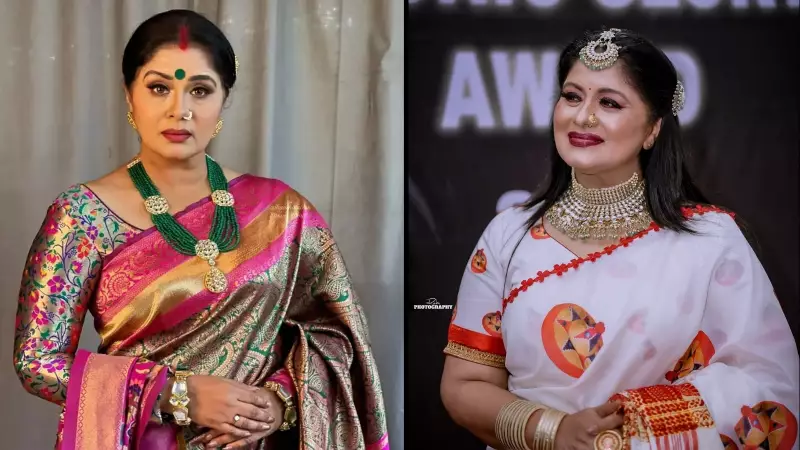
Classical dancer and actor Sudhaa Chandran recently shared her profound love for makeup in a candid interview. She made a striking statement about her relationship with cosmetics, capturing the attention of many.
Sudhaa Chandran's Emotional Bond with Makeup
During her conversation with Bollywood Bubble Telly, Chandran expressed a heartfelt wish. She said, "Marte dum tak makeup mere chehre pe rahe... Agar bhagwan ne chaha to makeup ke saath main is duniya se uthu... wo maut har kisi ko naseeb nahi hota." This translates to her desire to wear makeup until her last breath, viewing it as a beautiful way to depart from the world.
Chandran, who currently stars in the Hindi TV show Noyontara, explained her perspective. She believes that leaving the world with her makeup and ghungroos on would honor her life and the stage that shaped her journey. Her words reflect a deep emotional connection to her artistry and identity.

Why Do People Feel Strongly About Makeup?
Chandran is not alone in her attachment to makeup. Many individuals share similar feelings, and psychologists have insights into this phenomenon. Ria Talwar, a Counselling Psychologist at Samarpan Recovery and Rehabilitation Centre, sheds light on the reasons.
Talwar explains that strong attachments to makeup often develop through cultural exposure, social environment, and personal identity. She says, "For many, makeup is a powerful form of self-expression. It allows people to shape how they present themselves and gives them a sense of control over their appearance."
Over time, makeup becomes less about looking good and more about who they are as individuals. It transforms into a part of their identity.
The Psychological Benefits of Makeup
Dr Pragya Rashmi, a Consultant Psychologist at Yashoda Hospitals in Hyderabad, adds to this discussion. She notes that the act of applying makeup can stimulate feel-good responses in the brain. This makes the process calming and pleasurable for many people.
Dr Rashmi explains, "The act of applying cosmetics, touching the face, choosing colours, and shaping features can become a self-care ritual. It lifts mood and provides comfort." Makeup can also act as emotional armour or a grounding ritual, helping individuals regulate emotions and reduce anxiety.
For those with perfectionist tendencies, makeup offers precision and control. For others, it serves as a form of camouflage, boosting confidence in social settings. Compliments and social approval further reinforce this confidence, creating a positive feedback loop.
Makeup as a Symbol of Identity and Dignity
Chandran's wish to die in makeup might seem unusual to some, but psychologists interpret it symbolically. Talwar clarifies that such a desire reflects dignity, identity, and agency. It represents a way to preserve a sense of self and continuity even at life's end.
Dr Rashmi agrees, adding that this sentiment is tied to cultural scripts around honor and preparation. It can be seen as a final act of self-expression, a statement of how one wishes to be remembered.
Experts caution that makeup's psychological power is healthiest when it is a choice. Distress at the thought of being seen without it may indicate over-reliance, anxiety, or internalized social pressure. In Chandran's case, her words reflect identity, strength, and dignity rather than obsession.
Conclusion: Makeup Beyond Beauty
Sudhaa Chandran's passion for makeup highlights its deeper significance. For many, it is not just about enhancing appearance. Makeup represents confidence, ritual, creativity, and even legacy. It serves as a tool for self-expression and emotional well-being.
As psychologists note, makeup fulfills several psychological needs. It boosts self-esteem, provides a sense of control, and helps individuals navigate social interactions. Chandran's story reminds us that personal choices, like wearing makeup, can hold profound meaning and contribute to one's sense of self.