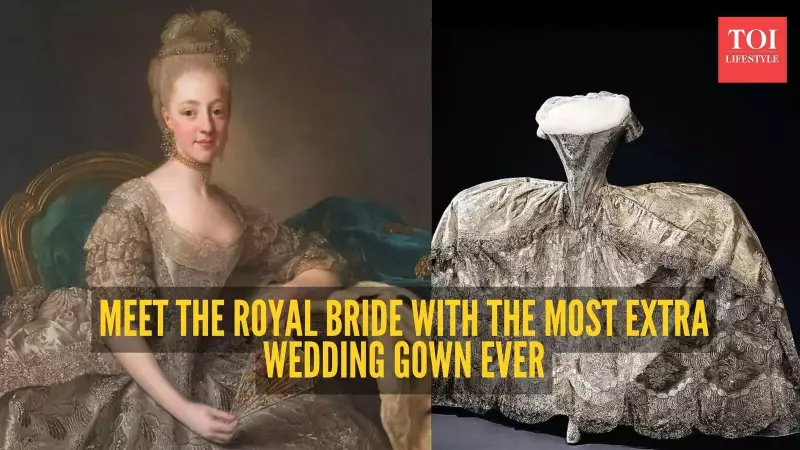
For decades, the image of Princess Diana stepping out of her carriage in a cloud of ivory silk taffeta and a 25-foot train has defined royal bridal fantasy. Yet, according to a fascinating deep dive by fashion historian Mae Sharifi, a far more opulent and historically loaded gown from 1774 claims the ultimate crown for over-the-top bridal fashion.
The Modern Icons: From Diana to Priyanka
Princess Diana's 1981 dress, with its antique lace and dramatic train, set a benchmark for unforgettable wedding moments. In recent years, other famous brides have created their own style landmarks. Kate Middleton's elegant Alexander McQueen design, Kim Kardashian's minimalist Balenciaga moment, and Priyanka Chopra's grand Ralph Lauren ensemble are all celebrated as iconic. However, a creator specializing in fashion history argues these modern masterpieces are outshone by a quarter-millennium-old spectacle.
The 1774 Contender: Silver, Diamonds, and a Shocking Truth
In a social media post from December 13, Mae Sharifi spotlighted the wedding dress of Edwidge Elisabeth Charlotte Holstein-Gottorp, who became Queen Charlotta of Sweden. Her 1774 gown, crafted for her marriage to cousin Charles, Duke of Södermanland, was an exercise in unparalleled royal excess.

Inspired directly by the extravagance of Marie Antoinette, the dress was constructed from shimmering silver fabric lavishly covered in diamond embroidery. It featured the era's signature oversized panniers, a tightly structured bodice, and layers of heavy, sparkling material. The goal was not subtlety but a breathtaking display of wealth and status.
This sartorial marvel, however, carries a darker historical footnote. As noted by accounts like Defunct Fashion, the gown's impossibly tiny waist underscores a harsh reality: Charlotta was merely 14 years old when she wore it down the aisle. The dress symbolizes not just beauty, but the political alliances and pressures within Europe's ruling families of the time.
Fashion as Power: A Legacy Preserved at Versailles
The gown's significance extends beyond its initial spectacle. A 2009 report by The Guardian mentioned its display at a Versailles exhibition, cementing its status as a key artifact of European royal history. It served as a potent tool, communicating power, rank, and dynastic ambition long before the age of viral social media moments.
While today's brides seek couture labels and Instagram fame, Queen Charlotta's silver wedding dress proves that the pursuit of a jaw-dropping bridal statement is not a modern invention. It existed centuries ago, woven with threads of silver, diamonds, and complex historical narratives. Sometimes, as this comparison reveals, history truly does manage to outshine even the most legendary present.