Fashion Meets Politics in NYC Victory Celebration
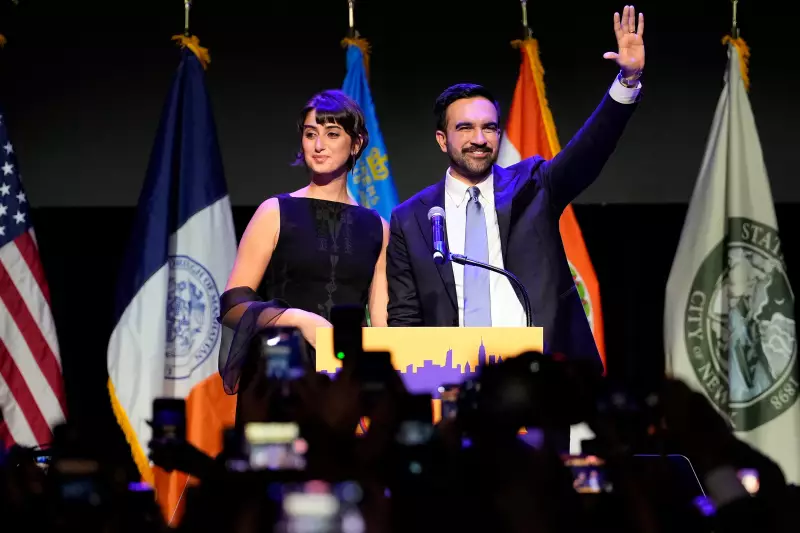
When Zohran Mamdani celebrated his historic victory in the New York City mayoral election on November 8, 2025, the political world witnessed more than just another election win. While the young socialist city council member basked in his hard-fought triumph, his partner Rama Duwaji made an equally powerful statement through her carefully chosen attire that captured global attention.
Duwaji stood beside the newly elected mayor wearing a black, laser-etched tatreez-embroidered top created by Palestinian designer Zeid Hijazi, paired elegantly with a velvet lace skirt by Ulla Johnson. This was no ordinary fashion choice for a political victory night—it was a deliberate act of cultural expression and solidarity that resonated far beyond the celebration venue.
The Deeper Meaning Behind the Tatreez Tradition
Tatreez represents much more than decorative embroidery in Palestinian culture. This centuries-old tradition serves as a living archive of resistance, a stitched language encoding stories of homeland, memory, and identity. Each pattern and motif carries historical significance, preserving cultural narratives that have survived generations of displacement and struggle.

By choosing this particular garment, Duwaji transformed her appearance into a platform for storytelling. She wasn't merely dressing for an important political event; she was wearing a narrative of loss, resilience, and cultural belonging that connected her personal heritage to broader global struggles for recognition and justice.
The timing of this fashion statement proved particularly significant. At a moment when global politics remains deeply fractured around issues of identity and geography, and when Palestine has become symbolic of both erasure and resistance, Duwaji's outfit demonstrated that political expression extends beyond speeches and voting booths.
Viral Impact and Symbolic Resonance
The image of Duwaji and Mamdani quickly went viral across social media platforms, capturing international attention. What made the photograph so compelling wasn't just the stylish ensemble but the rich symbolism it conveyed. In a political landscape often dominated by loud rhetoric and performative activism, their moment offered something different: visual poetry with profound cultural and political undertones.
The black ensemble, featuring both laser-etched modern techniques and traditional hand-embroidery, represented a sophisticated blend of contemporary fashion and cultural preservation. It stood as a testament to cultural pride and collective grief, while simultaneously asserting the refusal of marginalized communities to remain invisible in political spaces.
This fashion moment challenged conventional notions of political expression. In an age where algorithmic attention often flattens meaning into memes, Duwaji's choice reminded observers that aesthetics can still serve subversive purposes. Her outfit didn't seek applause but demanded awareness, inviting viewers to look deeper and understand the craftsmanship, history, and politics embedded in every stitch.
Two Forms of Political Expression
The context of Mamdani's political rise adds another layer of significance to Duwaji's fashion statement. Mamdani, born to Ugandan-Indian parents, represents a new generation of progressive politicians unafraid to challenge systemic inequalities, from housing injustice to climate crises. His campaign focused on demanding structural change through policy and governance.
Duwaji's fashion choice mirrored this same courage but expressed it through different means. Where Mamdani's political work demanded institutional transformation, Duwaji's attire called for emotional and cultural recognition. Both approaches constituted political acts—one operating through policy channels, the other through personal presence and cultural representation.
What made this moment particularly compelling was its organic authenticity. There were no press releases, no stylist statements, no carefully curated activism campaigns. Instead, a woman of Arab heritage dressed with intentionality, standing in solidarity with a people whose identity remains continuously contested in global discourse.

Redefining Representation Through Fashion
Duwaji's ensemble offered a powerful lesson about the true meaning of representation in contemporary society. For too long, diversity in fashion has been limited to superficial inclusion—more faces of different colors in advertising campaigns, without deeper engagement with the cultures being represented.
What Duwaji demonstrated was representation as inheritance and cultural carrying-forward. True representation isn't merely about appearance; it's about bearing the responsibility of preserving and amplifying crafts, cultures, and causes that might otherwise be forgotten or marginalized.
This explains why her look resonated so deeply with global audiences. It wasn't about designer prestige or extravagant cost; it was about purpose and meaning. In a moment of personal and political celebration, she found a way to make visibility meaningful, creating bridges between continents, histories, and interconnected struggles.
The tatreez embroidery pattern she wore represents a language of survival passed down through generations of Palestinian women. Each motif tells stories of destroyed villages, displaced families, and hope preserved through artistic tradition. By wearing this heritage on an American political stage, Duwaji amplified these narratives in spaces that rarely acknowledge them.
In a world where politics often feels abstract and distant from daily life, Duwaji's fashion choice brought political consciousness down to the tangible level of fabric, texture, and personal adornment. She demonstrated that solidarity can be worn, that resistance can manifest through soft materials, and that sometimes the most powerful statements are those stitched in silence rather than shouted through megaphones.
After the celebrations concluded and the speeches faded from memory, the enduring image remained: the black ensemble, the intricate tatreez patterns, the quiet confidence of someone who understood exactly what message she was conveying without uttering a single word. Ultimately, both fashion and politics concern visibility, and through her thoughtful sartorial choice, Duwaji ensured that in celebrating victory, the world also remembered what still needs recognition and justice.