Kangana Ranaut's Jamdani Saree Creates Political Fashion Moment in Bengal
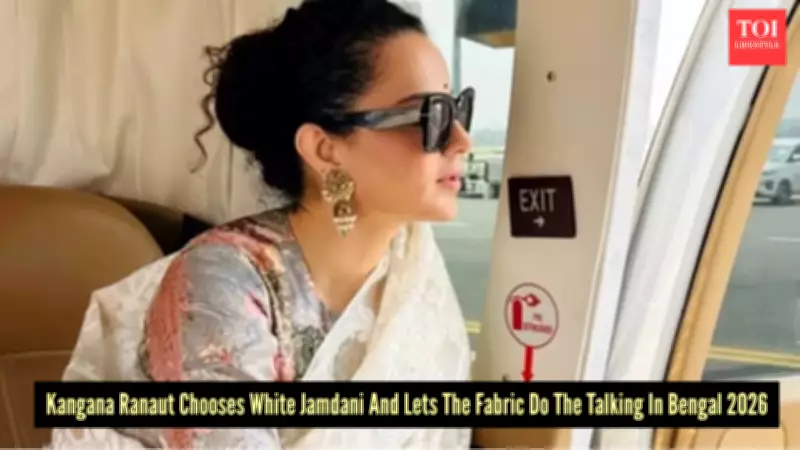
As West Bengal's 2026 election landscape heats up with intense political campaigning, actor-turned-politician Kangana Ranaut has captured attention not just with her political presence but with a carefully crafted fashion statement. During her campaign activities, Ranaut appeared wearing a pristine white Jamdani saree, creating a visual narrative that blends tradition with contemporary political image-making.
The Cultural Significance of Jamdani Textiles
Jamdani textiles hold deep cultural roots in Bengal's heritage, making Ranaut's choice far from incidental. The traditional patterned sheer cotton fabric, originally crafted around Dhaka in Bangladesh and known as 'Dhakai Jamdani', represents centuries of weaving tradition. UNESCO recognizes jamdani as an Intangible Cultural Heritage, celebrated for its intricate designs, soft muted shades, and exceptional breathability.
Ranaut specifically selected a white traditional Jamdani drape from Yarn Story, a South Kolkata brand renowned for its handloom creations. The saree featured delicate floral embroidery with traditional motifs inspired by West Bengal, with the pallu neatly pleated on her shoulders.

Complete Ensemble and Styling Details
The political figure paired her Jamdani saree with a multi-coloured silk blouse featuring brocade work, a round neckline, tailored fit, floral detailing, and half-length sleeves. Her styling remained deliberately simple yet impactful, with oxidised silver jhumkas and a statement ring as her only jewelry pieces.
Ranaut completed her look with a messy bun hairstyle and minimal makeup, focusing on glossy pink lips and lightly blushed cheeks. She added traditional elements including a bindi while incorporating modern accessories like broad-framed sunglasses, creating a blend of regional identity with contemporary aesthetics.
Political Symbolism Through Fashion Choices
In the politically charged atmosphere of West Bengal's upcoming elections, where visual optics carry significant weight, Ranaut's fashion selection conveyed multiple layers of meaning. The white colour projected purity and accessibility, while the choice of Jamdani textile demonstrated cultural connection and respect for local traditions.
This carefully curated appearance transcended mere fashion, becoming a form of political communication that redefined power dressing within regional contexts. The ensemble surprised many observers and generated substantial discussion among both political commentators and fashion enthusiasts, highlighting how clothing choices can serve as strategic tools in political campaigning.
Ranaut's Jamdani moment represents how contemporary politicians are increasingly using cultural symbols and traditional attire to connect with voters, establish regional credibility, and craft distinctive public personas during election seasons.