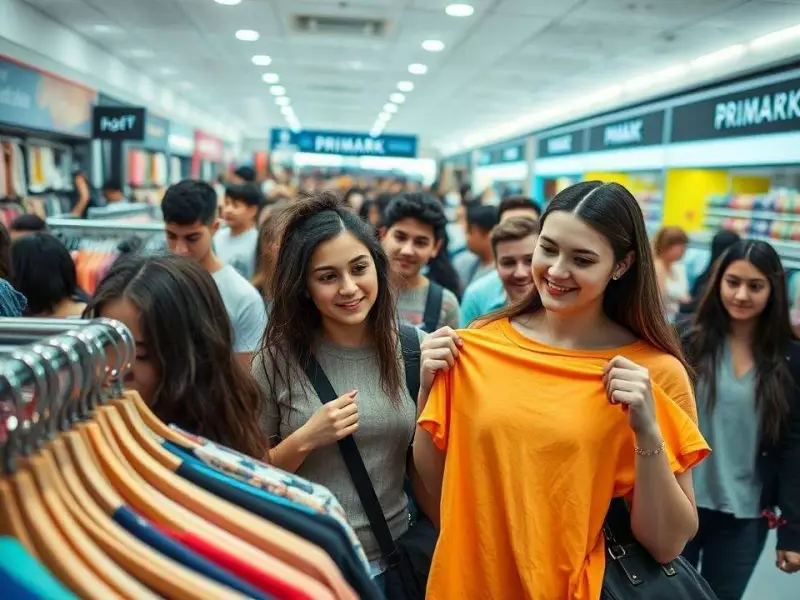
India's Western Fashion Market Shows Mixed Results After Pandemic Boom
India's western fashion market is experiencing a clear split in performance following the strong post-pandemic surge. Global brands are navigating a landscape where some struggle with weak demand while others continue to expand their presence.
Brand Performance Highlights a Growing Divide
Major international labels are reporting sharply different outcomes. Marks & Spencer, Benetton, and Adidas are all facing softer sales figures. In contrast, Uniqlo and Nike are actively growing their footprint across the country.
Zara's growth has essentially stalled, showing flat performance. The Apparel Group, which operates Aldo and Charles & Keith stores in India, has also seen its sales growth slow down significantly.

Retail experts believe this uneven pattern points to something deeper than a temporary demand dip. They suggest a fundamental structural shift is underway in India's fashion and lifestyle sector.
Consumer Preferences Shift Toward Functionality
Devangshu Dutta, founder of retail consultancy Third Eyesight, provides crucial insight. He notes that Indian consumers are increasingly moving toward more functional clothing options.
"Trend-led brands still exist, but they are becoming smaller," Dutta explains. "Some labels are finding it difficult to set or follow trends effectively in this new environment."
He emphasizes the role of younger shoppers. "This is especially true for Gen Z, which stays closely tuned to global trends and acts as the primary driver of fashion adoption," Dutta states. "While older consumers may have greater spending power in absolute terms, it is younger shoppers who shape trends and influence product sales."
Financial Year Results Reveal Clear Patterns
Growth slowed across most major retailers during FY24. High inflation and stagnant incomes reduced discretionary spending power among consumers. This trend continued into FY25 for many brands, though some posted strong recoveries.
Nike India reported a 14% rise in sales for FY25, a significant improvement from the 4% growth seen in the previous year.
Uniqlo experienced an even sharper acceleration. Its growth picked up to 45% in FY25 from 31% in FY24. The company noted that sales improved particularly after the festive season.
Lifestyle, India's largest department store chain, grew 5% in the last fiscal year. This represents a recovery from a 4% decline recorded in FY24.
Uniqlo's Success Story in the Indian Market
Uniqlo attributes its strong performance to several key factors. The company cites steady momentum driven by positive customer response, ongoing store expansion, rising brand awareness, and a boost in ecommerce sales.
Kenji Inoue, chief financial officer and chief operating officer of Uniqlo India, shared his perspective. "India is now among Uniqlo's fastest-growing markets in Asia," Inoue stated. "It plays a meaningful role in the region's overall business."
He highlighted specific advantages of the Indian market. "The country's young demographic, growing focus on quality, and increasing appreciation for functional everyday clothing have all contributed to this progress."
Organized Retail Shows Selective Recovery
According to the Retailers Association of India, organized retail segments recorded single-digit growth last fiscal year. These segments include apparel, footwear, beauty, and quick service restaurants.
However, sales picked up momentum after the festive season. Double-digit growth returned during this period, indicating some recovery in consumer spending.
Kumar Rajagopalan, chief executive at the Retailers Association of India, offered analysis. "Demand has improved, but it isn't broad-based," Rajagopalan observed. "With more fashion options available, Indian consumers are becoming more selective."
He explained where growth is coming from. "Growth is coming to brands that offer a strong value proposition. These are not necessarily the cheapest products, but those where prices are justified by innovation, design and quality."
Company Results Illustrate the Market Divide
Recent financial reports clearly demonstrate the market's split personality.

- Apparel Group's sales rose 25% in FY25. This was slower than the 37% growth seen a year earlier.
- Inditex Trent, which runs Zara in India, reported flat sales after growing 8% in FY24.
- Adidas saw its revenue growth slow to 5% from 20% in the previous year.
- Sales at Marks & Spencer fell by 12%, while Benetton declined by 3%.
India Remains an Attractive but Challenging Market
India continues to draw international fashion brands due to its large population and growing adoption of western-style clothing among young consumers. The market's potential remains substantial.
However, most global and premium brands face increasing competition. They are vying for a limited share of demand that remains concentrated in major metropolitan areas. This concentration makes sustained growth more challenging to achieve.
The western fashion market in India is clearly evolving. Brands that understand shifting consumer preferences toward functionality and value are finding success. Those that fail to adapt are experiencing slower growth or even declines in sales.