Jonathan Anderson's Dior Debut Shatters Fashion Norms with Protective Architecture
If you anticipated the sartorial dialogue of 2026 would revolve around subdued beige tones or the gentle whisper of cashmere fabrics, designer Jonathan Anderson has dramatically disrupted those expectations. In what stands as the most discussed fashion debut of this decade, Anderson's inaugural Haute Couture collection for the iconic house of Dior has delivered a powerful, resonant statement on the runway. The era defined by "looking rich" has conclusively ended, making way for a new paradigm where "feeling safe" becomes the central focus of contemporary fashion.
The Architectural Marvel of the Birdcage Dress
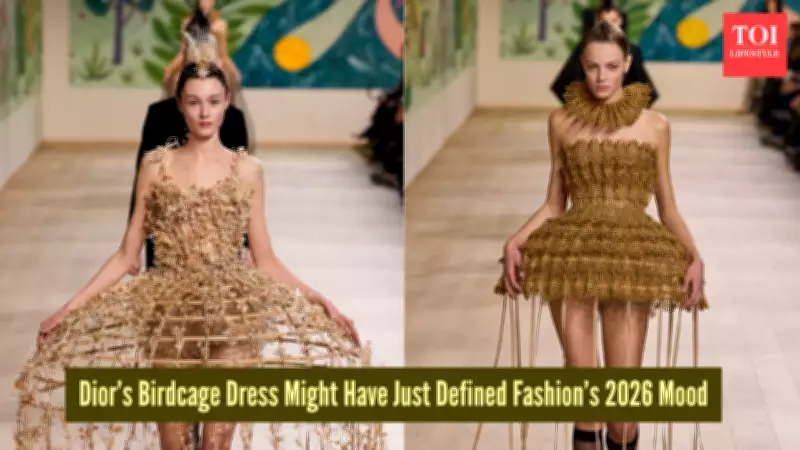
Models who walked the runway recently were not merely attired in garments; they appeared fortified within structural creations. The undeniable centerpiece of this groundbreaking show was the revolutionary "Birdcage" dress, an engineering masterpiece that has formally inaugurated the emerging trend of "Protective Fashion." This collection moves decisively away from the fluid draping techniques that have dominated recent seasons, presenting instead an architectural, almost industrial vision that maintains a paradoxical delicacy.
These literal cage structures captivating social media feeds represent remarkable feats of fashion engineering. Rather than employing heavy metallic elements, Anderson utilized hidden and exposed wire frameworks that generate spherical, lantern-inspired silhouettes enveloping the body. The designer's brilliance manifests in the calculated tension between materials, as he stretched featherweight silk tulle over these wire forms to create substantial volume without imposing crushing weight. The resulting aesthetic suggests not confinement but rather a floating protective shield.

From Containment to Protection: A New Design Philosophy
Drawing inspiration from the curvaceous, vessel-like forms created by celebrated ceramicist Magdalene Odundo, Anderson pursued a conceptual exploration of "containing" the female form rather than restricting it. This approach establishes protective vessels that fundamentally differ from the constrictive corsetry of historical fashion. The collection responds directly to contemporary psychological needs, transitioning from the "Quiet Luxury" mood of 2024-2025—which emphasized projecting stability through expensive, understated basics—toward what trend forecasters now term "Psychological Safety."
Industry analysts have begun labeling this significant shift as "Guardian Design" or "Soft Armor," recognizing how contemporary clothing responds to global chaos by offering tangible buffers. While the "Birdcage" dress represents the avant-garde pinnacle of this movement, its philosophical underpinnings are already permeating streetwear aesthetics. Fashion is progressively moving away from body-clinging garments toward designs that provide defensive qualities, shifting focus from skin exposure to the security experienced within one's sartorial environment.
The Carapace Effect: Redefining Ready-to-Wear Silhouettes
While most consumers won't wear literal wire cages to casual weekend brunches, they will undoubtedly encounter the descendants of this aesthetic in upcoming ready-to-wear collections. Anderson's influential vision predicts substantial transformations in everyday silhouettes, particularly through what fashion experts call the "Carapace" effect. Expect to witness the emergence of "Carapace" coats characterized by rounded, structured shoulders and bubble-style hems that establish physical separation between fabric and skin.
This intentional "buffer zone" functions as a personal boundary constructed from textile materials, reflecting broader cultural desires for protected personal space. The movement toward internal structural elements—including scuba fabrics and bonded wools that maintain independent shapes rather than draping softly against the body—demonstrates how contemporary clothing literally stands up for the wearer. Even accessories participate in this defensive approach through "wearable systems" like hands-free harnesses, modular bag designs, and enclosed hood constructions that signal growing desires for self-reliance and preparedness.

Housing the Body: Fashion as Personal Sanctuary
Jonathan Anderson has fundamentally redrawn fashion's lines of engagement through this collection. The "Birdcage" dress powerfully demonstrates that 2026's defining aesthetic mood transcends the exposure-focused trends that dominated early 2020s fashion. Instead, the emerging paradigm centers on "housing" the human form, treating personal space as sacred sanctuary. For the first time in recent memory, fashion actively serves as architectural walls around the individual, providing both physical and psychological protection through intentional design.
This collection marks a pivotal moment where haute couture directly addresses contemporary anxieties while offering innovative solutions through material science and structural experimentation. As protective fashion principles gradually filter into mainstream design, consumers can anticipate clothing that prioritizes emotional security alongside aesthetic appeal, fundamentally transforming how we relate to our garments in an increasingly uncertain world.