Ditching the Pastel Uniform: How Vijay Deverakonda and Rashmika Mandanna Redefined Wedding Fashion
For years, A-list weddings adhered to an unspoken dress code where couples matched their outfits meticulously, often in identical pastel shades. This "Pantone twin" approach guaranteed flawless photo opportunities but increasingly felt like a mandatory uniform rather than genuine self-expression. The recent Udaipur wedding of South Indian superstars Vijay Deverakonda and Rashmika Mandanna has dramatically shifted this paradigm, showcasing a sophisticated new trend in bridal fashion that celebrates individuality while maintaining visual unity.
The Rise of Asymmetrical Coordination in Modern Weddings
The perfectly synchronized wedding wardrobe has started to feel exhausting for many couples, appearing less like authentic taste and more like compliance with outdated expectations. Fortunately, the bridal fashion scene is evolving rapidly, making room for partners to look like two distinct individuals while still appearing completely unified. This emerging approach, known as asymmetrical coordination, represents a significant departure from traditional matching aesthetics.
Asymmetrical coordination allows both partners to command their own visual space while still looking like they belong together in the same frame. Rather than blending into one giant block of color, this sophisticated styling technique highlights two distinct main characters bringing their unique energy to a shared ritual. The result is deeply intentional, visually interesting, and far more authentic than the uniform-like matching of previous eras.

Deconstructing the Deverakonda-Mandanna Wedding Aesthetic
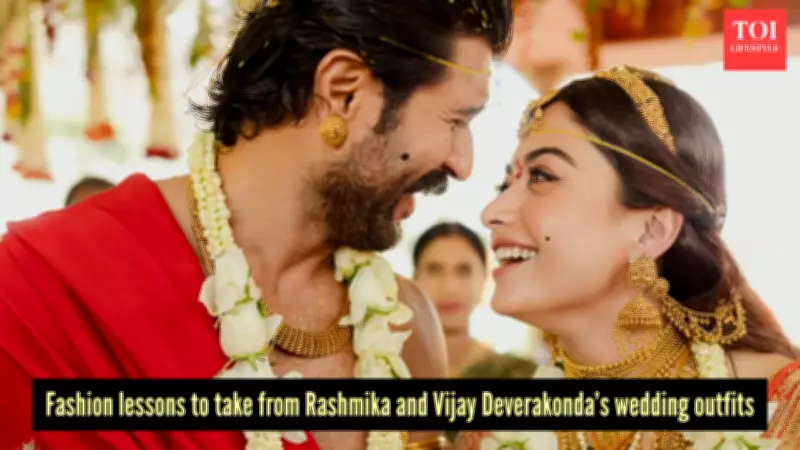
Examining the Udaipur wedding portraits reveals masterful execution of this new approach. Rashmika Mandanna served as the immediate focal point in a rich, vibrant vermilion Kanjeevaram silk saree with heavy gold zari work and traditional drape that naturally demanded attention. Following the old formula would have required Vijay Deverakonda to wear a matching red sherwani, which could have easily flattened the visual impact of both outfits.
Instead, Vijay anchored his look with a sharply tailored, crisp ivory dhoti that created perfect contrast. The visual bridge tying them together was just one powerful element: his heavy vermilion angavastram (shoulder drape). This strategic choice allowed him to echo her aesthetic without copying it outright. Keeping his base outfit completely neutral also enabled his intricate antique gold temple jewelry to stand out without competing against loud fabric patterns.
Practical Guide to Mastering Asymmetrical Coordination
For couples currently wedding planning who want to recreate this grounded, effortless aesthetic, the strategy is surprisingly accessible. Here is how modern couples can successfully implement asymmetrical coordination for upcoming celebrations:

- Anchor and Accent Principle: Designate one partner to wear the highly saturated, dominant color while the other builds their look around classic, grounded neutrals like ivory, warm beige, or deep charcoal.
- The Single Thread Technique: You only need one strategic accessory to tie the two looks together effectively. A traditional safa (turban), elegant pocket square, or woven shoulder stole matching your partner's primary shade accomplishes this perfectly.
- Texture Over Color Coordination: Instead of obsessing over perfectly matched dyes, coordinate your fabrics thoughtfully. If the bride wears heavy Kanjeevaram silk, the groom can opt for a raw silk kurta or add matching silk borders to his dhoti. Sourcing high-quality, color-coordinated silk borders for a groom's neutral outfit represents an affordable styling trick, typically adding just ₹3,000 to ₹7,000 to tailoring budgets.
The Future of Wedding Fashion: Individuality Meets Harmony
While perfectly matched outfits will always retain nostalgic charm for some, subtle asymmetrical coordination appears positioned as the definitive future of wedding fashion. This approach photographs beautifully, looks incredibly elegant, and most importantly, ensures couples don't appear to be wearing team uniforms. The Deverakonda-Mandanna wedding has demonstrated that couples can achieve complete visual harmony while allowing both partners to express their distinct personalities through fashion choices.
This shift represents more than just a styling trend—it reflects changing attitudes toward marriage itself, where individuality within partnership is increasingly valued. As wedding fashion continues evolving, expect to see more couples embracing this sophisticated approach that honors both unity and personal expression in equal measure.