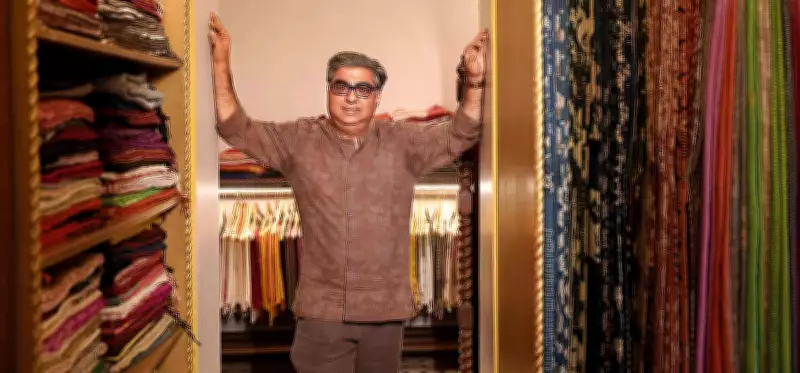
Bappaditya Biswas: The Indigo Crusader Reviving Bengal's Handloom Heritage
Bappaditya Biswas proudly identifies as a textile designer who operates at the dynamic intersection of tradition and contemporary design. As the co-founder of Byloom and Bai Lou, he dedicates his efforts to reinterpreting Bengal's rich handloom heritage, employing revered techniques such as Jamdani while emphasizing natural dyes and material-led experimentation.
Sustaining Communities Through Craft
Often celebrated as the Indigo Crusader, Biswas works intimately with artisan communities to sustain and adapt traditional craft practices. A distinguished recipient of the UNESCO Seal of Excellence, his work embodies a profound commitment to craft, process, and sustainability, solidifying his status as a true changemaker. In an exclusive conversation, he shares his design philosophy and insights on the future of Bengal's textiles.
Defining a Mission Rooted in People
What defines your work and what you wish to accomplish through it?

"For me, fabric is never just fabric – it's fundamentally about people," Biswas explains. "The core focus is on sustaining communities, preserving invaluable skills, and ensuring artisans earn with dignity. Consistent work opportunities are crucial; they encourage youngsters to return to weaving and even prompt migrant workers to come back when they witness a stable income. Ultimately, creating a viable market is critical – without genuine demand, no craft can survive."
The Legacy and Peril of Bengal Weaves
How do you view the legacy of Bengal weaves today?
"Dhonekhali is significant, but it represents only one facet of a much larger textile history," he notes. "Many Bengal weaves have tragically disappeared due to a lack of demand. While Dhonekhali, Tangail, and Jamdani remain relatively visible, others – like fine dhoti weaving – are fading rapidly. Specialized skills, such as working with ultra-fine single-count yarns, are also at severe risk and could vanish within a decade without urgent intervention."
Reviving the Lal-Paar Shada Sari
What led to your revival of lal-paar shada saris?
"It began with a growing interest in classic Bengal aesthetics – old naksha borders, dhakka borders, and chora designs," Biswas recalls. "These had faded with the rise of synthetic yarns and zari. We meticulously revisited heirloom saris, historical photographs, and personal memories to rework these patterns while keeping their essence intact. The response, especially during Pujo and wedding seasons, was overwhelmingly positive."
Balancing Tradition with Innovation
How do you balance tradition and innovation in your work?
"Rooted in tradition, restless in spirit – that defines my work mantra," he asserts. "I don't teach weavers new skills; instead, I work with what they already know to keep the process deeply rooted in tradition. Innovation emerges through material and texture. By introducing elements like textured yarns, sequins, and organza into traditional weaves, the work becomes more contemporary without disrupting its core integrity."
Handloom: A Traditional or Evolving Medium?
Do you see handloom as a traditional or evolving medium?
"Handloom is highly adaptable, allowing for experimentation and quick responses to changing lifestyles," Biswas observes. "As women's lives evolved, saris followed – becoming lighter, subtler, and more functional. For me, progress lies in staying aligned with local needs and contemporary demands."
The Biggest Challenge Facing Handloom Today
What is the biggest challenge facing handloom today?
"Awareness remains paramount," he emphasizes. "Mechanized fabrics are often deceitfully passed off as handloom, harming both artisans and consumers. Informed buyers and transparent brands are absolutely essential to sustain and strengthen the entire ecosystem."

Innovation and Evolution in Weave
Awarded the UNESCO Seal of Excellence for innovation, Biswas's work stands out for reinterpreting the double-cloth technique with metallic sequins. "It was a collaborative process," he says. "The weavers already knew how to create two layers on the loom." By alternating between double and single weave, he developed pockets to hold sequins, "adding a new dimension while keeping the essence of handloom intact."
While his work spans various Bengal traditions, Jamdani became a key focus. "When I began, Tangail Jamdani wasn't selling," he notes. In 2005, he introduced a reworked sari range with transparent pallus, solid bodies, and innovative textures. "The response was electric," he says – eventually shaping what is now celebrated as Bailu Jamdani.
Roots in Bengal's Cultural Tapestry
"Kolkata's cityscape, craftsmanship, music culture, and art have deeply shaped my work," Biswas reflects. "Bengal's heritage flows in almost unconsciously, keeping my work firmly rooted in this land."
His creative journey is intrinsically tied to Bengal. Born in Siliguri, he moved to Kolkata to study textiles at NIFT. What began as an academic pursuit soon transformed into a lifelong association with the region's textile legacy.