Indian Wedding Traditions: A Celebration of Cultural Heritage
As the first official pictures of the 'Virosh' wedding took social media by storm, one thing became instantly clear: the traditional Indian bride is officially back, and she is magnificent. Ditching predictable Bollywood pastels, Rashmika Mandanna championed her rich cultural heritage, glowing in a traditional rust-orange silk drape paired with heavy, ancestral temple jewelry to honor her Telugu and Kodava roots. Her sartorial choices proved that nothing beats the sheer grandeur of regional Indian wedding attire.
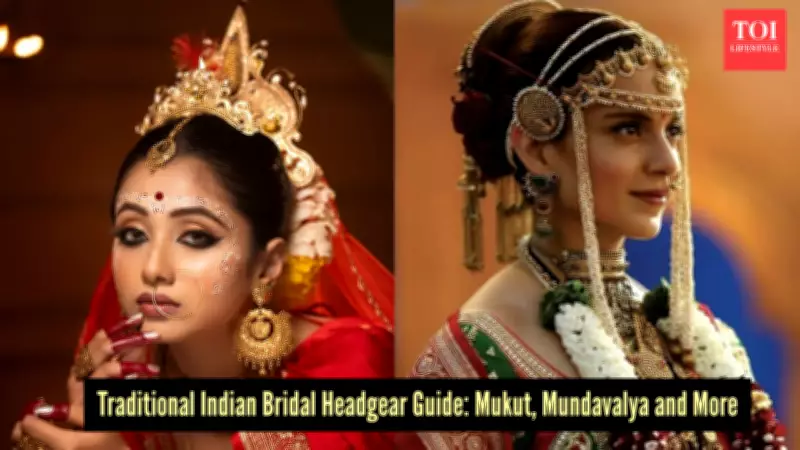
If Rashmika’s deeply authentic bridal moodboard has inspired you to look closer at India's rich cultural tapestry, you need to examine the details right at the top. From the East to the West, traditional regional headpieces carry the undeniable weight of ancestral traditions and distinct aesthetics. Here is a sartorial deep dive into five stunning traditional headgears adorned by brides from different states across India.
The Divine Bengali 'Mukut'
If you have ever swooned over a Bengali Hindu bride, you know her look is entirely incomplete without the iconic Mukut. Handcrafted from sholapith—the spongy, milky-white core of the Indian cork plant—this intricately carved crown is surprisingly lightweight. Its pristine white base is usually accented with delicate red painted motifs, flawlessly matching the bride's auspicious red Banarasi drape. Worn alongside the groom's matching Topor, it gives the couple an absolutely divine aura, symbolizing purity and marital bliss.

The Sweetly Equal Marathi 'Mundavalya'
One of the coolest aspects of a Maharashtrian wedding is how egalitarian the styling becomes. Enter the Mundavalya. Both the bride and the groom rock this delicate headgear, which is basically a string of pearls, intricate beads, or even fresh flowers tied straight across the forehead, with two dainty strings framing the face. It’s tied on just moments before the couple walks into the mandap. Visually, it's gorgeous, but emotionally? It’s a beautiful, shared declaration that they are both ready to step into this new life together, emphasizing unity and partnership.
The Regal Kashmiri 'Tarang'
Up in the valleys, the traditional Kashmiri Pandit bride wears a headpiece that commands sheer respect. The Tarang is a highly complex, multi-layered marvel with serious historical roots. It starts with the Kalpush, a long folded cap, over which a white cloth known as Zoojh is meticulously wrapped. Finally, a bridal dupatta (veil) is draped over the entire assembly, creating a heavy, magnificent headdress that honors her new marital status. This elaborate structure reflects the region's rich cultural heritage and the solemnity of the wedding ceremony.
The Unmissable Rajasthani 'Borla'
If you look at brides across North India, you'll see a lot of flat maang tikkas. The Rajasthani bride, however, does things a little differently with the Borla (sometimes called a Rakhdi). Shaped like a tiny bell or a sphere—inspired by the local jujube fruit—this piece sits right at the center of the hairline and refuses to be ignored. Made of gold and heavily studded with colorful Meenakari enamel work, uncut diamonds (polki), and precious stones, slipping on a Borla is the fastest way to channel pure Rajputana royalty, showcasing opulence and tradition.
The South Indian 'Nethi Chutti'
Down South, a Tamil bride treats her forehead as a literal canvas for the most breathtaking temple jewelry you'll ever see. The Nethi Chutti is traditional gold craftsmanship at its absolute peak. Encrusted with pearls and vibrant Kemp stones (those fiery, uncut red and green gems), this piece usually features intricate motifs of Goddess Lakshmi or dancing peacocks. It trails perfectly down the center parting of the hair, dropping right onto the forehead. Honestly, nothing pairs better with a rich, heavy Kanjeevaram silk saree, blending divine symbolism with artistic elegance.
These five headgears are just a glimpse into India's vast and diverse wedding traditions. Each piece tells a story of regional identity, craftsmanship, and cultural pride, making every Indian bride a living testament to her heritage. As fashion trends evolve, these timeless accessories continue to inspire brides to embrace their roots with grace and grandeur.