

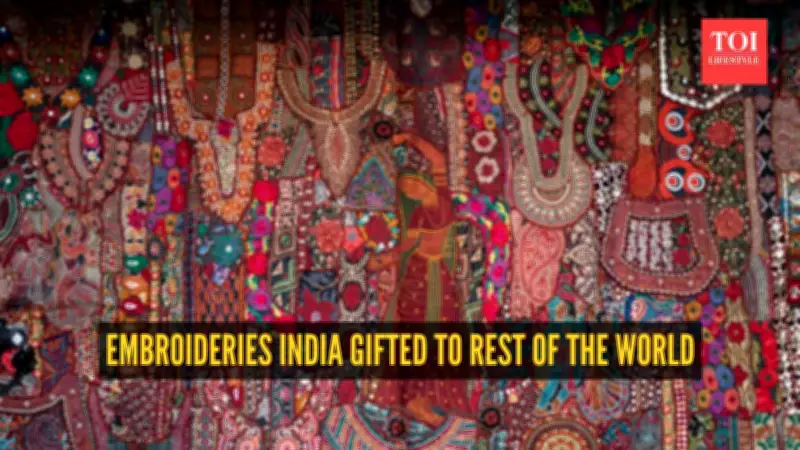
India's Threads of Glory: How Embroidery Became a Global Soft Power
While yoga and cuisine often dominate discussions of India's cultural exports, the nation's silent ambassador to the world has long been its exquisite needlework. For centuries, India has served not merely as a textile manufacturer but as the world's premier embroidery studio, weaving its indigenous stitches into the global fabric from the Silk Road to contemporary boho-luxe trends.
Zardozi: The Language of Opulence
Long before "bling" entered pop culture, India was teaching the world the art of opulence through Zardozi. Originating from Persia but flourishing in the courts of Lucknow and Delhi, this technique of sewing gold (Zar) and silver threads defined royal attire. Today, it transcends borders, adorning creations by international fashion heavyweights like Balmain and Alexander McQueen. The intricate metallic bullion work seen on their jackets and showstoppers is a direct legacy of Indian artisans, making Zardozi the global go-to for those seeking to wear their wealth with elegance.
Chikankari: The Whispered Poetry of Summer
If Zardozi represents the heavy drama of winter, Chikankari is the whispered poetry of summer. This white-on-white shadow work, originating in Lucknow and once patronized by Empress Nur Jahan, epitomizes understated luxury. It has become the world's most sophisticated resort wear, embraced by Western high-street brands for their "peasant top" looks and by designers like Abu Jani Sandeep Khosla, who have dressed icons such as Dame Judi Dench in its timeless elegance.

Kantha: The Pioneer of Sustainable Fashion
Centuries before "upcycling" became a trend, the women of Bengal and Odisha invented it with Kantha. What began as domestic frugality—layering old saris and stitching them with thread pulled from the borders—has evolved into a high-end home decor sensation. The rippled, textured vintage quilts found in boutique stores in New York are examples of Kantha. Even luxury brands like Chanel have incorporated this textured aesthetic, proving that recycling can indeed be high fashion.
Kashmiri Kashida: The Luxury Export
While the world chases cashmere, true connoisseurs recognize the magic of Kashmiri Kashida that adorns it. This single-stitch technique transforms fabric into canvases of chinar leaves and lotuses, making it India's first great luxury export to Europe. In 18th-century France, it became a massive status symbol, with Empress Josephine famously obsessed. Today, the "Cashmere Shawl" remains a wardrobe staple for the global elite.
Shisha and Phulkari: The Boho-Chic Explosion
The global boho-chic movement owes a significant debt to the vibrant colors of Shisha (Mirror Work) from Gujarat and Phulkari from Punjab. Originally meant to ward off the evil eye, Shisha became the uniform of the hippie era in the 1960s and 1970s. Today, whether it's a denim jacket at a festival or a geometric Phulkari-inspired print on a runway, these styles represent pure, unadulterated joy.
India's embroideries are more than mere decoration; they are a rich history of global trade, taste, and luxury, meticulously written one stitch at a time, influencing fashion across continents and eras.






