Once considered the exclusive domain of those with long, complex lives—ageing film stars, war survivors, Nobel laureates—memoirs are now following a radically different timeline across India. From prominent bookstore displays to literary festival panels nationwide, writers in their twenties and thirties are boldly redefining what a memoir can encompass and who has the right to tell their story.
Lives in Motion: The New Memoir Landscape
These contemporary narratives are not chronicles of epic achievement or reflective pieces penned after retirement. Instead, they capture lives still unfolding, with millennials and Generation Z sharing intimate tales of growing up queer or disabled, surviving political violence, navigating complex family expectations, confronting illness, pursuing ambition, and facing the ordinary yet profound challenges of adulthood—all from somewhere mid-journey.
K Vaishali: Writing from the Margins
One pioneering voice in this movement is K Vaishali, who first contemplated writing her life story at just 24 years old. Growing up as a lesbian and dyslexic individual in India, her existence became a constant tug-of-war between secrets and confessions—both at home and on university campuses—as she navigated double marginalisation. Even as the urge to document her experiences intensified, so did her hesitation.

"I thought hiding under the garb of fiction would be easier. It was my editor who pushed me to make it a memoir," reveals the author, now 33. While developing her book, Vaishali discovered queer memoirs by Western writers but struggled to find Indian reference points. "I wanted young people to know there is hope. I didn't have that growing up," she explains, highlighting the importance of representation.
Sanjana Ramachandran: Writing from the Middle
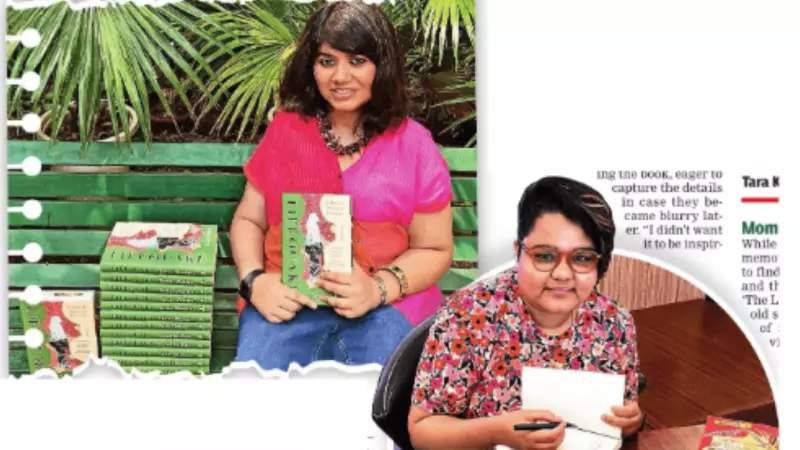
While many authors wrestle with doubts about the relevance of their life stories, Sanjana Ramachandran never experienced such uncertainty. Growing up in a Tamil Brahmin family, she knew by age 17 that her "filmy" life demanded documentation. Ramachandran never climbed Mount Everest or earned a place in the Limca Book of Records, but she lived experiences countless women of her generation would recognise: appearing for competitive examinations, pursuing engineering followed by an MBA, clashing with a strict father, and exploring her political beliefs and sexuality.
Her memoir, 'Famous Last Questions', published last year when she was 31, emerged from an undeniable compulsion. "There was no way to not write it," she asserts. During the writing process, Ramachandran realised how closely her experiences mirrored those of other '90s children in India who lived dual lives at home while struggling to express their authentic selves. "I knew it would be helpful to me and to some others, no matter how small or large the number," she adds.
Tarini Mohan: Living with Disability, Not Overcoming It
A similar passion defines Tarini Mohan's 'Lifequake', which traces how the young development professional's world was upended by an accident that caused a traumatic brain injury at age 23. A decade later, she began writing the book, eager to preserve details before they faded. "I didn't want it to be inspiring or a success story about 'overcoming' limitations, just a normal girl's journey," Mohan clarifies. "I hate that word. You don't overcome disability. You live with it."
In her memoir, Mohan embraces vulnerability, discussing not only slipping in and out of a coma but also everyday pleasures she once took for granted. "Like going out dancing," she mentions, emphasising the ordinary moments that define recovery.
Moments Over Milestones: The Political Meets Personal
While personal stories form the core of memoirs, some writers are skillfully balancing the political with the personal. Zara Chowdhary's 'The Lucky Ones' recounts her 16-year-old self navigating the Gujarat riots of 2002 with her family and how that violence irrevocably altered their lives.

"I was always keenly aware of the lapses and voids. Memory, whether my own or that of survivors within my household or the larger community, is pliant. The gaps often tell a more profound story. Different versions only reveal how all nonfiction is also ultimately fiction," Chowdhary reflects.
In her memoir, recently honoured with the Shakti Bhatt Prize, the writer not only documents her family's ordeal but also interweaves it with other witness accounts, exploring how subsequent generations navigated the aftermath of violence. "It's about keeping one's conscience at the centre of one's writing," she emphasises, "and asking what is still urgent or relevant."
The Power of the Ordinary: Industry Perspectives
Tara Khandelwal, editor and founder of storytelling agency Bound, observes that these examples signify a fundamental shift in how memoirs are perceived in India. "There's a growing awareness that a memoir doesn't have to be the chronological story of your life from point A to Z. It can be about a year or a particular episode in one's life," Khandelwal notes.
To harness this evolving curiosity, Bound recently launched a new imprint called 'Moments'. Submissions have ranged from grandchildren writing about their grandparents to a young cybercrime specialist documenting their cases. "Truth is sometimes stranger than fiction," Khandelwal remarks. "That's what makes it tick."
The Age of Personal Branding
Karthika V K, publisher at Westland Books, points to another driving force: "personal branding" in an era dominated by algorithm-driven social media platforms. "There's a change in the way that personal experience rubs up against public expression. It's no longer only the very senior or obviously successful person whose lives are worth sharing," she explains.
This democratisation inevitably means that shallow narratives and vanity projects coexist alongside courageous, inspiring attempts to articulate lived experiences of conflict, growth, achievement, and failure—from startup CEOs and social media influencers to therapists and young parents.
"Selective or partial memoirs are now far more popular than the conventional autobiography," Karthika observes. "And where readers are interested, publishers will follow."
This literary transformation reflects a broader cultural shift in India, where younger generations are claiming space to narrate their truths, challenging traditional notions of whose stories deserve preservation and when they should be told.