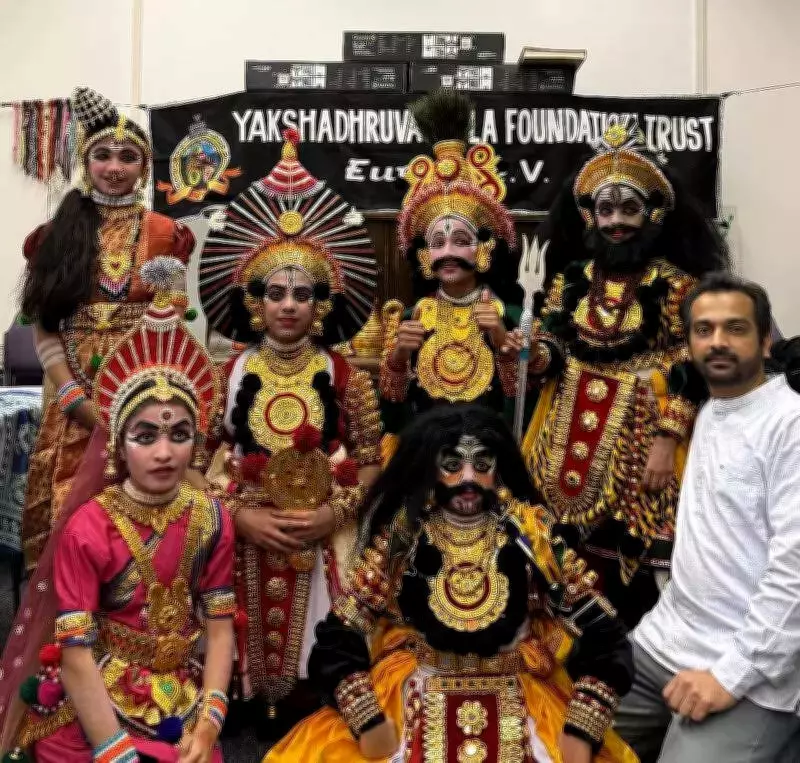
Yakshagana Makes Historic German Debut in Munich
In a groundbreaking cultural development, Yakshagana, the vibrant and centuries-old theatre tradition of coastal Karnataka, is breaking new linguistic ground. Traditionally performed in Kannada, Tulu, Konkani, and Marathi, this classical art form is now preparing for its first-ever presentation in the German language.
Munich to Host Historic Performance
According to Yakshagana artiste and Yakshadhruva Patla Foundation Europe unit secretary Ajeeth Prabhu Thallu, the team will present the classic episode 'Mohini Bhasmasura' on February 28 in Munich. This production represents a significant milestone in the international journey of Yakshagana, following previous experiments with English performances aimed at global audiences.
"The production is designed specifically for German audiences," explained Ajeeth. "This is the result of over a year of meticulous planning and preparation. Interestingly, the performance will feature children born and raised in Germany, for whom German is their native language."

Organic Evolution of a Cultural Crossover
The idea for presenting Yakshagana in German emerged naturally from the troupe's experiences in Europe. While the students learning Yakshagana are native German speakers, the team also observed growing interest among local German audiences who regularly attended Kannada performances.
"Many German art enthusiasts would sit through shows lasting over 90 minutes, attempting to follow the storyline despite the language barrier," Ajeeth noted. "Their consistent feedback about difficulties understanding the dialogues prompted us to explore this new direction."
Translation Challenges and Cultural Adaptation
The translation process presented significant challenges that required innovative solutions. Ajeeth collaborated with German theatre experts and language specialist Birgit Goulet to ensure linguistic clarity while maintaining cultural authenticity.
"The himmela (background music and singing) will remain in Kannada, and the dance poses no issue," Ajeeth explained. "However, dialogues cannot be translated directly because humor is deeply cultural. It must be relatable to German audiences while retaining the traditional Yakshagana tone and essence."
The team developed a layered translation approach:
- Initial translation from Kannada to English
- Subsequent adaptation to German
- Continuous review by German language experts
- Adaptation to theatre-style delivery
Why 'Mohini Bhasmasura' Works for This Experiment
The chosen episode, Prasanga Bhasmasura Mohini, proves particularly suitable for this cultural experiment. The story revolves around a demon tricked into using his own boon to destroy himself, featuring rich elements of:
- Humorous dialogue
- Dynamic dance sequences
- Dramatic narrative elements
These characteristics make the story accessible even to audiences unfamiliar with Indian mythology. While the children performers find learning German dialogues natural, delivering them in authentic Yakshagana style requires rigorous training and adaptation.
Adapting to German Audience Sensibilities
The troupe has carefully considered German cultural preferences, where performances typically feature:
- Concise duration
- Controlled volume levels
- Attentive, silent appreciation
"With a clear focus on reaching the German community," Ajeeth stated, "Yakshadhruva Europe is promoting the production through local radio and newspapers."
Broader European Outreach Initiatives
Beyond the Munich performance, the foundation is launching comprehensive awareness initiatives:
- A 9-minute documentary about Yakshagana
- Translation into multiple European languages including Italian, Polish, and French
- A newly launched website: Yakshagana in Europe
This historic German-language Yakshagana performance represents more than just a linguistic adaptation—it signifies the evolving global reach of traditional Indian performing arts and their ability to transcend cultural boundaries while maintaining their essential character.