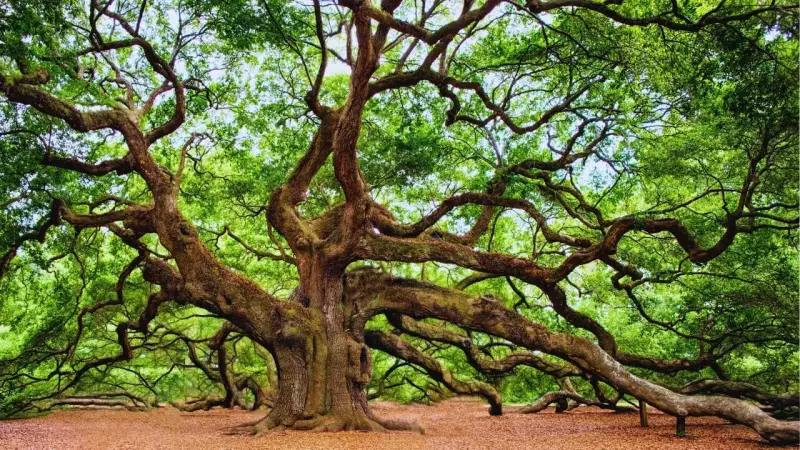
Imagine living beings that have stood through geological periods, witnessed empires rise and fall, and watched entire cycles of human civilization unfold before their eyes. These aren't mythical creatures but actual trees that have survived for thousands of years, rightfully earning their status as iconic and historic natural wonders.
The Ancient Guardians of Our Planet
These remarkable trees represent the longest-living organisms on Earth, each telling a unique story of survival and resilience. Some are single, non-clonal individuals that have lived uninterrupted for millennia, while others survive through sophisticated root systems that constantly regenerate new trunks. Together, they form a living bridge connecting our modern world to ancient civilizations.
Methuselah: California's Ancient Sentinel
Hidden within California's Inyo National Forest, specifically in the Ancient Bristlecone Pine Forest of the White Mountains, stands Methuselah, estimated to be over 4,800 years old. This Great Basin bristlecone pine has endured extreme cold, powerful storms, and prolonged droughts across millennia. Scientists confirmed its astonishing age through dendrochronology, carefully counting its tree rings. To protect this precious natural treasure from damage or vandalism, authorities have intentionally kept its exact location undisclosed to the public.

Old Tjikko: Sweden's 9,550-Year Wonder
In Sweden's Fulufjället National Park grows Old Tjikko, a Norway spruce that has survived for approximately 9,550 years. While the visible trunk appears relatively young, radiocarbon dating of its root system revealed its true age. This clonal tree represents one of the oldest genetic individuals on Earth, repeatedly regenerating new trunks as older ones died off over thousands of years. The root structure itself has persisted for nearly ten millennia, making it a true survivor of the ages.
Jōmon Sugi: Japan's Mystical Cedar
On Yakushima Island in Kagoshima Prefecture, a UNESCO World Heritage Site known for its ancient forests, stands Jōmon Sugi, the most famous and oldest cryptomeria (Japanese cedar). Its approximate age remains debated among scientists, with estimates ranging from 2,170 to 7,200 years. Reaching this ancient giant requires a long trek through almost mystical forests, but the journey rewards visitors with a glimpse of one of Japan's most respected and oldest living organisms.
Gran Abuelo: Chile's Great Grandfather
In Chilean Patagonia's Alerce Costero National Park stands Gran Abuelo or "Great Grandfather," believed to be approximately 5,484 years old. This Patagonian cypress, often compared to American redwoods for its massive size and longevity, continues to awe researchers. In 2022, scientists suggested the tree might be more than 5,000 years old based on partial ring sampling. Although researchers couldn't core the full trunk to avoid damage, all evidence indicates this is among the world's oldest living organisms.
Sarv-e Abarqu: Iran's Treasured Landmark
In Iran's Yazd Province stands Sarv-e Abarqu, a monumental Persian cypress estimated to be around 4,000 years old based on historical and scientific analysis. This massive tree, with its expansive crown and unusual shape, represents one of Iran's most cherished natural landmarks. While exact dendrochronological data remains unavailable because the tree's center is too old and dense to core, its appearance clearly hints at an extraordinarily long life.
Olive Tree of Vouves: Greece's Fruitful Ancient
In Crete's Ano Vouves village grows the Olive Tree of Vouves, believed to be at least 2,000-3,000 years old, with some experts suggesting it might be even older. Tree-ring analysis confirms a minimum age of 2,000 years, but archaeological context indicates it could potentially be 3,000 or even 4,000 years old. Remarkably, this ancient tree still bears fruit, with villagers harvesting olives from its massive, twisted trunk that reflects centuries of natural weathering.

Living Witnesses to Human History
These ancient trees serve as living monuments to Earth's history, having survived civilizations, climate changes, and human expansion. They remind us of nature's incredible resilience and our responsibility to protect these biological treasures for future generations. Each tree represents not just botanical wonder but a continuous thread connecting our present to distant pasts that shaped human civilization.