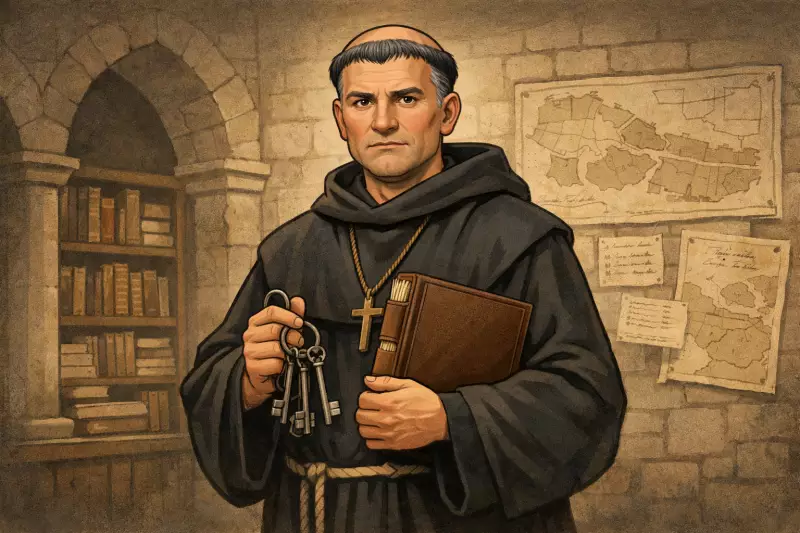
The popular word puzzle game Wordle, on December 28, presented players with the word 'abbot'. Far more than just a five-letter challenge, this term opened a window into a world where authority was absolute, structural, and did not seek public approval. It represented a form of leadership rooted in duty and jurisdiction, a concept that has traversed centuries and cultures.
The Etymology and Essence of 'Abbot'
The journey of the word 'abbot' begins with the Aramaic word 'abba', simply meaning 'father'. This term travelled through Greek and Latin before finding a permanent home in the English language. However, the meaning it carried was far deeper than familial affection. It embodied the idea of responsibility concentrated in a single person. This father figure was not defined by warmth but by accountability. The word itself is a linguistic artifact from an era when power was visible, named, and rarely apologetic for its own existence.
The Abbot in Western Christian Monasticism
In the framework of Western Christian monasticism, particularly under the influential Rule of St. Benedict, the abbot was established as the supreme authority within a monastery. His role was all-encompassing. He governed the spiritual path, moral conduct, and daily discipline of the entire monastic community. He set the rhythm of life, enforced order, and was the living embodiment of the rule itself.

Yet, monasteries were never just spiritual retreats. They were powerful institutions with significant economic and social clout. They controlled vast estates, managed labour, stored wealth, preserved ancient texts, educated the elite, and shaped local economies. The abbot presided over all these secular and sacred matters. This made him a figure of immense real-world power, often comparable to a feudal lord.
Abbots managed lands, negotiated with kings and nobles, administered justice on monastery territory, and represented their institution to the outside world. The romantic image of the abbot as a secluded mystic is largely a later creation. Historically, he was primarily an executive and administrator.
Power, Scrutiny, and Cross-Cultural Parallels
Such concentrated authority naturally attracted scrutiny and criticism. Throughout Church history, reform movements frequently targeted monasteries precisely because abbots sat at the volatile intersection of wealth, power, and religious belief. When corruption or lax discipline was found, the abbot was held responsible. Some responded with strict reforms and austerity, while others became skilled political operators, balancing papal demands with royal favour.
While 'abbot' is a Christian title, the role it describes is a universal phenomenon in monastic traditions. In Buddhism, the head of a monastery holds strikingly similar responsibilities, blending spiritual guidance with administrative control. In Eastern Orthodox Christianity, the hegumen or igumen fulfills an identical role. Hindu monastic orders also have heads of mathas who manage doctrine, property, and lineage. Across faiths, the need for a central figure to ensure order, discipline, and institutional survival repeatedly emerges.
The Abbot's Legacy in Culture and Modern Metaphor
In literature and popular culture, the abbot often vacillates between two archetypes: the wise, restrained guardian of tradition and the politically savvy institutional heavyweight. Both portrayals are historically valid. This very tension gives the word its rich texture.
Even today, 'abbot' can be used metaphorically to describe someone who governs any closed or hierarchical system—a corporation, a university, a foundation—with paternalistic authority and a focus on structure. The term signifies hierarchy without apology. It points to a logic of endurance through stewardship, not constant reinvention.
The word 'abbot' retains its weight because it names a type of authority that is foundational rather than performative. It belongs to a world where power was exercised from an office, not a platform, and where leadership was tied to continuity above all else. In our age of disruption and personal branding, the abbot reminds us of a different, enduring model of command.