Beyond Tradition: The Profound Meaning of Touching Elders' Feet in India
In countless Indian households, the gesture unfolds almost instinctively. Before embarking on a crucial exam, during vibrant festivals, at joyous weddings, or after reuniting with grandparents following a lengthy separation, younger family members gracefully bend to touch the feet of their elders. To some, particularly younger generations navigating rapidly modernizing urban landscapes, this may appear as merely a cultural ritual, a motion performed out of habit or societal expectation. However, the tradition of touching elders' feet carries profound layers of psychological, emotional, and philosophical significance that extend far beyond simple etiquette. Rooted deeply in ancient Indian thought, it embodies concepts of humility, lifelong learning, energy exchange, and human connection that remain strikingly relevant in contemporary times.
A Gesture Rooted in Reverence, Not Hierarchy
Contrary to widespread misconceptions, touching feet was never designed to establish superiority or enforce submission. Within Indian philosophy, age is intrinsically linked with experience—a rich tapestry of learning woven through moments of joy, resilience, mistakes, and profound responsibility. The gesture symbolizes a heartfelt acknowledgment of this accumulated, lived wisdom.
The Sanskrit concept of pranam or charan sparsh translates literally to bowing with deep reverence. It is less about elevating one individual above another and more about recognizing the invaluable nature of guidance. By physically bending, the younger person symbolically lowers their ego, an idea profoundly emphasized in Indian spiritual traditions where humility is deemed essential for personal and spiritual growth. In this light, the act transforms into an authentic expression of gratitude rather than a mere obligation.

The Psychology of Humility and Emotional Grounding
Modern psychology offers a fascinating lens through which to understand why such enduring rituals persist. Physical gestures possess the power to influence emotional states significantly. When an individual consciously bows or lowers their posture, it creates a momentary pause—a deliberate break from self-centered thinking.
This simple yet intentional act can shift attention outward, reminding participants of relationships and connections larger than themselves. In today's fast-paced modern existence, where independence is frequently prioritized, rituals like touching feet powerfully reinforce interdependence and a sense of belonging.
For elders, the gesture holds substantial emotional weight. It communicates recognition and deep appreciation without the need for words, thereby strengthening intergenerational bonds in a uniquely meaningful way.
The Concept of Blessings and Energy Exchange
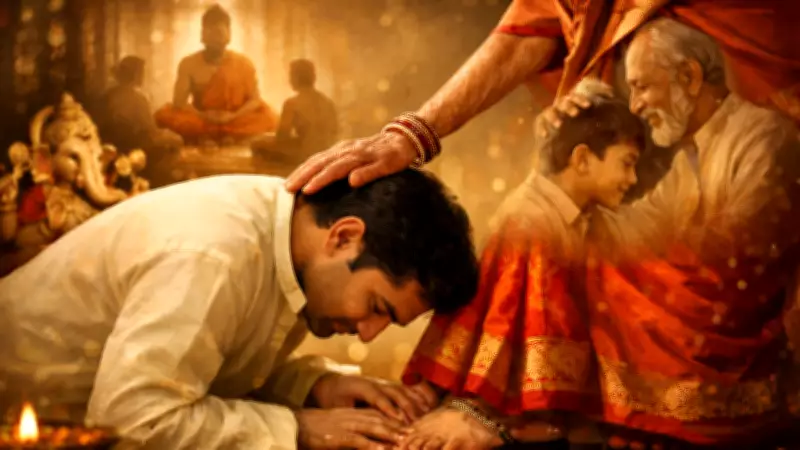
Traditional belief maintains that elders transmit blessings, known as ashirwad, when the younger person touches their feet and the elder reciprocates by placing a hand gently on the head. While often interpreted through a spiritual lens, this idea also possesses significant symbolic and psychological dimensions.
The blessing ritual cultivates a moment of intentional, heartfelt connection. The elder offers goodwill, encouragement, and emotional reassurance; the younger person receives affirmation and supportive energy. Such exchanges foster deep emotional security, particularly within family structures where wisdom is traditionally passed down orally rather than through formal education.
Ancient Indian texts frequently describe respect toward parents and teachers as a vital pathway to inner discipline and social harmony, values that have historically helped sustain community-based societies for centuries.
A Cultural Language of Silent Gratitude
Every culture develops unique non-verbal methods of expressing respect, such as handshakes, bows, hugs, or salutes. Touching elders' feet functions as India's distinctive cultural language of gratitude.
Unlike spoken expressions, which can sometimes feel formal or rehearsed, physical gestures often carry a raw sincerity. The act acknowledges invisible contributions: the sacrifices made by parents, the guidance offered by teachers, and the unwavering emotional support provided by grandparents.

In numerous families, this ritual gains heightened significance during pivotal life transitions—marriages, new career opportunities, or major decisions—when younger members actively seek reassurance and a tangible connection to their cultural roots.
Bridging Generations in an Evolving Society
As Indian society continues to evolve dynamically, some younger individuals thoughtfully question whether such traditions retain their place in contemporary life. However, traditions endure not because they resist change, but because they adapt in meaning and application.
Today, touching feet is less about rigid custom and more about conscious, deliberate choice. Many modern families emphasize that respect must be mutual; elders, too, are encouraged to offer kindness, understanding, and consistent encouragement. When practiced with genuine emotion rather than compulsion, the gesture becomes a powerful bridge between modern individuality and cultural continuity.
It also offers something increasingly rare in our digital age: a meaningful pause. In an era dominated by quick messages and virtual greetings, this act demands physical presence and mindfulness, even if only for a few precious seconds.
Beyond Ritual: A Reminder of Our Shared Humanity
At its very core, touching elders' feet serves as a poignant reminder that human growth does not occur in isolation. Every generation stands upon the collective efforts and wisdom of those who came before. The gesture acknowledges that knowledge, values, and resilience are inherited not solely through books, but through rich, nurturing relationships.
Whether viewed through a spiritual, psychological, or cultural framework, the practice represents timeless qualities: humility, gratitude, and profound connection. Perhaps this is precisely why the tradition continues to endure with such vitality. It is not merely about bending down physically; it is about looking up to the wisdom that helped shape who we are, and recognizing that respect, when expressed sincerely, strengthens both the giver and the receiver in immeasurable ways.