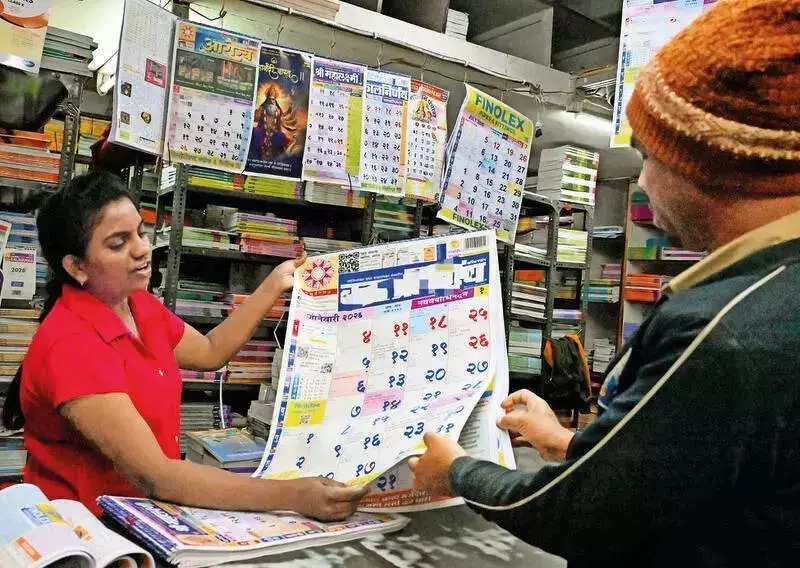
In an era dominated by smartphone notifications and digital alerts, the humble printed calendar is staging a quiet but resilient comeback on kitchen walls and office desks across India. A recent global market analysis reveals a surprising trend: a strong preference for analogue planning tools in a digitally-saturated world.
More Than Just Dates: The Emotional & Cultural Hold
A 2025 study by Global Growth Insights found that over 58% of consumers globally still prefer physical wall calendars for personal planning and reminders. This statistic resonates deeply with the Indian reality, where the ritual of buying and hanging a calendar is far from obsolete. The act has evolved from a mere functional task into a meaningful tradition of setting intentions for the year ahead.
Choosing a calendar is now a deliberate exercise in self-expression. Data indicates that over 45% of buyers now seek customised or themed calendars that reflect their personality, cherished memories, or cultural motifs. In Indian households, these calendars often serve multiple roles: as decorative mood boards, keepers of cultural knowledge, and essential planning tools.

Practicality Meets Tradition in Daily Life
For many, the continued use of paper calendars is driven by very specific, pragmatic needs. Pune-based IT professional Ashwini Joshi highlights a common divide, noting that digital calendars are often reserved for professional tasks, while personal and family life is managed on paper.
In Mumbai, homemaker Revati Kulkarni depends on a traditional Hindu almanac-style calendar to track religious observances. "I need to see Ekadashi and other important dates right in front of me. We avoid non-vegetarian food on those days, so having it on the wall ensures I never miss it," she explains. For her, the physical presence is irreplaceable.
In Kolkata, Sayani Mandlik uses a large calendar as a central log for her household's complex logistics. With family members working different shifts and domestic staff requiring leave, the wall calendar offers an at-a-glance overview that a phone app cannot match. "This is one glance and I know everything," Mandlik states.
Calendars as Canvases for Goals & Advocacy
The younger generation is repurposing calendars into tools for motivation and personal growth. Bengaluru marketing professional Nishtha Singh deliberately chose a calendar with monthly goal prompts. "I like seeing my goals where I cannot ignore them. It's like having them stare me down every morning, whether it's training for a marathon or saving money," she says. The constant, passive visibility provides a unique form of accountability.
Furthermore, gifting calendars has transformed into a subtle form of advocacy. Pune school teacher Farida Ali selects themes that promote the change she wishes to see. "This year, I'm giving calendars where each month highlights an environmental habit. If someone sees it daily, an idea might stick. It feels like a small but real contribution," Ali shares. The calendar becomes a lasting message in a friend's or relative's space.
Ultimately, in a country marked by a rich tapestry of cultural, personal, and social milestones, the printed calendar is far more than stationery. It functions as a compass, a record keeper, a chart for aspirations, and occasionally, a call to action. Its enduring appeal in the digital age is not a relic of habit but a conscious, meaningful choice for millions of Indians.