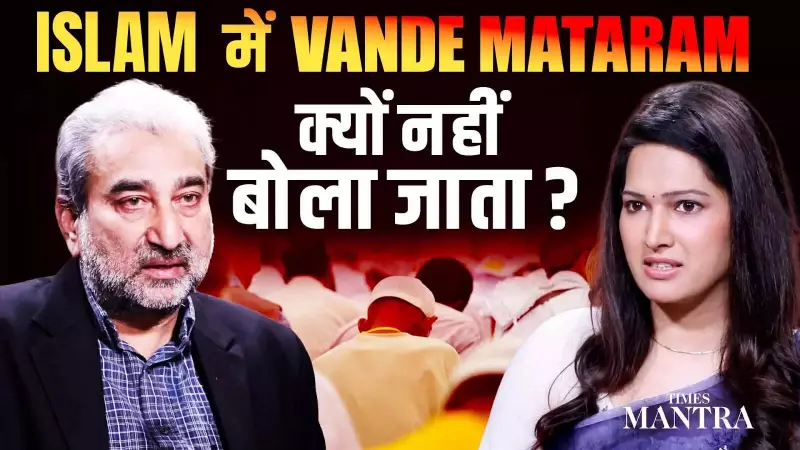
In a detailed exploration for Times Mantra, author Shantanu Gupta delves into a sensitive and often debated aspect of India's socio-religious fabric: the traditional reluctance of many Muslims to recite the patriotic chant 'Vande Mataram'. Published on December 29, 2025, the article seeks to move beyond surface-level debates to explain the core religious interpretations and historical contexts that inform this practice.
The Core Religious Conflict with Islamic Teachings
The central reason explored is a fundamental conflict with core Islamic principles. The phrase 'Vande Mataram' translates to 'I bow to thee, Mother', where the 'Mother' is a personification of the nation as a goddess. In Islam, the act of bowing or prostrating (Sajdah) is an act of worship (Ibadah) reserved solely for Allah. Any form of devotion that appears to direct this worship towards a created entity, including a deified nation, is considered shirk (associating partners with God), which is the gravest sin in Islam.
This theological standpoint makes the chant incompatible with the monotheistic foundation of Islamic faith. The article clarifies that the issue is not with patriotism or love for the nation, but specifically with the act of 'veneration' implied by the word 'Vande'. Many Muslims express their patriotism through other means and national symbols that do not compromise their religious beliefs.

Historical and Cultural Contexts Shaping the Practice
Shantanu Gupta's analysis does not stop at theology. It traces how this stance has been shaped over time by historical and cultural developments. The song, originally a poem from Bankim Chandra Chattopadhyay's novel 'Anandamath', gained prominence during the Indian independence movement. However, its imagery of the nation as the goddess Durga created a natural point of divergence for monotheistic communities.
The discussion highlights that the practice of abstaining is not a modern political stance but a tradition rooted in long-held religious interpretations. Over decades, this perspective has been reinforced within community discourses, making it a significant marker of religious identity for many Indian Muslims.
Towards Respect and Balanced Understanding
The article concludes by advocating for a nuanced and respectful understanding of this choice. It emphasizes that in a diverse democracy like India, national identity can be expressed in multiple ways. Respecting diverse religious perspectives on symbols like 'Vande Mataram' is crucial for genuine interfaith harmony.
The piece offers a balanced view, aiming to dispel misconceptions that often paint the issue as a lack of patriotism. Instead, it frames it as a complex interplay of unwavering faith and tradition influencing personal and communal choices. The ultimate takeaway is the importance of dialogue and empathy in navigating the spaces where faith, culture, and national symbolism intersect.
By providing this in-depth context, the article on Times Mantra moves the conversation from heated debate to informed understanding, highlighting the need to respect traditions while forging a shared sense of nationhood.