Vande Mataram's 150th Anniversary Dominates Republic Day Celebrations
The Republic Day parade in New Delhi commenced with the soft, melodious notes of Vande Mataram played on the flute, setting a patriotic tone for the annual event. This year's celebration was particularly significant as it marked the 150th anniversary of the national song, a milestone that the governing NDA has actively promoted to position itself as the true custodian of India's cultural heritage. The parade concluded with a grand performance by 2,500 artists from every state and union territory, who rendered a specially composed version of Vande Mataram, symbolizing national unity and pride.
Political Undertones and State Tableaux
Amidst the festivities, political narratives unfolded, with the Mamata Banerjee-led TMC government in West Bengal presenting a tableau that highlighted the state's deep association with Vande Mataram. The display featured statues of Bankim Chandra Chatterjee, the author of the song, along with other iconic Bengali figures such as Swami Vivekananda, Rabindranath Tagree, and Subhas Chandra Bose. This move came against the backdrop of the national song being elevated to a higher pedestal, a context the TMC could not have overlooked as the state approaches assembly polls.
The BJP has intensified its criticism of the TMC, accusing the party of deviating from Bengal's Hindu ethos linked to Chatterjee in favor of alleged vote bank politics. In response, the TMC has labeled the BJP as an outsider party disconnected from the state's cultural impulses, adding a layer of political tension to the cultural celebration.

Central Theme and International Guests
The "150 years of Vande Mataram" served as the central theme of this year's parade at Kartavya Path. Prime Minister Narendra Modi was seen frequently explaining the intricacies of the military parade and the procession of tableaux to the chief guests, European Council President Antonio Costa and European Commission President Ursula von der Leyen. This interaction underscored the event's significance on both national and international stages.
Portraits of Bankim Chandra Chatterjee were prominently displayed at the venue, and several tableaux, including those from BJP-governed states like Gujarat and Chhattisgarh, paid homage to Vande Mataram. The song's deep roots in the cultural agenda of the BJP and the Sangh Parivar were evident throughout the parade.
Cultural Ministry and Patriotic Displays
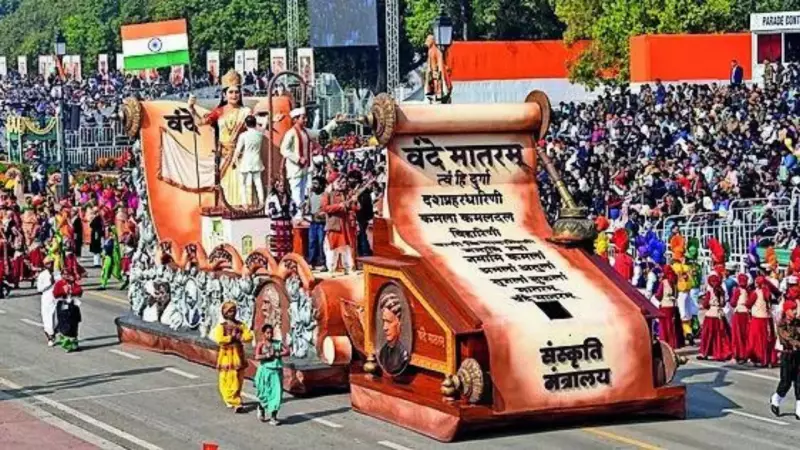
The Ministry of Culture's tableau foregrounded evocative lines from Vande Mataram, which served as a rallying cry for freedom fighters during India's independence struggle. The display featured two versions of the song and carried a statue of "Bharat Mata," emphasizing the song's role in fostering patriotism. Similarly, the CPWD's tableau echoed this theme, reinforcing the cultural and historical importance of Vande Mataram.
To bring alive the spirit of patriotism and culture associated with the national song, prints of 1923 paintings from an album on Vande Mataram by Tejendra Kumar Mitra were displayed in and around the venue. These artistic renditions added a visual dimension to the celebration, connecting the past with the present.
The Republic Day parade, with its blend of military precision and cultural performances, successfully highlighted the enduring legacy of Vande Mataram. The event not only celebrated the song's 150th anniversary but also showcased the ongoing political and cultural dialogues surrounding it, making it a memorable spectacle for all attendees.