Valentine's Day Wedding Boom Hits Alandi, Maharashtra's Sacred Pilgrimage Town
In a remarkable social shift, Alandi, one of Maharashtra's most revered pilgrimage centers and home to the samadhi of Sant Dnyaneshwar, witnessed an unusual surge in weddings this Valentine's Day. Over 100 couples chose to marry on February 14, setting aside the traditional astrological 'muhurat' typically followed in Hindu customs.
Unprecedented Rush at Marriage Registration Offices
Local marriage registration offices and private halls reported an unprecedented spike in weddings on February 14, marking the first time such a trend has been recorded in this deeply traditional temple town. According to officials at the Alandi marriage registration office, the rush was noticeable from early morning, with queues forming by midday as couples, often accompanied by close family members and friends, lined up to complete legal formalities.
"We usually see higher numbers on auspicious dates. This is the first time we saw so many couples specifically choosing Feb 14, despite there being no traditional muhurat," said Girish Purohit, who has been running the marriage bureau office for two decades.

Practical and Symbolic Choices for Modern Couples
For many couples, the choice was both practical and symbolic. Valentine's Day represented companionship and personal commitment rather than ritual precision. Several newlyweds explained that shrinking family sizes, demanding work schedules, and rising wedding costs encouraged simpler ceremonies focused on legal registration and intimate celebrations.
"We wanted our wedding to be meaningful to us. Valentine's Day felt special," said one bride, noting that elders in the family eventually agreed to the unconventional timing.
Modest Ceremonies with Modern Themes
Wedding service providers noted that most ceremonies were modest affairs. Floral decorations, heart-shaped motifs, and red-and-white themes replaced elaborate mandaps. Some couples exchanged garlands under Valentine-themed backdrops, blending modern symbolism with essential traditional rites. Caterers reported small guest lists, while priests said they were consulted mainly for basic rituals rather than full-day ceremonies.
Community Acceptance and Changing Social Norms
Alandi's residents, initially surprised, appeared largely accepting of the change. Shopkeepers near the temple precinct observed that the day brought a different kind of footfall—young couples, photographers, and families rather than only pilgrims.
"It felt different but not disrespectful. People were happy and, most importantly, the couples were enjoying their moments," said Sanket Waghmare, who runs a marriage hall in the town.
Sociological Perspective on Urban Transformation
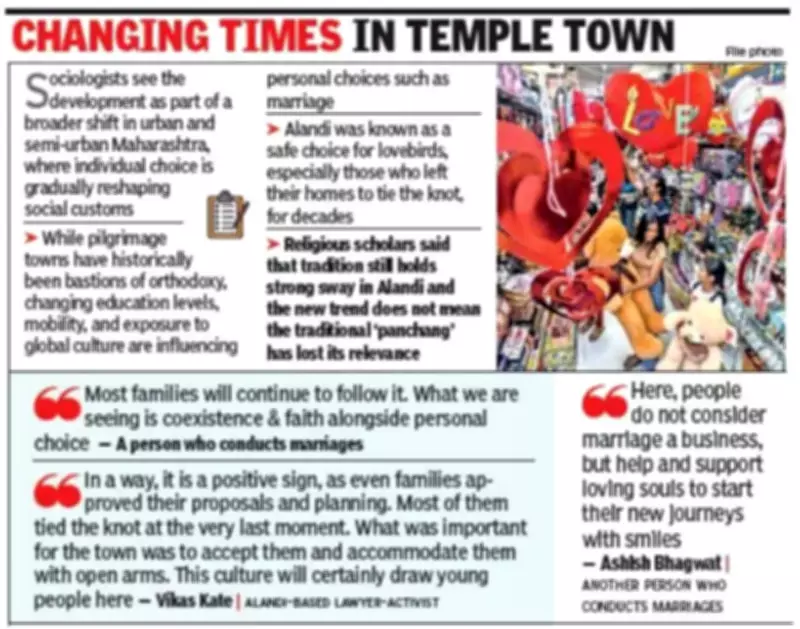
Sociologists see this development as part of a broader shift in urban and semi-urban Maharashtra, where individual choice is gradually reshaping social customs. While pilgrimage towns have historically been bastions of orthodoxy, changing education levels, increased mobility, and exposure to global culture are influencing personal decisions such as marriage timing and format.
Coexistence of Tradition and Modernity
Religious scholars emphasized that tradition still holds strong sway in Alandi, and the new trend does not mean the traditional 'panchang' (Hindu almanac) has lost its relevance. "Most families will continue to follow it. What we are seeing is coexistence—faith alongside personal choice," noted one person who conducts marriages regularly.
Vikas Kate, an Alandi-based lawyer and activist, observed: "In a way, it is a positive sign, as even families approved their proposals and planning. Most of them tied the knot at the very last moment. What was important for the town was to accept them and accommodate them with open arms. This culture will certainly draw young people to the town."
Ashish Bhagwat, another marriage officiant, added: "Here, people do not consider marriage a business, but helping and supporting loving souls to start their new journeys with smiles."

The Valentine's Day wedding surge in Alandi represents a significant cultural moment, demonstrating how even deeply traditional communities are adapting to changing social realities while maintaining core values of acceptance and celebration.