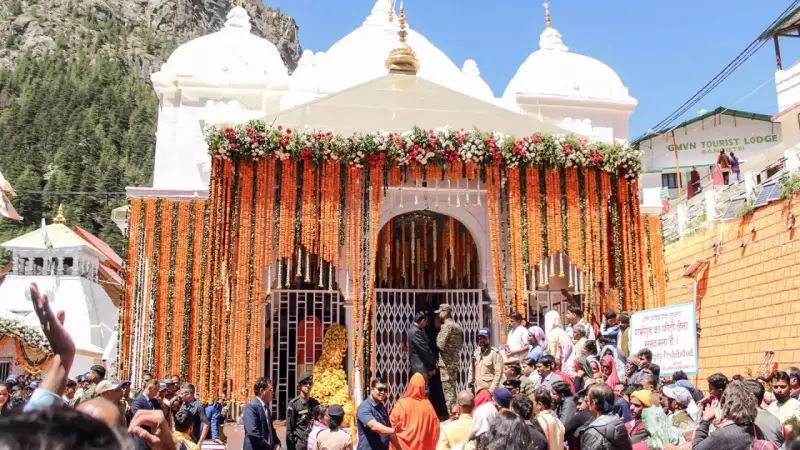
Uttarakhand Religious Sites Consider Entry Restrictions for Non-Hindus
In a significant development that echoes recent proposals for Haridwar's sacred ghats, the Badrinath Kedarnath Temple Committee (BKTC) is now contemplating similar restrictions on the entry of non-Hindus at the revered Char Dham shrines under its administration. This move comes as religious authorities seek to reinforce traditional practices at some of India's most important pilgrimage sites.
Committee Proposes Preservation of Ancient Traditions
The BKTC, which oversees the administration of the Char Dham shrines including Badrinath and Kedarnath along with 47 other temples, is expected to present this proposal before its board in the near future. According to reliable sources familiar with the matter, the initiative has garnered substantial support from most stakeholders involved in temple management.
BKTC chairman Hemant Dwivedi emphasized that the proposed restriction finds its foundation in what he described as "long-standing tradition" that dates back to the era of Adi Shankaracharya. "We see nothing wrong in preserving religious traditions that have been followed for centuries," Dwivedi stated, while clarifying that "entry for non-Hindus has historically been restricted at these sacred shrines."

Constitutional Framework and Clarifications
Dwivedi further elaborated on the legal basis for such a decision, pointing to Article 26 of the Indian Constitution which grants religious denominations the right to manage their own affairs in matters of religion. The committee maintains that it operates well within its constitutional rights when considering measures to protect religious practices.
The temple committee chairman also sought to address potential misunderstandings about the terminology being used. "The term 'non-Hindus' should not be misconstrued," Dwivedi explained. "Those who genuinely respect our faith and traditions are always welcome. It's important to understand that these dhams are primarily centers of faith and devotion, not merely tourist destinations."
Broader Context in Uttarakhand
This development occurs alongside other significant religious policy considerations in Uttarakhand. The state government is currently evaluating a proposal to restrict non-Hindu entry at 105 ghats across Haridwar. Additionally, authorities are contemplating declaring both Haridwar and Rishikesh as 'sanatan pavitra shehar' or holy cities dedicated to preserving Hindu religious traditions.
Sources indicate that the implementation process for these measures could potentially begin with the upcoming Haridwar Ardh Kumbh, scheduled to commence on January 14. The proposals may draw upon historical precedents, including provisions from a 1916 agreement that involved Ganga Sabha founder Madan Mohan Malviya, highlighting the deep historical roots of these religious management practices.
These developments represent a significant moment in the ongoing discussion about religious access, tradition preservation, and constitutional rights at India's most sacred pilgrimage sites. The decisions made by both temple committees and state authorities will likely have far-reaching implications for religious tourism and interfaith relations in the region.