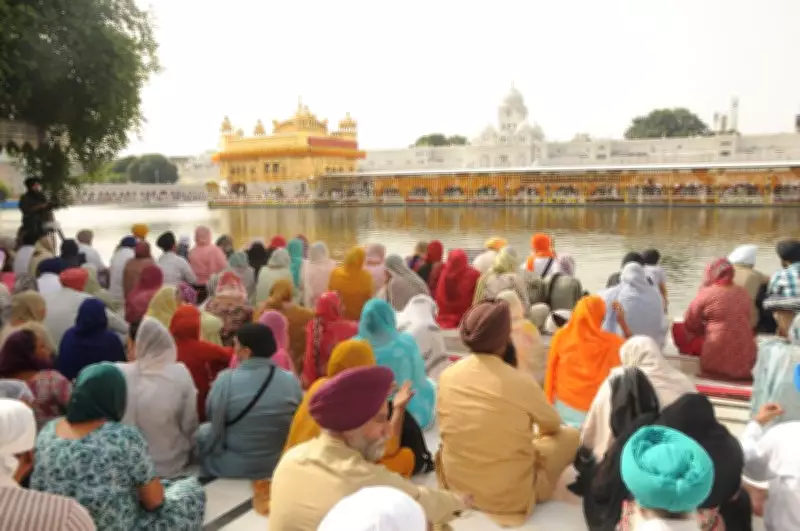
The Sacred Rule: Why Uniformed Police Cannot Enter the Golden Temple
The Golden Temple, or Sri Harmandir Sahib, in Amritsar stands as one of the holiest sites in Sikhism, attracting millions of devotees and tourists annually. A unique and longstanding rule at this revered shrine prohibits uniformed police officers from entering its premises. This restriction is deeply embedded in the temple's history, religious ethos, and commitment to maintaining a peaceful, spiritual environment free from symbols of state authority.
Historical and Religious Foundations
The prohibition dates back to the principles established by the Sikh Gurus, who emphasized the Golden Temple as a sanctuary for all, regardless of faith or background. Historically, the temple has served as a refuge during times of conflict, symbolizing equality and compassion. The presence of uniformed police is seen as contradictory to these values, as uniforms represent governmental power and potential coercion, which could disrupt the temple's atmosphere of devotion and harmony.
This rule gained prominence during the British colonial era and subsequent periods of political unrest in Punjab. It was reinforced to prevent the temple from being associated with state control or militarization, ensuring it remains a neutral, sacred space. Over time, it has become a respected tradition upheld by the Shiromani Gurdwara Parbandhak Committee (SGPC), the managing body of Sikh shrines.

Practical Implications and Exceptions
In practice, police officers are allowed to enter the Golden Temple, but only in plain clothes or after removing their uniforms. This allows them to perform necessary duties, such as security checks or crowd management, without violating the sanctity of the site. The SGPC and local authorities coordinate to ensure safety while respecting religious sentiments. For instance, during large gatherings or festivals, plainclothes officers may be deployed discreetly to maintain order.
Exceptions to this rule are rare and typically involve extreme emergencies, such as terrorist threats or natural disasters, where immediate intervention is required. Even in such cases, efforts are made to minimize the visual impact of uniforms, often involving prior consultations with religious leaders. This balance highlights the temple's adaptability while preserving its core principles.
Symbolism and Modern Relevance
The restriction on uniformed police underscores the Golden Temple's role as a symbol of spiritual sovereignty and resistance to external domination. It reflects Sikh teachings that prioritize humility, service, and equality—values that uniforms can sometimes overshadow. In contemporary times, this rule continues to resonate, reinforcing the temple's identity as a place where faith transcends political and social boundaries.
Visitors and devotees often appreciate this policy, as it enhances the serene and inclusive ambiance of the complex. It also serves as a reminder of the temple's historical struggles for autonomy and its ongoing commitment to peace. By upholding this tradition, the Golden Temple maintains its unique character, fostering a sense of unity and reverence among all who enter.
In summary, the prohibition against uniformed police at the Golden Temple is not merely a regulatory measure but a profound expression of its religious heritage. It safeguards the shrine's sanctity, honors historical precedents, and ensures that it remains a haven for spiritual reflection, free from the trappings of worldly authority.