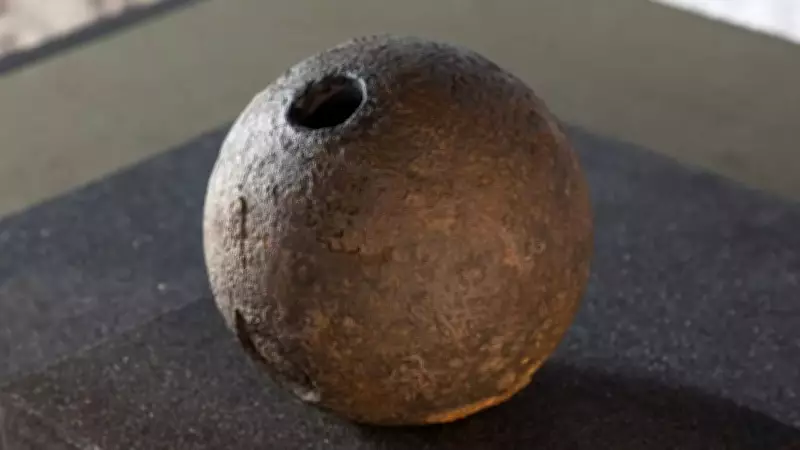
Archaeologists Unearth 1746 Undetonated Mortar Shell at Culloden Battlefield
A significant archaeological discovery has emerged from the historic Culloden battlefield in Scotland, where researchers have uncovered an undetonated mortar shell dating back to the pivotal 1746 conflict. This remarkable find was made during a collaborative excavation project led by the National Trust for Scotland and the University of Glasgow, offering unprecedented insights into the final Jacobite rising through the preservation of this eighteenth-century artifact.
Preserved Through Boggy Ground Conditions
The shell has been identified as originating from a government Coehorn mortar, a small-caliber ordnance extensively deployed during the brutal battle. Archaeological analysis indicates the projectile failed to explode because it plunged into the soft, marshy terrain characteristic of the Culloden landscape. This boggy ground effectively snuffed out the fuse before it could ignite the internal powder charge, leaving the shell intact for nearly three centuries.
This exceptional preservation provides archaeologists with a crucial piece of evidence that helps illuminate the heart of the Culloden battlefield. The discovery offers site-specific data that enables historians to better understand artillery positioning and tactical maneuvers during this decisive confrontation in British history.

Collaborative Recovery and Analysis
The recovery operation was spearheaded by Derek Alexander of the National Trust for Scotland and Professor Tony Pollard from the University of Glasgow. As detailed in Archaeology Magazine reports, the artifact represents a projectile from a Coehorn mortar, which was a standard weapon in the government arsenal during the 1746 engagement.
Archaeologists have determined that the shell serves as a tactical marker that enables reconstruction of government fire trajectories toward Jacobite artillery positions. By analyzing the approximate landing location, researchers can map the intensity of combat zones and potentially revise historical understanding of troop formations during this brief but exceptionally violent battle.
Specialized Conservation and Safety Procedures
Before detailed study and potential public display, the shell underwent extensive conservation procedures to ensure complete safety. The artifact was carefully X-rayed to verify the condition of its internal contents, then meticulously cleaned and stabilized to prevent further metal degradation.
The preservation of live historical ordnance recovered from battlefield contexts requires specialized handling that combines forensic science methodologies with traditional historic preservation techniques. This multidisciplinary approach ensures both scientific accuracy and public safety when dealing with potentially hazardous artifacts.
Historical Context of the 1746 Battle
The Battle of Culloden, fought on April 16, 1746, marked the final confrontation of the Jacobite Rebellion. Following the defeat of Bonnie Prince Charlie's forces by government troops commanded by the Duke of Cumberland, the traditional Highland Clan system was systematically dismantled throughout Scotland.
This mortar shell and similar artifacts provide tangible evidence of the technological disparity between opposing forces, highlighting the overwhelming firepower that government Redcoats employed to defeat the Jacobite uprising. The discovery contributes to ongoing scholarly reassessment of this transformative period in Scottish and British history, offering material evidence that complements documentary records of the conflict.