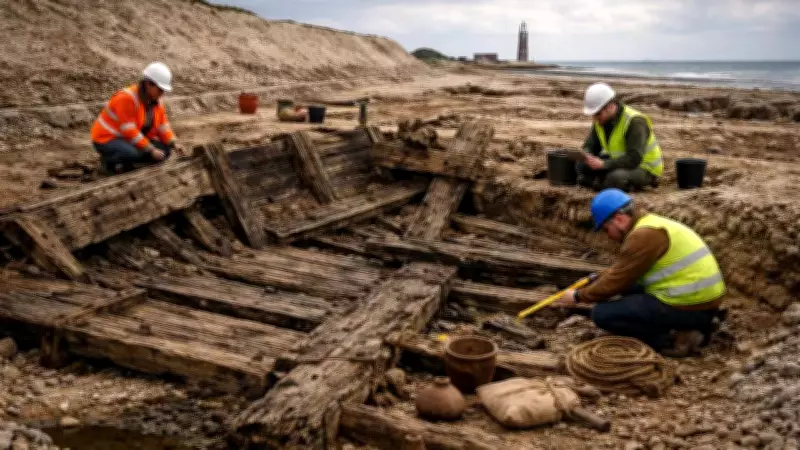
Unexpected Tudor Shipwreck in Gravel Quarry Sheds Light on England's Naval Power
History often emerges from the most unlikely places, far from grand monuments or famous battlefields. In 2022, a remarkable discovery in a gravel quarry near Dungeness, Kent, revealed a hidden chapter of England's past. Wooden relics, initially thought to be simple rubble, were identified as a remarkably well-preserved ship dating back almost 500 years. This find provides profound insights into a transformative era in English history, highlighting how design and craftsmanship, rather than just battles and monarchs, played a crucial role in shaping the nation's rise to global dominance.
Discovery and Location of the Dungeness Shipwreck
The wreckage was uncovered in 2022 within a gravel quarry in Dungeness, Kent, as documented in an official investigation by Wessex Archaeology. Approximately 140 oak timbers were found nearly 1,000 feet inland from the current shoreline, an unusual location that suggests significant changes in the coastline over centuries. This positioning indicates that the ship was originally closer to the sea but has been displaced due to natural shifts in the landscape, offering a unique glimpse into historical environmental changes.
Dating the Ship to the Tudor Period
Using the scientific technique of dendrochronology, researchers were able to date the wood precisely. The analysis, published in the Journal of Maritime Archaeology, showed that the ship was constructed between the mid-1530s and mid-1540s, firmly placing it within the reign of Henry VIII. Evidence of repairs conducted after 1561 further confirms its active use over several decades, underscoring its durability and importance during a pivotal time in English history.

A Major Shift in Shipbuilding Techniques
The ship was built using a method known as "carvel construction," where planks are placed edge to edge on a pre-existing frame. This marked a departure from the traditional "clinker construction," which involved overlapping planks. The carvel technique allowed for the creation of larger, stronger vessels capable of enduring long voyages and warfare, representing a significant advancement in naval engineering that contributed to England's maritime prowess.
Materials and Construction Details
Primarily constructed from oak, with some sections of the external hull made from elm, the vessel showcased the resourcefulness of Tudor shipbuilders. Instead of metal nails, fasteners were wooden treenails, and waterproofing materials included cattle hair, tar, and resin. While some parts of the ship were crafted with refined precision, others displayed a more rudimentary approach, reflecting the evolving nature of shipbuilding practices during this period.
Connection to the Gresham Ship
The Dungeness wreck has also provided valuable context for understanding another vessel, known as the Gresham Ship. Similar structural features indicate a regional shipbuilding style that blended English and continental influences. This connection helps researchers piece together a more comprehensive picture of Tudor-era maritime technology, highlighting the exchange of ideas and techniques that fueled innovation.
How This Shaped England's Naval Power
During the 16th century, England invested heavily in naval dockyards and recruited experienced shipbuilders from across Europe. This strategic focus on improving shipbuilding techniques and designs enabled the construction of superior ships, which played a critical role in England's ascent as a dominant world power. The discovery of the Dungeness shipwreck underscores how technological advancements in craftsmanship were instrumental in shaping the nation's historical trajectory, offering a tangible link to the past that continues to inform our understanding of maritime history.