Poonam Saxena Calls Translation 'God's Work' at Jaipur Literature Festival
Journalist, writer and translator Poonam Saxena delivered a powerful message at the Jaipur Literature Festival on Friday. She described translation as a form of creative and ethical responsibility during her thought-provoking session.
Translation as Divine Work
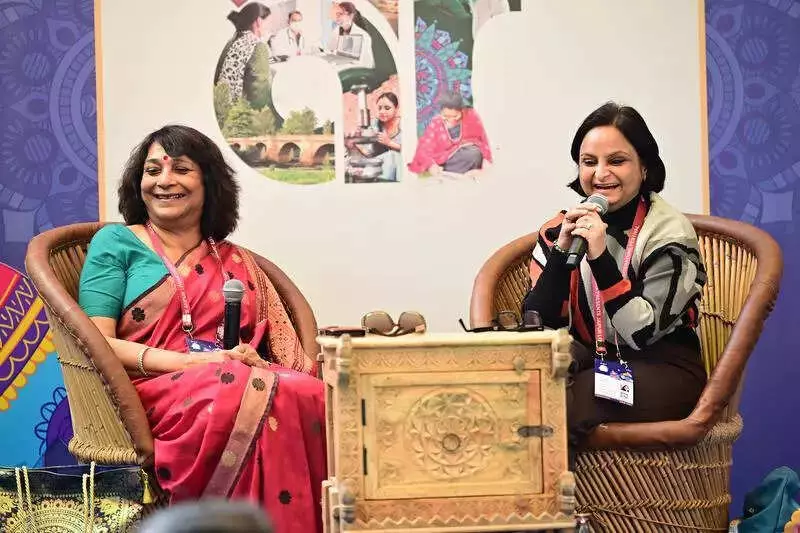
Saxena spoke at a session titled 'Baaton Baaton Mein'. She reflected deeply on the power of language and the complexities of translation. The translator called the work "God's work" with genuine conviction.
"Translation is God's work," Saxena declared. She explained that this process involves understanding cultural contexts, emotional undertones and social realities within texts. The journalist emphasized that translation goes far beyond literal word transfers between languages.

"Sometimes, translated words cannot capture the original emotion or punch," she acknowledged during her conversation with Kumari Rohini. "Still, I feel this work remains necessary for global literature exchange."
The Vital Exchange Process
Saxena recognized that translations often fall short of capturing the full depth of original works. However, she strongly emphasized the process remains vital for exchanging literature and ideas across linguistic and geographical boundaries.
The writer highlighted how translation enables cultural bridges between communities. She stressed that this creative work requires deep sensitivity to both source and target languages.
Hindi Cinema's Language Evolution
During the session, Saxena also traced the fascinating evolution of language in Hindi cinema. She noted how film dialogues and narratives transformed significantly over time.
"Early Hindi films drew heavily from Urdu and literary Hindi," she observed. "This lent them a certain lyrical quality that audiences cherished."
The translator contrasted this with contemporary cinema. "Modern films reflect changing social sensibilities, urban influences and global exposure," she explained. This shift has significantly altered how stories are told and received by audiences today.
From Page to Screen
The freewheeling discussion touched upon literary works adapted into films. Saxena specifically mentioned how Gulshan Nanda's novels were woven into successful Hindi movies like Kati Patang and many others.
She highlighted the challenges involved in translating written narratives into visual storytelling. Filmmakers must reinterpret characters, emotions and themes for the screen, often requiring creative compromises.
"Cinema operates under different constraints than literature," Saxena explained. "Adaptations demand careful balancing between faithfulness to source material and cinematic requirements."
Language as Living Expression
The session offered audiences a nuanced understanding of translation, cinema and storytelling. Saxena underlined how language continues evolving while remaining central to human expression.
Her insights revealed translation as both art and responsibility. The discussion illuminated how words carry cultural weight across languages and mediums.
Attendees left with deeper appreciation for translators' work. They understood how these language bridges connect diverse literary worlds and cinematic traditions.