The serene environs of the Gandhi King Plaza at the India International Centre in New Delhi recently transformed into an open-air gallery for a significant artistic convergence. Titled 'Three Moderns,' the exhibition brought together the powerful sculptural works of three stalwarts of Indian modernism: Himmat Shah, Krishen Khanna, and Thota Vaikuntam. Presented by Namtech Fine Arts and curated by the renowned critic Uma Nair, the show presented a curated dialogue between three distinct artistic voices, exploring profound themes through form and material.
A Synergy of Masters Under the Open Sky
Curator Uma Nair envisioned the exhibition as more than a mere display; it was an experiential journey. She described it as an event “about creating a feeling—an energy formed through the synergy of great artistic minds.” By installing the 12 sculptures amidst the Plaza's greenery and under the vast sky, the artworks were allowed to breathe and interact with natural light and shadow. This setting encouraged visitors to engage in a walking meditation, where each piece appeared as a suspended moment of reflection, its meaning amplified by the passage of time and the elements.
Nair poignantly added, “When masters like Himmat Shah, the last of the Progressives Krishen Khanna, and Thota Vaikuntam come together, time becomes witness and sculpture becomes language.” The exhibition also served as a tribute to the late Prof. M.G.K. Menon, whose vision established the Gandhi King Plaza as a dedicated space for India's leading sculptural expressions.

Celebrating a Centenary with the Bandwallahs
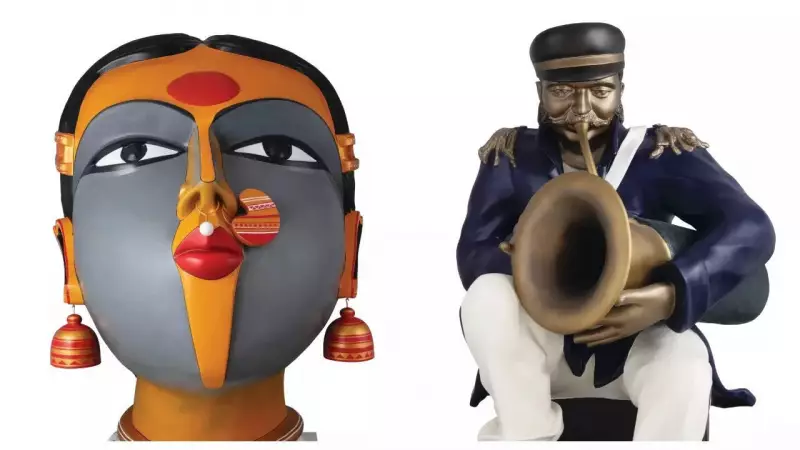
A central highlight was the contribution of the legendary Krishen Khanna, who is celebrating his 100th year. The exhibition featured four monumental works from his iconic Bandwallah series. Khanna's powerful bronzes elevate everyday street musicians into enduring symbols of community, rhythm, and cultural memory. His figures, frozen in musical performance, speak volumes about the collective soul of India, turning ordinary scenes into timeless monuments.
The Silent Eloquence of Stone and Earth
The exhibition presented a compelling study in contrasts. Alongside Khanna's narrative bronzes stood the profound stone works of Himmat Shah. Shah contributed four sculptures that delve into concepts of time, tactility, and pure presence. Often focusing on heads and figures, his work masterfully blends archaic, timeless qualities with a contemporary sensibility. The weight and texture of the stone communicate a silent eloquence, tracing a deep, introspective human journey.
Completing the triad was Thota Vaikuntam, whose bronzes from 'The Sacred Gaze' series offered a vibrant connection to the soil. Reflecting the rural life and ethos of Telangana, his sculptures are characterized by their earth-toned surfaces, steady, grounded postures, and intricate ritualistic details. Vaikuntam's work celebrates the dignity and spiritual grace of rural Indian men and women, making the local universally resonant.
Material as Metaphor: Identity and Abstraction
The artists' choice of medium—from marble and bronze to resinated fiberglass—was integral to the exhibition's narrative. Each material was employed not just for its physical properties but as a metaphor. The show collectively highlighted enduring themes of identity, human vulnerability, and abstraction. The tactile quality of Shah's stone, the narrative warmth of Khanna's bronze, and the earthy resonance of Vaikuntam's figures together created a rich tapestry of modern Indian sculpture.
'Three Moderns' successfully provided a rare opportunity to witness the divergent yet complementary paths of three giants in one contemplative space. It reinforced the Gandhi King Plaza's role as a vital cultural hub in the nation's capital, offering Delhi's art lovers a profound encounter with works that bridge memory, material, and the enduring human form.