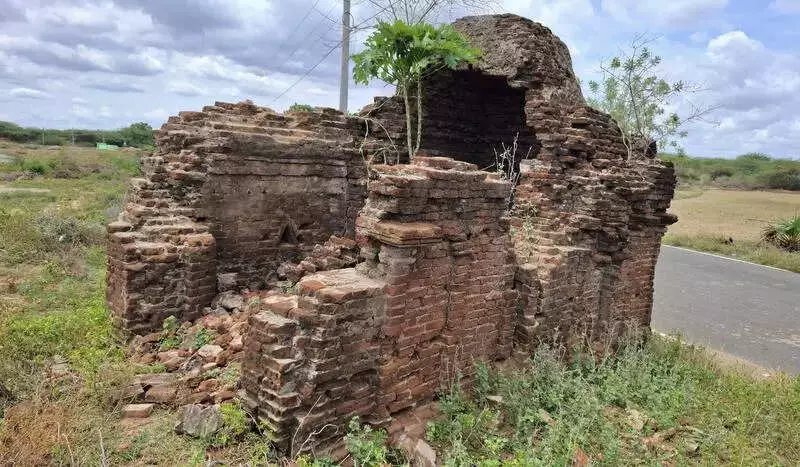
The historic Kulasekara Azhwar Temple granary in Thondi, a coastal town in Tamil Nadu's Ramanathapuram district, stands as a crumbling testament to neglect. This ancient structure, which once served as a vital storage facility for temple grains and offerings, is now dangerously close to complete collapse, leaving locals and heritage enthusiasts deeply concerned.
A Legacy Built to Last, Now Falling Apart
Constructed approximately 400 years ago during the reign of the Sethupathi kings, the granary was an architectural marvel of its time. Built with robust lime mortar and featuring a unique beehive-shaped dome (Kudavarai), it was designed for perfect preservation. The structure's thick walls and strategic ventilation kept stored paddy safe from moisture and pests for decades.
However, this resilience is now failing. A large portion of the dome has already caved in, exposing the interior to the harsh coastal elements. The remaining structure shows severe cracks and signs of imminent failure. The neglect is stark, especially considering the temple itself is under the management of the Tamil Nadu Hindu Religious and Charitable Endowments (HR&CE) Department.

Local Voices Rise in Protest
The deteriorating condition has sparked significant distress among the residents of Thondi. M. Karunakaran, a local resident and heritage activist, has been at the forefront of efforts to draw official attention to the granary's plight. He emphasizes that the structure is not just a relic but an integral part of the town's cultural and historical identity, directly linked to the revered Kulasekara Azhwar Temple.
"The granary is a symbol of our community's past prosperity and agricultural practices," Karunakaran states. "Watching it disintegrate is heartbreaking. We have submitted petitions and appealed to the HR&CE officials multiple times, but no concrete restoration action has been initiated." The local community fears that without immediate intervention, this piece of history will be lost within a few monsoon seasons.
An Urgent Call for Restoration
The situation highlights a broader issue of preserving lesser-known but historically significant monuments across the state. While major temples receive attention and funds, ancillary structures like granaries, which speak volumes about socio-economic history, often fade away.
Heritage experts argue that restoring the Thondi granary is both a duty and an opportunity. It can serve as an educational site, showcasing ancient Indian engineering and grain storage wisdom. The onus now lies squarely with the HR&CE department to allocate resources and expertise for a scientific conservation project.
The clock is ticking for the Thondi granary. Its continued neglect sends a poor message about heritage conservation priorities. The demand from Thondi is clear: official recognition of the problem and the commencement of urgent restoration work to save a 400-year-old legacy from turning into dust.