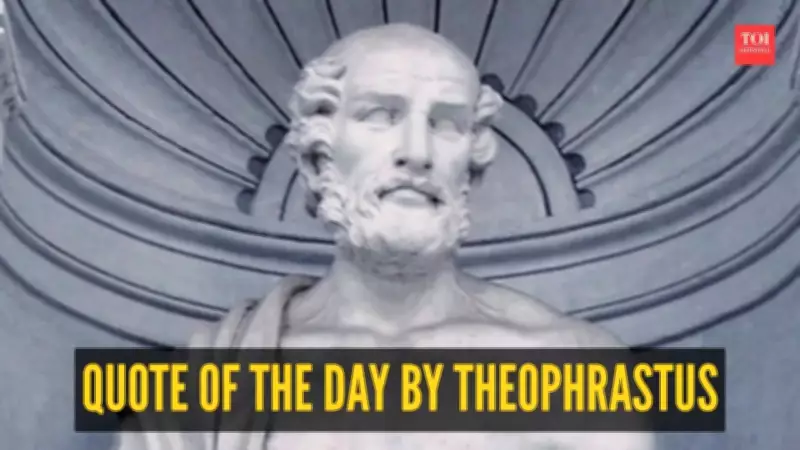
The Enduring Legacy of Theophrastus: Aristotle's Philosophical Heir
Theophrastus stands as one of the most influential figures in ancient Greek philosophy, having succeeded the legendary Aristotle as the head of the Peripatetic school. Often celebrated as the "Father of Botany" for his groundbreaking contributions to natural science, his intellectual pursuits also spanned ethics, metaphysics, and profound reflections on human existence. His work seamlessly blended empirical observation with deep philosophical inquiry, leaving a legacy that continues to inspire scholars and thinkers across the globe.
Decoding a Timeless Quote: The Vanity of Glory and Ambition
A thought-provoking statement widely attributed to Theophrastus captures the essence of his philosophical outlook: "Remember that life holds out many pleasing deceits to us by the vanity of glory; for that when we are beginning to live, then we are dying. There is, therefore, nothing more profitless than ambition." This powerful quote delves into the deceptive nature of societal accolades and the relentless pursuit of fame.
At its core, the quote emphasizes how glory and ambition often mislead us with their superficial appeal. Theophrastus argues that the quest for reputation and prestige creates an illusion that external validation leads to fulfillment. However, in chasing these ephemeral goals, individuals risk losing their authentic selves and squandering precious time.

The poignant line, "when we are beginning to live, then we are dying," underscores the transient and ironic nature of human life. It highlights that even as we gain wisdom or achieve milestones, time inexorably slips away. This insight urges a life lived with urgency, mindfulness, and a focus on what truly matters, rather than hollow pursuits.
By labeling ambition as "profitless," Theophrastus does not condemn hard work or meaningful goals. Instead, he cautions against blind ambition driven by ego or societal pressure, advocating for actions guided by genuine purpose and self-awareness. He encourages a balanced approach where ambition is directed by inner values, not external validation.
The Surviving Works and Insights of Theophrastus
Although much of Theophrastus's extensive writings have been lost to history, key works endure, offering glimpses into his versatile mind. His botanical studies, such as Enquiry into Plants and On the Causes of Plants, laid the foundation for modern botany and scientific methodology. Beyond science, his treatise Characters explores human nature with remarkable wisdom and humor, categorizing various personality types and reflecting the depth seen in his philosophical quotes.
These works collectively present a gentle yet firm caution to reassess life's priorities. Amidst societal pressures to achieve and excel, Theophrastus's teachings remind us that life is fleeting, and chasing illusions can detract from true enjoyment and fulfillment. His philosophy advocates for conscious living, cherishing each moment, and striving for profound, meaningful accomplishments rather than superficial success.
Why Theophrastus's Teachings Resonate Across Centuries
The wisdom of Theophrastus remains strikingly relevant in today's fast-paced world, where ambition and glory often dominate personal and professional landscapes. His call to balance success with significance encourages individuals to:
- Reflect on their motivations and avoid being swayed by vanity.
- Embrace mindfulness and live with a sense of purpose.
- Value time as a finite resource and prioritize meaningful experiences.
By integrating these lessons, one can navigate the complexities of modern life with greater clarity and fulfillment, proving that ancient philosophy still holds powerful insights for contemporary challenges.