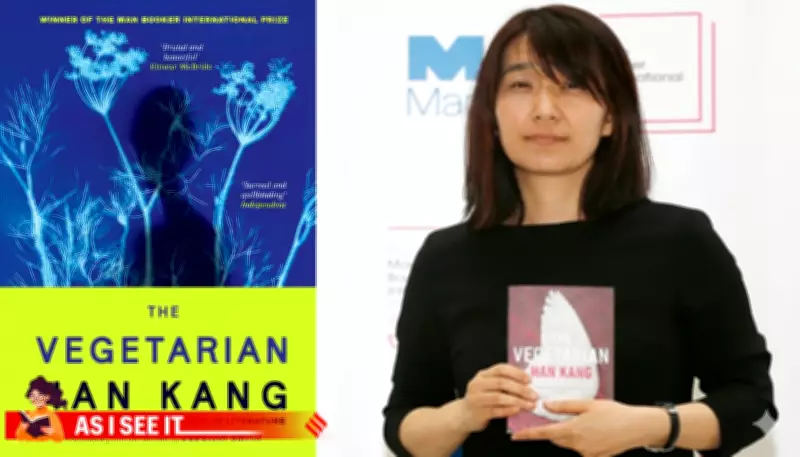
Han Kang's acclaimed novel The Vegetarian, first published in 2007, continues to resonate powerfully with modern readers, particularly women. This unsettling narrative delves into the profound implications of a woman's silent refusal to comply with societal norms, exposing how such defiance is perceived as a threat in a world that still demands obedience, justification, and access to female bodies.
The Unsettling Power of Yeong-hye's Silence
At the heart of the story is Yeong-hye, a seemingly ordinary woman who, after experiencing disturbing nightmares, decides to stop eating meat. She offers no explanation for her choice, refusing to campaign for vegetarianism or seek approval from others. This lack of justification infuriates those around her: her husband views her as a social embarrassment, her father sees her as a rebellious figure without cause, and her brother-in-law aestheticizes her suffering, turning her into a muse for his art.
In today's supposedly progressive world, Yeong-hye's experience feels eerily familiar. Women who deviate from expected timelines—such as marriage, motherhood, or traditional gender roles—often face the same intrusive questions: Why? What's wrong with you? Can't you just be normal? The novel starkly illustrates how refusal from women is rarely tolerated; it must be explained, corrected, or even punished.

The Body as a Site of Control
The Vegetarian powerfully portrays how women's bodies remain public property, subject to endless scrutiny and moral policing. Yeong-hye's body becomes a battleground for control: her husband asserts marital entitlement, her father resorts to force-feeding meat to discipline her, and her brother-in-law projects his desires onto her, treating her suffering as artistic material.
This reflects a broader reality where women's choices—regarding food, appearance, sexuality, and reproduction—are constantly debated and judged. Even acts of resistance are often filtered through a male gaze that prioritizes perception over genuine consent. Han Kang's unflinching narrative shows how easily women's pain is exploited for control, offering no redemption arc or triumphant reclamation of agency.
Silence as Defiance in an Age of Oversharing
In an era dominated by social media and the expectation to share every trauma as empowering content, Yeong-hye's silence feels revolutionary. She does not translate her suffering into inspirational narratives or public lessons; instead, she retreats into isolation. Her refusal to explain is not a sign of weakness but a profound act of defiance, challenging readers to confront their discomfort with unexplained female autonomy.
The novel raises critical questions: Why do we feel entitled to explanations from women? Why does female silence provoke such fear and hostility? By depicting Yeong-hye's gradual transformation—from giving up meat to attempting to become a tree—Han Kang highlights the brutal consequences of a woman choosing to step away from societal expectations.
Enduring Relevance and Uncomfortable Truths
Nearly two decades after its publication, The Vegetarian remains relevant because the world it depicts has not changed enough. Yeong-hye's quiet rebellion is still seen as dangerous, and her withdrawal is deemed unacceptable. The novel does not provide solutions but exposes a raw wound, forcing readers to sit with the discomfort of her choices.
Its warning is not about vegetarianism, madness, or extremity but about the limited space society allows for women who decide for themselves. In a culture that often rewards visible resilience, Yeong-hye's story reminds us that not all forms of resistance are survivable or celebrated. Han Kang's masterpiece endures as a poignant critique of the pressures modern women face, making it an essential read for anyone grappling with issues of agency, silence, and autonomy.