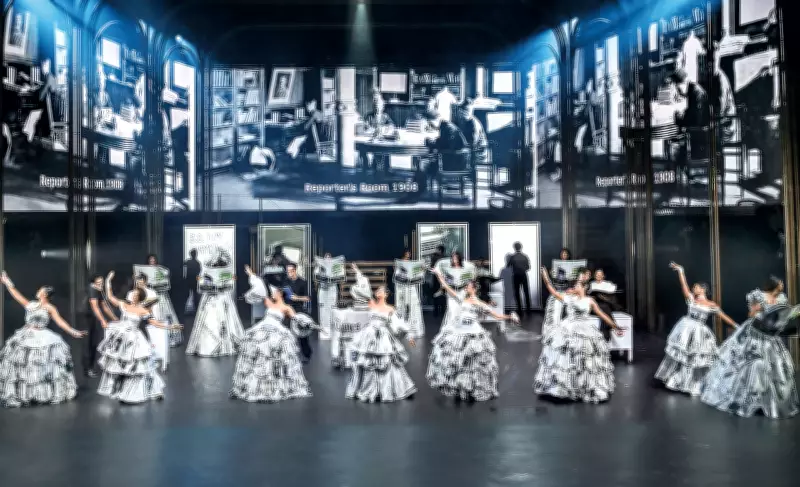
Tesseract: A Theatrical Masterpiece Celebrating 187 Years of The Times of India in Mumbai
In Mumbai, a typical Friday night often involves dressing up, attending an event, and offering polite applause. However, the recent performance of Tesseract at the National Centre for the Performing Arts (NCPA) defied this norm, delivering an evening of profound depth and emotional resonance. This production, created by Meera Jain to commemorate 187 years of The Times of India, was not just a show but a transformative experience that continuously elevated its own standards.
A Grand Opening with Shostakovich
The evening commenced with Dmitry Yablonsky and the Russian State Symphony Orchestra performing Shostakovich's Waltz No. 2. This choice immediately set a serious and introspective tone, blending grandeur with melancholy. As an opening for a show exploring themes of truth and time, it signaled that this was an event committed to intellectual and artistic rigor, far removed from casual entertainment.
Exceptional Performances and Emotional Peaks
Shiamak Davar's dancers, already renowned for their talent, showcased their absolute best in this production. With a hundred performers on stage, the energy was palpable. During a Michael Jackson medley, the stage transformed into a vibrant space that felt both theatrical and intimately celebratory, prompting audience members to dance in their seats. In contrast, a quieter moment featured Billy Joel's She's Always a Woman, rendered with such tenderness that it created a private, reflective atmosphere amidst a full house.

As noted by Ankur Chaturvedi, a co-founder of the independent creative agency Wife, the show consistently surpassed expectations. Every perceived peak was swiftly followed by something even more impactful, making it a rare theatrical experience that kept raising its own bar.
Innovative Use of Screens and Historical Narrative
The integration of screens played a pivotal role in shifting the emotional register of each scene. In a production traversing 187 years of history, this visual element was crucial. Audiences witnessed India and the world evolve through front pages and headlines from The Times of India, now archival relics that once defined mornings for readers. This juxtaposition of past and present on a Friday night was both strange and deeply moving, highlighting the newspaper's long-standing role in documenting truth.
AI Integration and a Sense of Inevitability
Artificial intelligence added a layer of inevitability to the production, positioning it at a turning point between the print century and the digital future. This technological aspect underscored the show's relevance and forward-thinking approach, enhancing its narrative on historical continuity and change.
A Lasting Impact and Personal Reflection
Attendees left with a commemorative book, serving as a tangible record of the chapters they had just witnessed. For many, like Chaturvedi, this led to personal reflection later in the evening, emphasizing the show's profound impact. Tesseract not only celebrated 187 years of publishing truth but did so with justice, offering a memorable and thought-provoking experience that resonated long after the curtains closed.