The Accidental Discovery of Lascaux Cave's Ancient Art Gallery
Imagine the thrill of childhood adventure stories coming to life—treasure hunts through forest trails, following mysterious maps into the unknown. For four French teenagers in 1940, this fantasy became reality when they climbed down a small hole and entered a world sealed for millennia, discovering one of humanity's greatest artistic treasures.
The Day That Changed Archaeology Forever
On September 12, 1940, Marcel Ravidat, Jacques Marsal, Simon Coencas, and Georges Agnel—four local teenagers from Montignac, France—slipped through a narrow opening beneath a wooded hill. What began as youthful exploration transformed into a monumental archaeological discovery as they entered what we now know as the Lascaux cave complex.
According to France's Ministry of Culture, "They walked along a passage about 98 feet long before spotting the first paintings in what is now called the Axial Gallery." While some accounts mention a dog named Robot helping locate the entrance, official records emphasize the boys' own exploration rather than any animal's role in their remarkable find.

A Labyrinth of Ancient Masterpieces
The teenagers returned with ropes to descend a roughly 26-foot-deep shaft, where they encountered one of Lascaux's most famous scenes: a human figure facing a charging bison. This was merely the beginning—the cave revealed itself as an extensive network of decorated passages and chambers spanning approximately 771 feet underground.
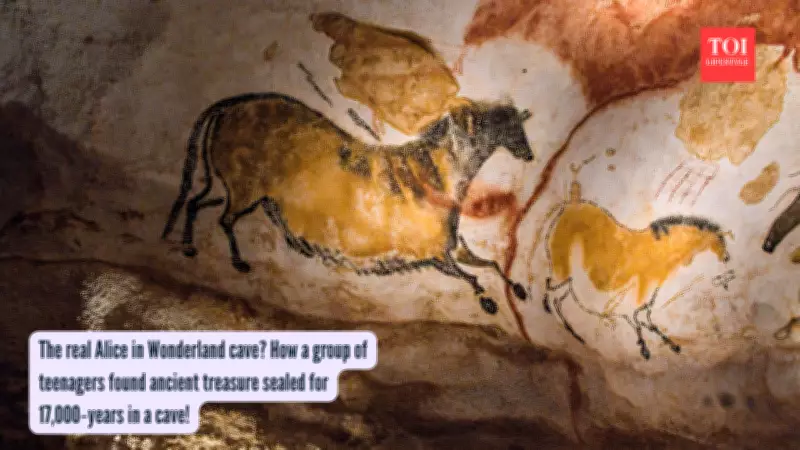
Lascaux is not a single mural but rather an interconnected system of painted and engraved spaces containing between 600 and 680 painted figures alongside approximately 1,500 engravings. The majority depict animals including horses, deer, ibex, aurochs, and bison, created using red ochre, charcoal, and manganese-based pigments.
Some figures stretch more than 6.5 feet in length, demonstrating remarkable planning and execution in complete darkness. Radiocarbon dating places these artworks between 17,000 and 22,000 years old, created during the early Magdalenian period of the Upper Paleolithic era.
From Public Sensation to Protected Sanctuary
Lascaux first opened to the public on July 14, 1948, quickly becoming an international sensation. At its peak, official records indicate 1,500 to 1,800 daily visitors exploring the cool, dark chambers. However, this popularity came at a cost—human presence introduced heat, moisture, carbon dioxide, and microscopic organisms into the fragile underground ecosystem.
By the late 1950s, guides and scientists observed green algae and lichen beginning to colonize the ancient walls. In 1963, authorities made the difficult but necessary decision to close the cave to general visitors. As the French Ministry of Culture explains, "Lascaux was closed to the public in 1963 because people did not just come to look—they changed the cave's air and biology."
Today, the original cave remains under continuous monitoring with strict access limitations to protect the irreplaceable artwork from further damage.
Experiencing Lascaux in the Modern Era
Since the original cave cannot safely accommodate visitors, replicas and digital technologies have become the primary means for public engagement. The French Ministry of Culture has developed an official virtual tour available on its website, allowing users to navigate through the chambers without disturbing the fragile environment.
This digital preservation ensures that while the physical cave remains protected, its artistic legacy continues to inspire and educate generations about our shared human heritage. The story of those four teenagers—whose curiosity uncovered a window into prehistoric creativity—remains more relevant than ever as we balance preservation with public access through innovative technological solutions.