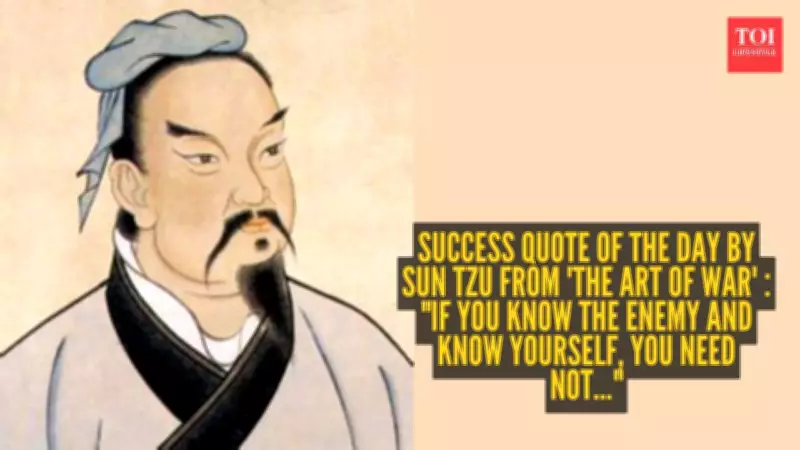
Sun Tzu's classic treatise, The Art of War, offers a profound lesson that transcends military strategy: "If you know the enemy and know yourself, you need not fear the result of a hundred battles. If you know yourself but not the enemy, for every victory gained you will also suffer a defeat. If you know neither the enemy nor yourself, then you will fail in every battle." This wisdom, though framed for warfare, serves as a masterclass in navigating everyday obstacles with clarity and resilience.
Understanding the Core Principle
True success is not a product of luck or brute force. It hinges on a deep understanding of two critical elements: the specific problem you face and your own limitations. When you genuinely comprehend both, the fear of failure dissipates, grounding you in focus and readiness. Sun Tzu's message is not about bloodshed but about facing heavy obstacles with strategic awareness.
The First Lesson: Preparation Eliminates Fear
The first part of the quote—"If you know the enemy and know yourself, you need not fear the result of a hundred battles"—emphasizes preparedness. Knowing what you are up against and your own capabilities allows you to act with confidence. You do not panic or guess; you move with purpose. This awareness transforms fear into focus and uncertainty into strategy. Victory comes not from overpowering but from understanding.

The Second Lesson: Self-Awareness Is Not Enough
The second part—"If you know yourself but not the enemy, for every victory gained you will also suffer a defeat"—serves as a warning. Self-knowledge is powerful but insufficient without understanding the obstacle. Without insight into the terrain, rules, or opposition, you risk being blindsided. You might win one battle but lose the next, or succeed once only to fail due to unseen risks. Even your strengths can become weaknesses if you fight the wrong battle.
The Third Lesson: Ignorance Leads to Failure
The final part—"If you know neither the enemy nor yourself, you will succumb in every battle"—is the harshest truth. Without understanding the challenge or yourself, you are lost. You react instead of acting, guess instead of planning, and remain vulnerable. Most people fail not because they are weak, but because they are unaware. Sun Tzu does not promise immunity from failure; he asserts that failure is inevitable when awareness is absent. The only way to avoid it is to learn.
Applying Sun Tzu's Wisdom to Modern Life
This ancient advice applies broadly to relationships, careers, health, and personal growth. In a relationship, the "enemy" might be a communication problem; knowing yourself means understanding your triggers. In a job, the "enemy" could be a tough project; knowing yourself involves recognizing your skills and limits. In health, the "enemy" may be a habit; knowing yourself requires understanding your motivations. Success stems from understanding both sides of any struggle.
Practical Steps for Implementation
Practically, this means asking two questions: What am I facing? And who am I when I face it? Write down the challenge. List your strengths and weaknesses. Plan your steps. Learn from mistakes. Sun Tzu's message is simple but profound: know your enemy, know yourself, and you will never be afraid because you are ready. You are prepared. That confidence wins battles—not just in war, but in life.
So the next time you face a challenge, do not just react. Ask: What am I facing? Who am I when I face it? Understand both. Then move forward with clarity. Because when you know the enemy and know yourself, you do not need to fear the result. You know you will handle it. That is the real victory.
About the Author
This article is brought to you by the TOI Lifestyle Desk, a dynamic team of dedicated journalists at The Times of India. With unwavering passion and commitment, they sift through the pulse of the nation to curate a vibrant tapestry of lifestyle news. The TOI Lifestyle Desk goes beyond the obvious, delving into the extraordinary to serve as your lifestyle companion, providing daily doses of inspiration and information—from fashion trends and travel escapades to culinary delights and wellness tips.