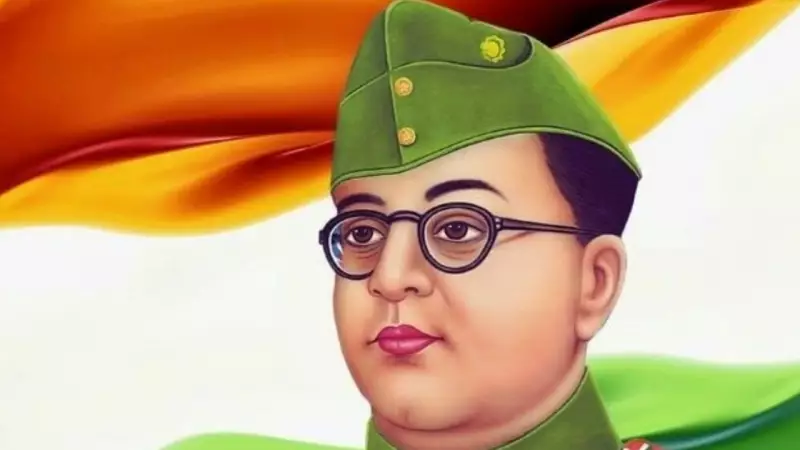
10 Iconic Quotes of Subhash Chandra Bose That Still Inspire and Encourage
Subhash Chandra Bose occupies a distinctive position in India's freedom movement, celebrated not only for his audacious campaigns and fervent nationalism but also for the keen, restless intellect that underpinned them. While popular memory often reduces him to a handful of dramatic slogans, his speeches, letters, and political writings unveil a far more nuanced thinker: strategic, philosophical, and deeply invested in India's inner resilience. Beyond the roar of crowds and wartime drama, Bose addressed themes of fear, unity, moral courage, and the arduous responsibilities that accompany freedom. These lesser-known reflections capture Netaji in contemplative moments, portraying a leader who believed independence was not merely secured on battlefields but forged in mindset and character. Delve into these insights that continue to resonate powerfully today.
1. “Reality is, after all, too big for our frail understanding to fully comprehend. Nevertheless, we have to build our life on the theory which contains the maximum truth.”
This quote unveils Bose as an intellectual who acknowledged uncertainty, a rare quality in a revolutionary leader renowned for his decisiveness. Yet, he rejected paralysis in the face of complexity. For him, political action involved selecting the most truthful path available, even when perfect clarity remained elusive. This perspective feels remarkably relevant in an era marked by misinformation and ideological inflexibility, urging us to navigate ambiguity with principled choices.
2. “No real change in history has ever been achieved by discussions.”
Bose expressed skepticism toward endless debate when it supplanted action. This statement reflects his frustration with protracted negotiations during India's freedom struggle and his conviction that historical shifts hinge on decisive moments, not solely on conference tables. It is not an outright rejection of dialogue but a critique of inaction, emphasizing the necessity of bold steps to drive progress.

3. “The secret of political bargaining is to look stronger than what you really are.”
Here, the master strategist emerges. Bose possessed an intimate understanding of power dynamics, believing that perception often influences outcomes as much as tangible strength. For colonized nations negotiating with empires, projecting confidence was, in his view, a vital survival tactic, highlighting the psychological dimensions of political struggle.
4. “India is calling. Blood is calling to blood.”
Less dramatic than his famous battle cry, this poetic line still carries profound urgency. Bose frames patriotism almost as an instinct, something deeper than ideology, flowing through shared history and sacrifice. It showcases his talent for rhetoric that stirs emotion without descending into theatrics, connecting individuals to a collective heritage.
5. “Men, money and materials cannot by themselves bring victory or freedom. We must have the motive-power that will inspire us to brave deeds.”
In this reflection, Bose transcends military hardware to discuss morale and purpose. He believed that psychological strength—the willingness to endure, believe, and persist—served as the true engine of liberation. This serves as a reminder that revolutions are sustained by spirit as much as by strategy, underscoring the importance of inner drive.
6. “To be able to stand against the world, a nation must first stand against itself.”
This stands as one of Bose's most introspective lines. He harbored deep concerns about internal divisions, regionalism, communal tensions, and complacency, feeling that freedom would be hollow without self-discipline and unity. The quote reads less like a battlefield exhortation and more like a cautionary message aimed inward, advocating for internal cohesion as a foundation for external strength.

7. “We have to fight the British, but we have to fight them with our own strength, on our own soil.”
This statement underscores Bose's insistence on Indian agency. He resisted the notion that independence might appear as a geopolitical accident or a gift shaped entirely by global events. His emphasis lay on dignity, with Indians securing freedom through their own efforts, fostering a sense of self-reliance and national pride.
8. “Life loses half its interest if there is no struggle, if there are no risks to be taken.”
Philosophical rather than purely political, this line captures Bose's personal temperament. He viewed struggle not merely as a necessity but as the essence of a meaningful existence. It explains why he consistently chose the more challenging and perilous path, embracing adversity as a catalyst for growth and fulfillment.
9. “In the battle for freedom, fear is the greatest enemy.”
Bose recognized that psychological surrender could precede physical defeat. He believed colonial rule persisted partly due to internalized fear. Breaking that fear, through organization, symbolism, and daring acts, was central to his strategy. This insight positions him almost as a modern political psychologist, highlighting the critical role of mindset in liberation movements.
10. “The future is in our hands, and we will have to shape it ourselves.”
Unlike many revolutionary statements focused on grievances, this one looks forward with optimism. Bose showed less interest in rehearsing past injustices than in constructing a confident, self-reliant nation post-independence. It frames freedom not as an endpoint but as a beginning brimming with responsibility, empowering individuals to actively mold their destiny.
These quotes collectively reveal Subhash Chandra Bose as a multifaceted leader whose wisdom extends beyond historical contexts, offering enduring inspiration for contemporary India. They encourage reflection on unity, courage, and self-determination, reminding us that the principles he championed remain vital in today's complex world.