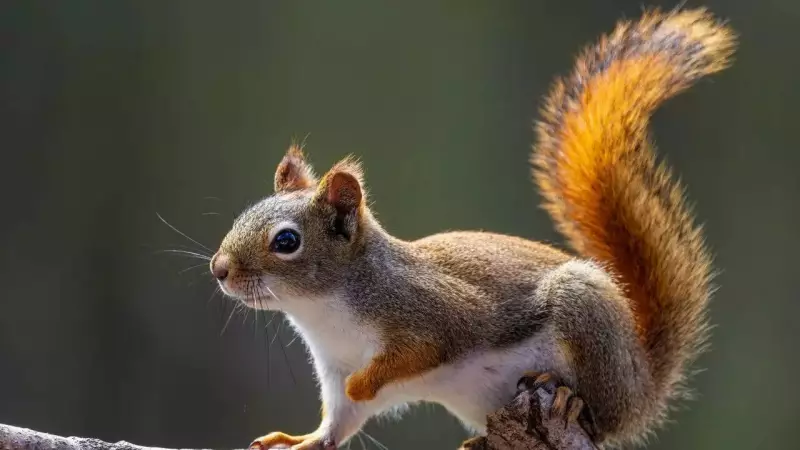
Have you ever watched a squirrel in a park or garden and noticed its tail jerking and flicking repeatedly? This common sight is often dismissed as random nervous energy. However, this subtle movement is a sophisticated form of communication, packed with meaning for both the squirrel and its observers.
The Tail as a Communication Tool: More Than Just a Flick
For a squirrel, the bushy tail is far from a mere decorative appendage. It serves as a primary tool for non-verbal communication. The tail twitch is a direct reaction to the squirrel's constant state of environmental scanning. Their heads swivel rapidly, bodies remain tense, and the tail is often the first part to react to a perceived change.
When you are near a squirrel and its tail starts flicking, it has already detected your presence. The animal is acutely aware of your location and is actively assessing your potential next move. This signal is not intended solely for you. It also acts as a visible alert to other squirrels in the vicinity, silently indicating that something in the environment feels "off," all without a single sound.

Why Don't They Just Run? The Strategy Behind the Signal
Contrary to the expectation that threatened animals will immediately flee, squirrels often employ a wait-and-watch strategy. Running consumes precious energy and reveals their intended escape route. Sometimes, holding their ground to gather more information is the safer, more energy-efficient choice.
The tail twitch occurs in this critical moment of assessment. The squirrel is not in panic mode but is meticulously measuring distance, movement, and intent. If you take a step closer, the flicks typically become more vigorous. If you stop and stare, the pace often increases. In this standoff, the squirrel is reading your body language just as you are reading its tail.
Respecting the Silent Boundary
A persistently twitching tail is a clear sign of discomfort. The squirrel is signaling that you are nearing an invisible boundary it prefers not to have crossed. This boundary could be related to physical proximity, direct eye contact, or even prolonged stillness, which can be interpreted as focused attention and therefore a greater threat.
The tail movement serves as a quiet warning before a full-blown escape. For a small prey animal living among predators like hawks and cats, as well as human dangers like traffic, silent signals are a survival advantage. A visual flick can warn fellow squirrels without alerting larger threats. The motion also makes the squirrel appear larger, more alert, and less vulnerable, potentially deterring an escalation.
Uncertainty fuels the motion. If the squirrel cannot predict your actions—are you leaving, approaching, or just watching?—the tail may continue its agitated dance. Once you retreat or clearly move on, the tail usually settles, and the animal relaxes.
The appropriate human response is simple: do less. Do not step closer, attempt to interact, or test limits. The squirrel is not being dramatic or aggressive; it is politely, and quietly, asking for more space. That twitching tail is not a threat directed at you. It is a boundary marker—quiet, clear, and easy to respect once you understand its language.