Six Surprising Facts About Seahorses You Probably Didn't Know
Seahorses capture our imagination with their unusual shapes and gentle movements. These tiny ocean creatures hold many secrets that most people never learn about. Let's dive into six fascinating facts that reveal the true nature of seahorses.
1. Seahorses Are Fish, Not Horses
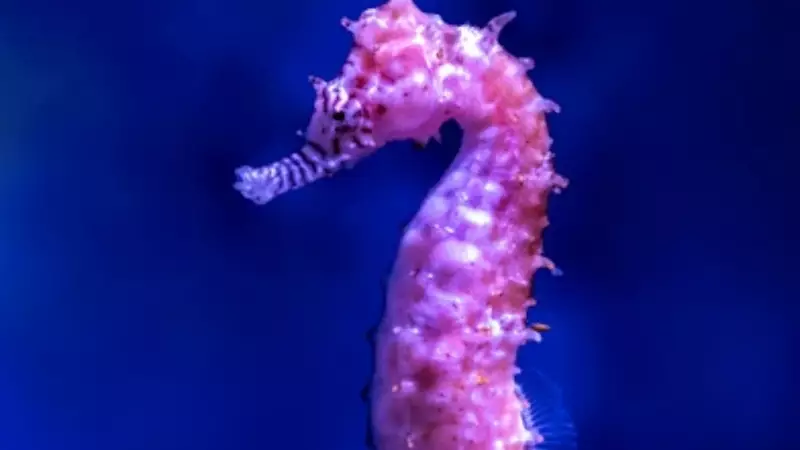
Despite their name, seahorses belong to the fish family. They have gills for breathing underwater and fins for swimming. Their horse-like head gives them a unique appearance, but they are fully aquatic animals. Seahorses live in coastal waters around the world, from tropical reefs to temperate zones.
2. Male Seahorses Give Birth
In a remarkable role reversal, male seahorses carry and give birth to the young. The female deposits her eggs into a special pouch on the male's abdomen. He then fertilizes the eggs internally and carries them for several weeks. When the time comes, the male experiences muscular contractions to release dozens or even hundreds of tiny seahorses into the water.

3. Seahorses Have Excellent Camouflage
Seahorses possess a remarkable ability to blend into their surroundings. They can change color to match corals, seaweed, or other marine environments. This camouflage helps them avoid predators and sneak up on their prey. Some species even grow skin filaments that mimic the texture of their habitat, making them nearly invisible.
4. They Are Monogamous for Life
Many seahorse species form lifelong pair bonds with a single mate. Each morning, the bonded pair engages in a greeting dance. They change colors, swim together, and hold tails. This daily ritual strengthens their bond and coordinates their breeding cycles. This monogamous behavior is rare in the animal kingdom, especially among fish.
5. Seahorses Have No Stomach
Seahorses lack a proper stomach, which means they must eat almost constantly to survive. They feed on tiny crustaceans like brine shrimp and plankton. Because food passes through their digestive system quickly, they need to consume large quantities daily. A seahorse can eat up to 3,000 brine shrimp in a single day to meet its energy needs.
6. They Use Their Tails Like Hands
A seahorse's prehensile tail acts like a fifth limb. They wrap their tails around sea grasses, corals, or other objects to anchor themselves in place. This helps them stay stationary in strong currents and avoid being swept away. The tail also allows them to rest without expending energy on swimming, which is crucial given their constant need to eat.
These facts highlight the incredible adaptations of seahorses. Their unique biology and behaviors make them one of the ocean's most intriguing inhabitants. Next time you see a seahorse, remember there's much more to these creatures than meets the eye.