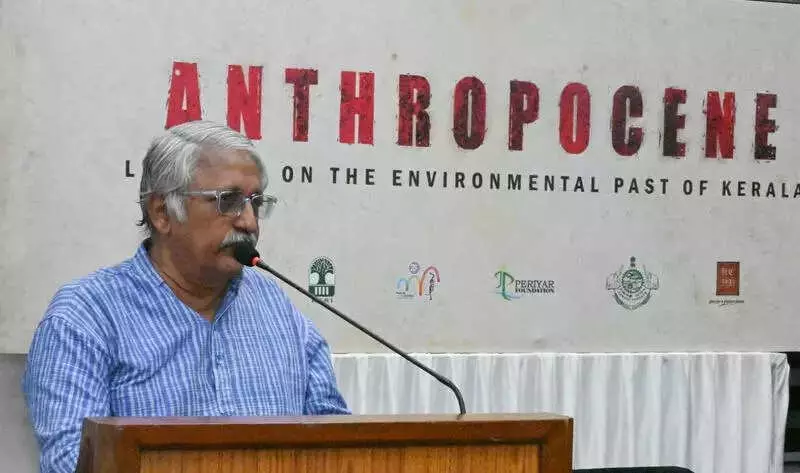
K N Ganesh, the chairperson of the Kerala Council for Historical Research, recently shared insights on the historical perspective of the Western Ghats. He delivered a talk titled 'The Western Ghats in History' as part of the forest department's Anthropocene lecture series in Thiruvananthapuram.
Ancient Respect for the Western Ghats
Ganesh explained that communities in olden days viewed the Western Ghats as a resource-rich and biodiverse region. They respected the habitat of wildlife and never considered it a frontier. People in those times preferred co-habitation with animals and did not disturb their spaces.
He gave the example of elephant corridors. These corridors served as habitats that ancient communities left alone. They had better knowledge about animals and their behaviors.

The Impact of Hunting
Ganesh noted that everything changed when hunting became prevalent. He clarified that this was not the small-time hunting practiced by tribes. Today, people hardly know anything about animals, according to him.
Many individuals, especially from areas close to the Western Ghats, are now moving out due to wildlife presence. This shift marks a significant change from the past.
Transformation Through the Ages
Ganesh discussed how the Western Ghats transformed over different periods. In the Megalithic period, it was a resource-rich region. By the 16th-17th centuries, it became swaroopams. During the British era, it turned into a mono-crop plantation region. Today, it is a region of capital for commercial tourism.
He emphasized that the Western Ghats should be treated as central to south India, not as a frontier as it is currently seen.
Evidence of Human Presence
There is evidence of human presence closer to the Western Ghats on the eastern side during the Megalithic age. Sites include Varshanad, Andipatti Hills, Palani Hills, Pollachi, Udagamandalam, Coonoor, and Vanavasi. The most evidence was found at Idukki.
Ganesh pointed out that this shows people lived or moved around here, but there is no evidence of human settlement. Among signs of continuous movement, two are particularly interesting.
Community Movements
The Kurumba movement from Karnataka through the Ghats all the way to Tiruvallur in Chennai is one example. The movement of the Irulars is another. For these communities, the Ghats were never a hindrance.
These paths could be considered exchange routes for resources. They facilitated the transfer of food produce and other materials to people from the coast. Ganesh suggested that further studies are needed to identify these resources and their origins and destinations.
Major Changes in History
The first major change occurred when people from midland regions moved to hilly areas. Many swaroopams were established by families who migrated for various reasons.
The second major change happened with the colonialists introducing the plantation economy. By the end of the 19th century, selective felling became widespread, and forest plantations were implemented.
Protection and Laws
To maintain these plantations, some regions of the Ghats had to be protected. Animals had no place to go, so reserve forests were notified. This shift occurred with the help of forest laws.
Ganesh remarked that a multi-crop resource region could have been maintained instead. His talk highlighted the deep historical connections and evolving perceptions of the Western Ghats.