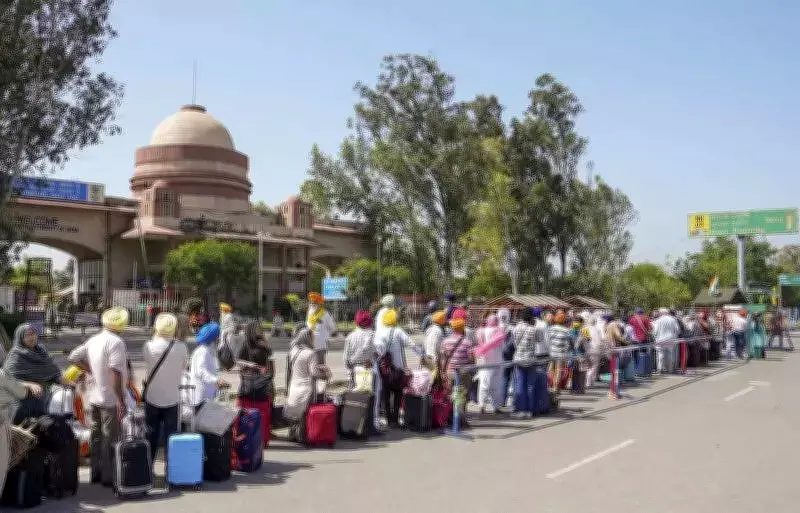
Sikh Pilgrims Return to India After Baisakhi Pilgrimage to Pakistan
A significant group of Sikh pilgrims, known as a jatha, has successfully returned to India after undertaking a spiritual journey to Pakistan. The pilgrims crossed the Attari International Border on Sunday, marking the conclusion of their pilgrimage undertaken during the auspicious occasions of Baisakhi and Khalsa Sajna Diwas.
Details of the Pilgrimage Journey
The jatha, comprising a substantial total of 2,238 devotees, originally departed for Pakistan on April 10. Their return was met with visible joy and emotional fulfillment as they re-entered their homeland. The pilgrims expressed that their entire journey was characterized by profound spiritual experiences and peaceful interactions.
The pilgrimage included visits to several of Sikhism's most revered historical sites in Pakistan:

- Gurdwara Nankana Sahib - The birthplace of Guru Nanak Dev Ji, founder of Sikhism
- Gurdwara Panja Sahib - Known for the sacred handprint of Guru Nanak
- Gurdwara Dera Sahib - Located in Lahore, marking where Guru Arjan Dev Ji attained martyrdom
- Gurdwara Darbar Sahib Kartarpur - The final resting place of Guru Nanak Dev Ji
Spiritual Fulfillment and Emotional Return
Upon their return, pilgrims shared heartfelt accounts of their experiences. Many described the pilgrimage as extremely pleasant and spiritually enriching beyond expectations. The act of paying obeisance at these sacred gurdwaras brought participants immense spiritual peace and deep personal satisfaction.
The atmosphere at the Attari border was one of celebration and homecoming as families reunited and pilgrims reflected on their transformative journey. This annual pilgrimage during Baisakhi serves as an important cultural and religious tradition connecting Sikh devotees with their heritage sites across the border.
The successful completion of this pilgrimage highlights the continuing religious exchanges between India and Pakistan, particularly during significant Sikh festivals. The pilgrims' positive experiences and safe return underscore the importance of such cross-border religious tourism for community bonding and spiritual fulfillment.