Shroud of Turin DNA Analysis Uncovers Startling 40% Indian Genetic Link
For devout followers of Christianity, artifacts associated with Jesus Christ are objects of profound reverence. Among these, the Shroud of Turin stands as one of the most sacred and debated relics—a 4.4-meter-long linen cloth that many believe served as the burial shroud of Jesus. While its authenticity has sparked centuries of controversy, a groundbreaking modern DNA analysis has now introduced a surprising new dimension to its enigmatic history: a significant genetic connection to India.
Comprehensive DNA Analysis of the Sacred Cloth
The Shroud of Turin has long been enveloped in mystery, but recent scientific advancements have shed unprecedented light on its complex past. A meticulous DNA analysis, led by Gianni Barcaccia of the University of Padova in Italy, has examined material collected from the relic in 1978. The study revealed that the shroud, measuring 4.4 meters in length and 1.1 meters in width, is contaminated with a vast array of genetic material from plants, animals, and humans.
Barcaccia and his team reanalyzed the 1978 samples, uncovering a remarkable diversity of medieval and modern DNA. The sources of this genetic material include:

- Domestic animals: Cats, dogs, chickens, cattle, goats, sheep, pigs, and horses
- Wildlife: Deer, rabbits, and various fish species including grey mullet and Atlantic cod
- Insects and arachnids: Flies, aphids, and other small creatures
- Plant species: Carrots, wheat, peppers, tomatoes, and potatoes—some of which were introduced to Europe after exploration of Asia and the Americas
The Startling Indian Connection
The most astonishing discovery emerged from the human DNA present on the fabric. The shroud has clearly been handled by numerous individuals over the centuries, including the 1978 research team. As the scientists noted, "The Shroud came into contact with multiple individuals, thereby challenging the possibility of identifying the original DNA of the Shroud."
Remarkably, nearly 40% of the human DNA extracted from the shroud traces back to Indian lineages. This finding suggests two possible explanations: historical interactions between regions or the importation of linen from areas near the Indus Valley by Romans. Barcaccia's team concluded, "The DNA traces found on the Shroud of Turin suggest the potentially extensive exposure of the cloth in the Mediterranean region and the possibility that the yarn was produced in India."
Historical Context and Controversy
The Shroud of Turin first appeared in historical records in France in 1354 and has been housed at the Cathedral of Saint John the Baptist in Turin, Italy, since the 16th century. Many believers maintain that this linen cloth was used to wrap Jesus's body after his crucifixion nearly 2,000 years ago. The shroud bears the faint image of a crucified man with wounds consistent with biblical accounts of Christ's suffering.
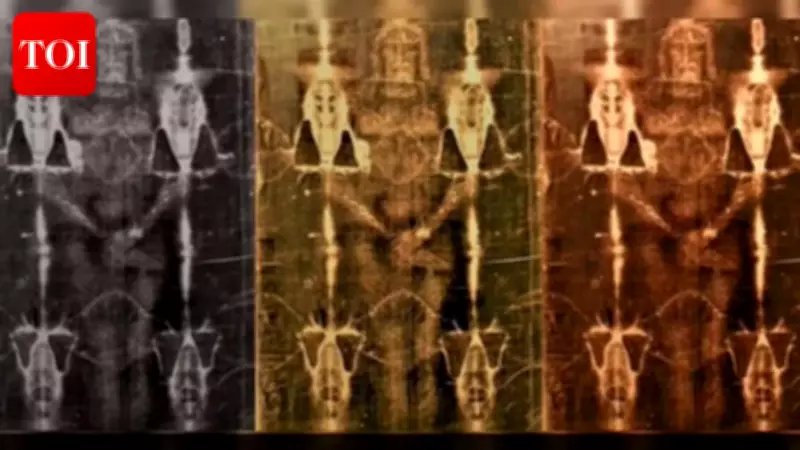
The relic gained widespread attention in 1898 when Italian photographer Secondo Pia captured images that revealed the figure more clearly than visible to the naked eye. The cloth shows both front and back views of a man with facial hair, oriented in opposite directions with the head at the center.
In 1988, radiocarbon dating placed the shroud's creation between 1260 and 1390, seemingly ruling out a connection to Jesus. However, this dating remains contested by some Christian scholars who point to earlier references, such as the Pray Codex (1192-1195) and accounts from French Crusader Robert de Clari in 1203.
Biblical Alignment and Ongoing Debate
The New Testament mentions burial linens in several Gospels, though references vary. John 19:40 describes Jesus's body being wrapped in linen strips, while Luke 24:12 and John 20:5-6 mention linen strips found in the empty tomb after the Resurrection. Notably, none of the four Gospels specifically mentions a single shroud like the Turin relic.
Some hypotheses accept the possibility of Christ's Resurrection and suggest the image formed under supernatural conditions. As researchers noted in a 2025 Textiles journal publication, attempting to explain such miracles through science presents inherent contradictions.

Regardless of scientific debates, the Shroud of Turin continues to be venerated by millions. The late Pope Francis prayed before the relic during its 2015 exposition, reflecting its enduring religious significance. Whether truly connected to Jesus Christ or not, this ancient cloth remains a powerful symbol of faith and a fascinating subject of scientific inquiry.