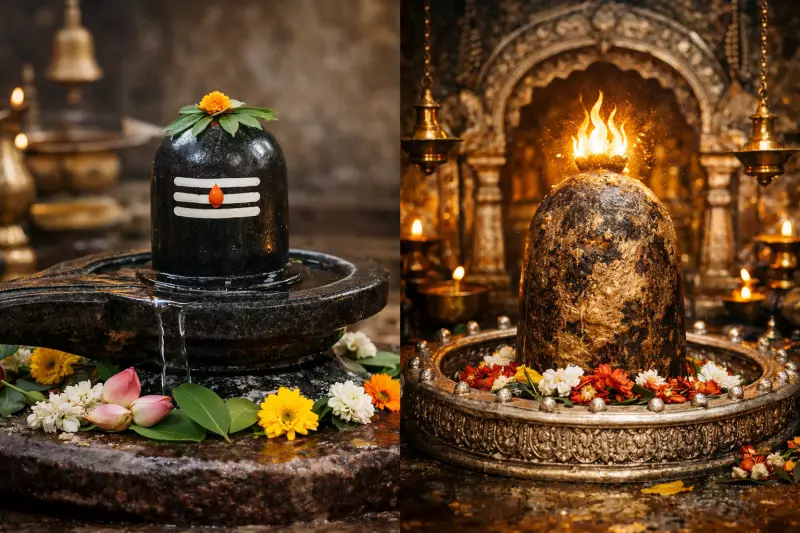
In countless Indian households and temples, the Shivlinga stands as one of the most recognizable spiritual symbols. You can find it resting peacefully in personal prayer rooms, at humble roadside shrines, and within magnificent temple complexes. Devotees regularly offer water, milk, flowers, and bilva leaves to these sacred forms every single day.
The Common Presence of Two Sacred Terms
Alongside the familiar word Shivlinga, another term frequently appears with deeper spiritual significance: Jyotirlinga. These two forms may look similar in appearance, but their meanings and purposes differ substantially. Grasping this distinction helps illuminate how Shiva worship unfolds across India, from simple home altars to the most revered pilgrimage destinations.
What Does a Shivlinga Truly Represent?
A Shivlinga serves as a symbolic representation of Lord Shiva. It deliberately avoids depicting him in human form. Instead, this form captures Shiva as pure cosmic energy—formless, eternal, and beyond physical limitations. The smooth, pillar-like structure signifies the unchanging reality behind all creation. The circular base, known as the yoni, represents Shakti, the creative feminine force.

Together, these elements demonstrate the perfect balance between stillness and movement, consciousness and creation. People can install a Shivlinga virtually anywhere. You might encounter one in a grand temple, a family home, a village shrine, or even beneath a sacred tree.
The power of a Shivlinga does not originate from geographical location or mythological stories. It springs directly from genuine devotion. When someone prays to a Shivlinga, they connect with Shiva as a universal presence, unrestricted by any single narrative, place, or form. This explains why millions across India perform abhishek rituals on Shivlingas daily.
Devotees offer water, milk, honey, and sacred leaves as acts of honoring Shiva's presence in the immediate moment. A Shivlinga is not about grand spectacle. It centers on daily spiritual connection.
The Distinct Nature of a Jyotirlinga
A Jyotirlinga represents something fundamentally different from a symbolic Shivlinga. Believers consider it a specific location where Shiva manifested as a pillar of divine light, or jyoti. Ancient Shaivite texts describe a cosmic moment when Shiva revealed himself not in human or physical form, but as an endless column of radiant light extending beyond heaven and earth.
That infinite light marked Shiva's true, limitless nature. Certain Indian locations are believed to be spots where this divine light touched the earth. These places became known as Jyotirlingas, meaning "lingas of light."
Traditionally, twelve Jyotirlingas exist across India. Famous examples include Kashi Vishwanath, Somnath, Kedarnath, Mahakaleshwar, and Rameshwaram temples. Each Jyotirlinga connects to a specific legend where Shiva revealed himself in luminous form to resolve conflict, defeat ego, or restore cosmic balance.
The significance of these places does not come from human installation. It stems from divine manifestation. Followers believe Jyotirlingas are self-manifested, or swayambhu, meaning they appeared through Shiva's own will rather than human creation.
Symbol Versus Source: The Core Difference
This distinction forms the heart of the matter. A Shivlinga symbolizes Shiva's presence. A Jyotirlinga is believed to be a source point of that presence. A Shivlinga can exist anywhere devotion flourishes. A Jyotirlinga exists only in specific locations because it links directly to events where Shiva's cosmic energy revealed itself on earth.
This explains why Jyotirlinga temples hold special status as powerful pilgrimage sites. Visiting them involves more than standard worship. It means standing where divine light is believed to have once entered the material world.
How Worship Practices Differ
Outwardly, rituals at Shivlingas and Jyotirlingas appear similar—water offerings, flowers, chanting, and prayers. However, the underlying intention varies significantly. When people worship a Shivlinga, they honor Shiva as a universal force present everywhere. When they visit a Jyotirlinga, they seek connection to a specific spiritual epicenter where Shiva's infinite nature was directly revealed.

This explains why many devotees attempt to visit all twelve Jyotirlingas during their lifetime. This practice is not about collecting temple visits. It represents a journey through sacred geography that maps different expressions of Shiva's cosmic presence across India.
Two Forms, One Ultimate Truth
Shivlinga and Jyotirlinga do not compete with each other. One represents Shiva's omnipresent nature. The other represents Shiva at particular sacred points in space and time. Together, they demonstrate how Indian spirituality embraces both concepts simultaneously—the divine is universal yet can choose to reveal itself powerfully in specific locations.
One form makes devotion visible. The other makes divinity manifest. Both pathways lead toward the same spiritual truth, offering different gateways to connect with the eternal.