The cheerful, red-suited Santa Claus beaming from advertisements, mall corners, and greeting cards is a universal symbol of Christmas cheer. However, this iconic image is a relatively modern invention. For centuries, the figure of Santa, or Saint Nicholas, was a shapeshifter, his appearance molded by local folklore, religious art, and regional customs before being cemented by a powerful force: advertising.
The Many Faces of Santa Before Standardisation
Long before becoming a corporate mascot, Santa's look was remarkably diverse across cultures. In European traditions, he was often depicted as a solemn religious figure. The Dutch Sinterklaas was a dignified, bishop-like character in long, flowing robes. Meanwhile, the British Father Christmas appeared as a thinner, sometimes stern man dressed in green or brown, focused more on moral lessons than gift-giving merriment.
Across the Atlantic in 19th-century America, artists began crafting a rounder, friendlier Santa. Yet, his attire lacked consistency, appearing in tan coats, grey outfits, or even patchwork clothes. This period was a melting pot of folklore, religious iconography, and emerging commercial ideas, with no single "correct" version of Santa Claus.

The Advertising Revolution That Created a Global Icon
The early 1900s marked a decisive turn. Businesses recognised the power of a consistent, recognisable Santa to drive holiday sales. Magazine covers and advertisements began prominently featuring a big, warm, and invariably smiling Santa. This was a strategic move. Standardising his image made him an effective marketing tool, easy for children and parents to identify and remember.
Printing technology and brand colours also influenced the palette. Gradually, the specific combination of a red coat with white fur trim gained dominance. This version started shaping public expectation, slowly overshadowing the regional variations that once thrived.
The Coca-Cola Campaign That Sealed the Deal
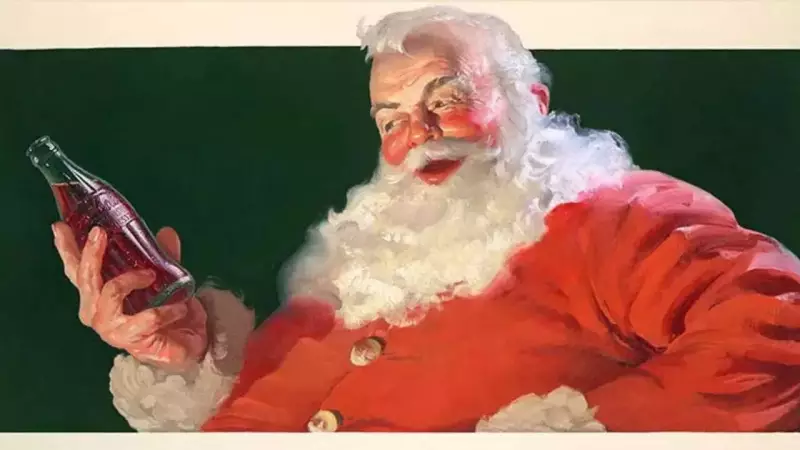
In 1931, a defining moment in Santa's visual history occurred. The Coca-Cola Company commissioned artist Haddon Sundblom to create a Santa for their holiday advertisements. Sundblom's genius lay in blending existing ideas. He drew inspiration from Clement Clarke Moore's classic poem "A Visit from St. Nicholas"—which described a "jolly old elf"—and combined it with the desire for a kind, grandfatherly figure.
The result was a masterstroke. Sundblom's Santa was plump, merry, and dressed in a bright red suit with distinct white trim, black boots, and a wide belt. These ads, showing Santa enjoying a Coke or interacting with children, saturated American media in newspapers, magazines, and on billboards. The campaign's massive reach didn't just sell soda; it crystalised this specific image as the definitive Santa Claus for a global audience.
Legacy: A Standardised Symbol vs. Living Traditions
The success of Sundblom's imagery was a monumental marketing achievement that had a profound cultural impact. The repeated exposure through ads, and later through merchandising, films, and television, made the red-and-white Santa the dominant global standard. It became a visual shorthand for Christmas, influencing everything from holiday décor to festive attire.
This phenomenon highlights how commercial imagery can reshape cultural traditions and collective imagination, transforming a folkloric figure into a universal brand. Nevertheless, older versions of Santa have not vanished entirely. In parts of Europe, local gift-givers like Sinterklaas still honour historical attire and customs. Artists and storytellers also periodically revisit these diverse origins, celebrating the fluid and adaptable nature of festive symbols. The enduring tension between the uniform commercial image and niche traditional portrayals reveals the complex interplay of marketing power and cultural memory in defining an icon as beloved as Santa Claus.